


Fire safety is a material, assembly, and installation decision—not a label on an insulation package.
Fire resistant mineral wool is generally noncombustible, but “fireproof” is too broad: the final fire rating depends on the exact product, facing, assembly, test method, and installation.
This guide answers the questions buyers ask most often, then turns the answers into practical checks for buildings, equipment, pipes, and firestop details.
Is Mineral Wool Insulation Fireproof?
The word “fireproof” sounds simple, but it can hide important differences between a material property and a tested building result.
Mineral wool is not technically fireproof, but its inorganic fibers are naturally noncombustible and can support passive fire protection when the complete system is designed and tested correctly.
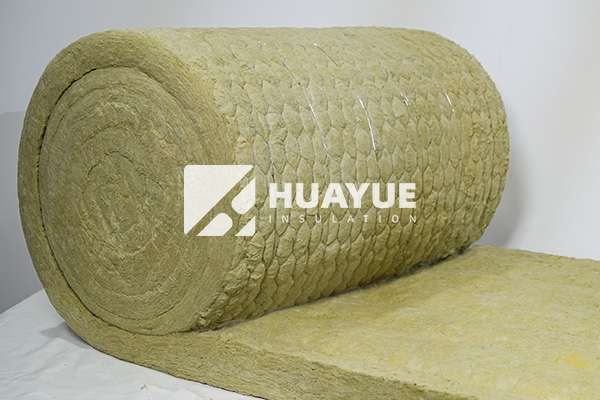
Mineral wool is a broad category that includes rock or stone wool and other mineral-fiber products made from inorganic raw materials. In a fire, the mineral fibers do not behave like an organic foam that can ignite and add fuel. This is why mineral wool is commonly considered when a project needs insulation with low contribution to fire growth.
Noncombustible does not mean that every part of every insulation product behaves identically. The core, binder, facing, adhesive, joint treatment, and supporting construction can all affect the result. Some facings, including kraft paper or foil-based layers, may be combustible even when the mineral wool core is not. The Insulation Institute’s fire-safety guidance makes this distinction clear: the product and its installation must be considered together.
Mineral wool also does not extinguish a fire or replace sprinklers, compartmentation, smoke control, or a properly designed fire barrier. Its useful role is passive: it can reduce heat transfer, fill concealed spaces, and help maintain separation when it is part of a suitable construction detail. A buyer should therefore avoid a simple statement such as “this insulation is fireproof.” A more accurate procurement question is: “What reaction-to-fire classification and tested assembly apply to this exact product and installation?”
For a broad building project, the first screen is usually the product’s reaction to fire and the combustibility of its facing. For a penetration, joint, or perimeter detail, the first screen is the listed system. The same mineral wool family may be supplied as a board, batt, blanket, or pipe section, but the form alone does not create a fire rating.
Does Mineral Wool Melt in a Fire?
Temperature claims are often copied from product pages without explaining the test conditions, exposure time, or intended operating range.
Mineral wool fibers have a high melting temperature, but fire exposure can affect binders, facings, shape, and insulation integrity before the mineral fibers melt; exact limits are product-specific.
Mineral wool is valued for its high-temperature behavior. A technical guide from the North American Insulation Manufacturers Association describes mineral wool as able to resist temperatures above 2,000°F in a referenced fire-test context. The same guide cautions that this is not a recommended continuous service temperature for every product. That distinction matters when a buyer is comparing building-fire performance with insulation for heated equipment.
The practical question is not only “When does the fiber melt?” It is also “What must remain in place, for how long, and under what load?” A board protecting a wall, a blanket around equipment, and a pipe section around a penetration may have different binders, facings, supports, densities, and installation details. Heat-up rate and duration can also change the outcome. A product can remain noncombustible while its binder changes, its facing chars, or its shape loses the fit required to maintain a barrier.
For industrial equipment, request the manufacturer’s maximum service temperature for the named product and form. For a building fire-resistance requirement, request the complete fire-test report or listing instead of using a melting-temperature headline as a substitute. For firestop work, confirm the temperature exposure, packing or compression requirement, sealant, support, and surrounding construction in the listed detail.
This is also why “over 1,000°C” should not be used as a universal promise for all mineral wool products. A high temperature mentioned in a fire test, a classification temperature, and a continuous operating limit are different pieces of information. The correct value must be tied to the product identity, test method, duration, and application.
Does Mineral Wool Have a Fire Rating?
A product brochure may mention A1, A2, Class A, or an hourly result, but these terms answer different fire-design questions.
Mineral wool products may carry a reaction-to-fire classification, but an hourly fire-resistance rating normally belongs to the complete tested assembly or firestop system—not the insulation alone.
Reaction to fire describes how a product contributes to fire, including ignition, flame spread, smoke, or flaming droplets under a defined classification system. In Europe, EN 13501-1 is used for reaction-to-fire classification, with Euroclass A1 and A2-s1,d0 representing noncombustible or limited-combustibility categories under the relevant test and scope. In North America, ASTM E136, ISO 1182, ASTM E84, and other methods may appear in project documentation, depending on the question being tested.
Fire resistance is different. A “one-hour” or “two-hour” result normally describes how a wall, floor, roof, door, perimeter joint, or penetration assembly performs during a specified fire test. The result depends on the complete arrangement: substrate, insulation, gypsum or boards, fasteners, joints, sealants, openings, supports, and installation sequence. NIST guidance on fire-resistant construction emphasizes that listed designs must be followed in detail; changing a component or configuration can require additional justification or testing.
For a B2B quotation or technical submittal, ask for four items:
- the exact product name, form, thickness, and density covered by the document;
- the reaction-to-fire classification and test method, where relevant;
- the full tested assembly or listing for any hourly fire-resistance requirement;
- the installation detail showing facings, fasteners, joints, sealants, and penetrations.
Do not transfer a rating from one mineral wool product to another just because both are described as rock wool or mineral wool. The dedicated fire-rated mineral wool article can carry the deeper discussion of A1 and assembly ratings, while this page should remain the broad material and buyer guide.
Can Mineral Wool Be Used as a Firestop?
Firestop applications are where material selection and installation discipline matter most, because small gaps can become paths for fire and smoke.
Mineral wool can be part of a firestop assembly for joints, voids, and penetrations, but only when the listed system specifies the product, packing method, sealant, support, and surrounding construction.
Firestopping is not simply the act of pushing insulation into a hole. A firestop detail may involve a pipe, duct, cable tray, joint, or perimeter gap; the opening may move, heat up, or expose the material to fire from more than one direction. The mineral wool is one component in a designed barrier. The sealant, coating, retaining method, backing, compression, and substrate can be equally important.
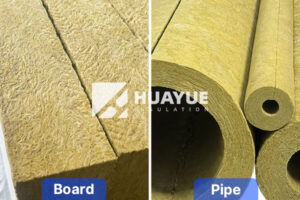
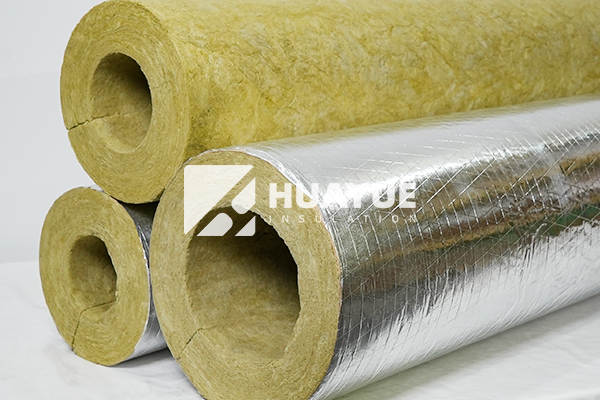
The physical form should follow the geometry and the tested detail. Boards or batts may be used in larger cavities, blankets can suit some wrap or equipment arrangements, and pipe sections are shaped for cylindrical services. These are selection directions, not universal approvals. A form that works in a wall cavity may not be accepted around a service penetration, and a product that is noncombustible may still be unsuitable if it does not match the required density, thickness, facing, or retention method.
Before approving a firestop material, confirm the system identifier, test standard or listing, maximum opening, service type, substrate, insulation specification, sealant, backing, and installation sequence. Keep the installation record with the technical submittal. If the project changes the pipe size, wall type, joint width, or product identity, the original listing may no longer apply.
For detailed penetration and compartmentation questions, route readers to the existing mineral wool fire-stopping guide or the fire-stopping rock wool selection guide. This keeps the broad “fire resistant mineral wool” page from promising that a generic material alone is code-compliant.
What Are the Downsides of Mineral Wool Insulation?
Mineral wool can be a strong fire-safety option, but buyers still need to match the product form and installation environment to the project.
Main limitations are moisture exposure, handling sensitivity, weight, facing compatibility, and the risk of choosing a form or system that does not match the fire requirement.
First, moisture must be managed. Mineral wool is inorganic and does not provide the organic food source that supports mold growth, but wetting can affect thermal performance, weight, handling, and adjacent components. Water-repellent treatment is product-specific and does not remove the need for drainage, weather protection, vapor-control design, or proper storage. Do not treat “water repellent” as a universal waterproofing claim.
Second, installation requires sensible protection and housekeeping. Fibers and dust may irritate skin, eyes, or the respiratory system during cutting and handling, so installers should follow the product safety data sheet and use appropriate protective equipment. Dense boards and pipe sections can also be heavier than lighter insulation products, which affects lifting, fixing, and support design.
Third, facings and accessories can change the fire behavior of the installed system. Confirm whether the project requires an unfaced product, a noncombustible facing, a vapor-control layer, or a tested surface treatment. Finally, the most serious limitation is selection error: a board, blanket, batt, or pipe section may be technically sound but still wrong for the geometry, fire test, or code detail.
Use this short selection sequence before requesting a quotation:
- Define the fire task: reaction to fire, an assembly rating, firestop, or high-temperature service.
- Identify the form and interfaces: wall, roof, equipment, pipe, joint, penetration, or cavity.
- Match the exact product document to thickness, density, facing, support, and test conditions.
- Review moisture exposure, installation access, retention, sealants, and inspection requirements.
- Send the application and approximate operating condition first; drawings, quantity, destination, packaging, and document requirements can follow.
The best fire resistant mineral wool is therefore not the product with the strongest headline. It is the product whose documented properties, physical form, and tested installation detail match the buyer’s actual fire-safety task.
Conclusion
Choose mineral wool by documented classification and tested assembly, not by the phrase “fireproof.” Share the application and approximate operating condition for a focused product discussion.