








Residential Insulation Materials — Attics, Walls, Floors, Pipes & Basements from One Source
Residential projects use glass wool in attics and ceilings, rock wool in fire-rated and acoustic walls, rubber foam on service pipes, and cellular glass under basement slabs — different material families for different areas of the home. We supply all of them in one inquiry for builders, contractors, and distributors serving the residential market.

Different Areas of the Home Need Different Insulation
Attics need lightweight, cost-effective glass wool that covers large areas fast. Party walls and floor-ceiling assemblies between dwelling units need dense rock wool for acoustic separation and fire rating. Service pipes need closed-cell rubber foam to prevent condensation. Below-grade basement walls and foundations need moisture-resistant insulation that survives ground contact.
For residential builders, contractors, and distributors, the procurement challenge is not finding insulation for one area — it is sourcing the right material for every area of the home without coordinating multiple suppliers.
This page matches each residential building area to the right material family. Use the guide below, then submit one inquiry covering the full project.
Page Navigation
Material Guide by Residential Area
The table below matches each residential building area to the material family that fits its conditions. The "Why This Material" column explains the selection logic. The "Before You Inquire" column lists the information that produces the most accurate recommendation.
| Residential Area | Typical Zones | Recommended Material | Why This Material — Not Others | Before You Inquire |
|---|---|---|---|---|
|
|
Attic floor, rafter cavities, cathedral ceilings, flat roof cavities |
Glass Wool Roll
Glass Wool Batt
|
Glass wool rolls cover large attic areas fast with minimal cutting and waste. Lightweight, easy to handle overhead, cost-effective for the large volumes residential attics require. Rock wool is unnecessarily heavy and expensive for horizontal attic applications where fire rating is not the driver. | Attic type (open floor/cathedral/flat), area in sqm, target R-value, access conditions |
|
|
Timber-frame cavities, steel-frame cavities, cavity walls, ETICS/EIFS |
Glass Wool Batt
Rock Wool Batt
|
Glass wool batts are the standard cavity fill for framed walls — lightweight, compressible to fit stud spacing, and cost-effective. Rock wool batts where higher density is needed for fire-rated assemblies or where the wall specification calls for non-combustible fill. | Wall type (timber/steel frame/masonry cavity), stud spacing, cavity depth, fire requirement if any, thermal target |
|
|
Party walls between units, bedroom walls, bathroom walls |
Rock Wool Batt
Glass Wool Batt
|
Party walls between units need dense cavity fill for low-frequency sound reduction — rock wool's higher density provides better acoustic separation where noise complaints concentrate. Glass wool for internal room partitions where moderate acoustic performance is sufficient and cost matters. | Wall type (party wall/internal partition), cavity depth, acoustic target (STC), fire assembly requirement |
|
|
Suspended timber floors, floor-ceiling assemblies between levels, ground floors |
Glass Wool Batt
Rock Wool Batt
|
Glass wool batts fit between floor joists — lightweight, does not sag when properly supported. Rock wool for floor-ceiling assemblies between dwelling units where fire rating and acoustic separation are both required. | Floor type (suspended/intermediate/ground), joist spacing, fire rating requirement, acoustic target |
|
|
Below-grade walls, under-slab, crawl spaces, foundation perimeter |
Cellular Glass Board
Rock Wool Board
|
Cellular glass for below-grade applications in direct ground moisture contact — moisture-proof, vapor-tight, compressive, the only insulation that survives buried conditions long-term. Rock wool board for above-grade exposed basement walls where fire performance matters and moisture is managed by other means. | Above-grade or below-grade, moisture and water table conditions, compressive load, thermal target |
|
|
Hot water lines, cold water lines, heating pipes, AC refrigerant lines |
Rubber Foam Tube
Rock Wool Pipe
|
Rubber foam for cold pipes — closed-cell condensation control without a separate vapor barrier. Rock wool pipe sections for hot water and heating pipes above rubber foam's temperature limit. Glass wool pipe for moderate-temperature hot water where cost matters. | Pipe diameters and quantities, service type (hot/cold/heating/AC), indoor/outdoor location |
|
|
Supply ducts, return air ducts, duct risers |
Glass Wool Blanket
Glass Wool Board
|
Lightweight duct wrap and duct lining for residential HVAC systems. Provides combined thermal and acoustic function. Facing type must match installation location and any fire/smoke requirements. | Duct dimensions, duct location, facing preference, fire/smoke requirement if applicable |
Material Families for Residential Projects
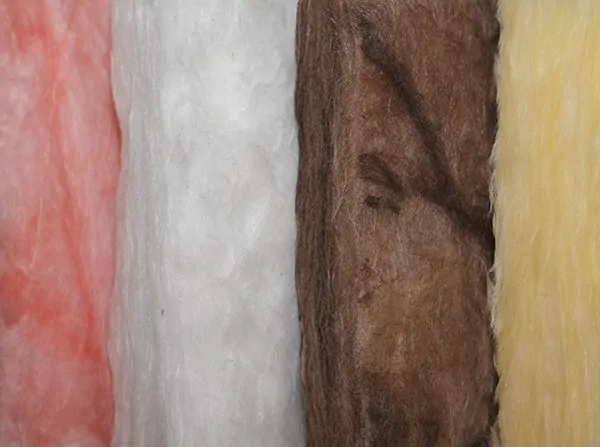
Glass Wool — The High-Volume Residential Material
The most widely used residential insulation. Lightweight, cost-effective, and available in rolls, batts, and boards that fit standard framing dimensions. Covers attics, walls, ceilings, floors, and duct insulation.
Best for: attic rolls, wall cavity batts, ceiling batts, duct wrap
Product forms: roll, batt, board, pipe section
Why contractors prefer it: fast coverage, easy cutting, light handling, lower cost per sqm
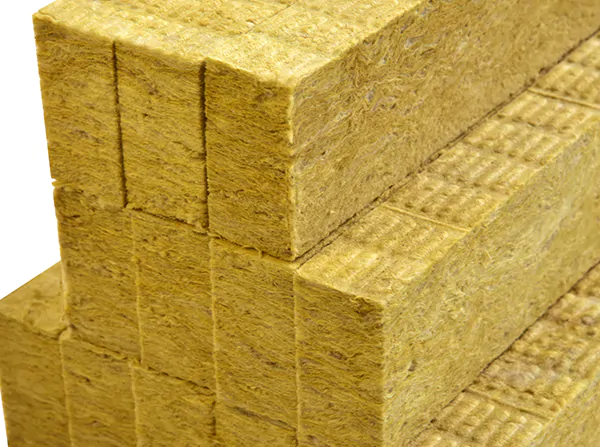
Rock Wool — Where Fire & Acoustic Matter
Higher density and non-combustible — the choice where fire-rated assemblies, acoustic separation between dwelling units, or building code requires it. Costs more per sqm than glass wool but delivers measurably better sound reduction and fire documentation.
Best for: party wall batts, fire-rated floor-ceiling assemblies, acoustic partitions
Product forms: batt, board, pipe section
Why it is specified: higher density for low-frequency STC, non-combustible, fire assembly documentation

Rubber Foam — Pipe Condensation Control
Closed-cell elastomeric foam for residential service pipes and refrigerant lines. Integrated vapor resistance prevents condensation without a separate barrier — critical for cold water, chilled lines, and AC service in humid conditions.
Best for: cold water pipes, AC refrigerant lines, hot water pipes (within temperature range)
Product forms: tube, sheet, self-adhesive tape
Why it is the standard: closed-cell = no moisture absorption, flexible for tight residential spaces
Cellular Glass is also available for below-grade basement and foundation applications where continuous ground moisture contact requires moisture-proof, vapor-tight, compressive insulation. View Cellular Glass Products
Material Comparison
| Property | Glass Wool | Rock Wool | Rubber Foam |
|---|---|---|---|
| Best Residential Use | Attics, wall cavities, floors, ceilings, duct insulation | Party walls, fire-rated assemblies, acoustic partitions, hot pipes | Cold water pipes, AC refrigerant lines, condensation-prone service |
| Acoustic Performance | Good — moderate density for standard cavity fill | Excellent — higher density provides better low-frequency sound reduction (STC) | Limited — not a primary acoustic material |
| Fire Classification | Non-combustible mineral fiber | Non-combustible — higher density and documented fire performance | Combustible — fire/smoke classification varies by product |
| Condensation Control | Requires vapor barrier on cold-side applications | Requires vapor barrier on cold-side applications | Integrated — closed-cell structure provides built-in vapor resistance |
| Product Forms | Roll, batt, board, pipe section | Batt, board, pipe section, blanket | Tube, sheet, self-adhesive tape |
What We Supply With the Materials
Residential project procurement is not just about the insulation material — it is about the product data and documentation that supports specification, code compliance, and project approval.
Thermal Performance Data
Every product supplied with thermal conductivity data, available thicknesses, and density specs. Share a target R-value and we confirm which product matches.
Lambda value, R-value, thickness & density ranges
Fire Documentation
Rock wool and glass wool supplied with fire reaction test reports where available. Fire performance belongs to the tested assembly — we provide material-level documentation.
EN 13501-1, ASTM E84 where available
Acoustic Data
Glass wool and rock wool include acoustic data where tested. Partition STC and ceiling NRC depend on the complete assembly — we provide the insulation-layer data.
Absorption coefficients, NRC values where available
Product Certificates
ISO 9001, CE marking, and product datasheets available across material families. Share your documentation requirements and we confirm availability.
ISO 9001, CE marking, datasheets, SDS
Project Showcase
Selected residential insulation projects demonstrating multi-material supply across different housing types and requirements.

Green Meadows Housing Development
Utilized flexible glass wool duct wrap for all attic-run HVAC ductwork across 150 homes, ensuring minimal thermal loss, reduced energy consumption for heating/cooling by an average of 15%, and improved indoor comfort by maintaining consistent air temperatures.

Apartments HVAC Upgrade
Replaced deteriorating pipe insulation with high-performance rubber foam tubes on all chilled water and refrigerant lines for the central air conditioning system in a 200-unit apartment building. This eliminated condensation issues, prevented moisture damage, and increased system efficiency by 10%, leading to lower maintenance costs.

The Serene Residences
Installed high-density glass wool duct liner inside the main supply and return air ducts for the HVAC systems in 50 luxury condominium units. This significantly reduced airborne noise from air handlers and airflow, achieving a 5dB(A) noise reduction in living spaces and enhancing overall occupant comfort.
Supply Capability
We supply insulation materials for residential projects — from individual building developments to large-scale housing programs.
Residential Project Types We Supply
-
Single-family homes and townhouses
-
Multi-unit apartment buildings
-
Condominium developments
-
Residential renovation and retrofit projects
-
Mixed-use developments with residential components
Ready to source your project materials?
Send us the building areas, number of units, and material needs — we will recommend the right material for each zone and provide a consolidated quotation.
Quick Material Match
Not sure where to start? Find your situation below for a quick material direction.
"I need to insulate a large attic or roof space"
Glass wool rolls. They cover large horizontal areas fast, are lightweight for overhead handling, and are the most cost-effective option for residential attic insulation.
"I need acoustic separation between dwelling units"
Rock wool batts in the party wall cavity. Higher density than glass wool means better low-frequency sound reduction where neighbor noise complaints concentrate.
"I need insulation for residential service pipes"
Cold pipes (cold water, AC refrigerant): rubber foam tubes — closed-cell condensation control. Hot pipes (hot water, heating): rock wool pipe sections or rubber foam within its temperature range.
"I need to insulate a basement or foundation"
Below-grade (in contact with soil/moisture): cellular glass — the only material that survives ground moisture long-term. Above-grade exposed basement walls: rock wool board.
"I need wall insulation for framed homes"
Glass wool batts — the standard cavity fill for residential framed walls. Cost-effective, compresses to fit between studs, lightweight. Use rock wool batts if the wall requires non-combustible fill or a fire-rated specification.
"I am a distributor looking for a residential insulation line"
We supply all four material families. Send your market, target product range, and typical order volumes — we will provide product specifications, pricing, and sample availability.
Documentation & Standards
The following documentation and standard compliance can be provided with material supply. Document availability varies by specific product and configuration — include your documentation requirements in your inquiry and we will confirm what is available.
Product Documentation
| Document Type | Description |
|---|---|
| Technical Datasheets | Thermal conductivity, density, dimensions, and specifications for each product |
| Material Safety Data Sheets (SDS) | Safety, handling, and composition data |
| Installation Guidance | Product-specific handling and installation reference documents |
Test Standards & Certificates
Products can be supplied with test reports and certificates per the following standards (availability varies by product):
- ASTM E84 — Surface burning characteristics (flame spread & smoke development)
- EN 13501-1 — Reaction to fire classification
- ASTM C612 — Mineral fiber block and board thermal insulation
- ASTM C547 — Mineral fiber pipe insulation
- ASTM C552 — Cellular glass thermal insulation
- ASTM C534 — Preformed flexible elastomeric cellular thermal insulation
- ISO 9001 — Quality management system
- CE Marking — European conformity (where applicable)
Note: Fire ratings, acoustic ratings (STC, NRC), and energy performance belong to the complete tested assembly — not the insulation material alone. We provide material-level documentation. If your project requires specific test reports or certificates, include these requirements in your inquiry.
Get a Residential Project Quote
Tell us what you need — building areas, material types, quantities, and any performance or documentation requirements. The more detail you share, the faster we can match the right materials.
Material-Matched Response
Every inquiry receives a material recommendation matched to your residential building areas — not a generic product list.
Multi-Material Quotation
Glass wool, rock wool, rubber foam, and cellular glass quoted together — one price sheet for the entire residential project.
Documentation Package
Datasheets, fire reports, and certificates across material families compiled in one document set for your project.
Typical response within 3 business days. All project information is treated as confidential.
Send Your Project Requirements
Describe the building areas, materials needed, and any performance or documentation requirements.
Your information is secure and will only be used to respond to your inquiry.