HVAC Insulation — Ducts, Pipes & Mechanical Equipment from One Source

A typical HVAC system uses glass wool around air ducts, rubber foam on chilled-water pipes, rock wool on high-temperature and fire-rated service, and possibly cellular glass on below-grade cold lines — different material families with different properties and different fire/smoke requirements. We supply all of them in one inquiry, matched to each HVAC component's operating conditions.

Every HVAC Component Needs a Different Insulation Material

Air ducts need lightweight glass wool for thermal and acoustic wrapping. Chilled-water pipes need closed-cell rubber foam to prevent condensation — mineral wool absorbs moisture on cold pipes and fails. Hot-water pipes above rubber foam's temperature limit need rock wool. Mechanical rooms need non-combustible insulation that meets fire requirements for the space.

The first decision in HVAC insulation is not "which brand" — it is "which material for which component." Using rubber foam on ducts wastes money. Using glass wool on chilled-water pipes causes condensation failure. Using rubber foam on high-temperature pipes exceeds its operating limit.

This page matches each HVAC system component to the right material family. Use the guide below to identify what your project needs, then submit one inquiry covering all materials.

Material Guide by HVAC Component

The table below matches each HVAC system component to the right material. The "Why This Material" column explains the selection logic. The "Before You Inquire" column lists the information that produces the most accurate recommendation.

HVAC Component Recommended Material Why This Material — Not Others Before You Inquire
Supply & Return Air Ducts
Glass Wool BlanketGlass Wool Board
Lightweight, cost-effective duct wrap and duct lining with combined thermal and acoustic function. Available with foil, FSK, or other vapor-retarder facings. The standard duct insulation material for commercial and residential HVAC. Rubber foam is unnecessarily expensive for duct applications. Duct dimensions, indoor/outdoor location, facing preference, fire/smoke classification required for duct location
Ducts in Plenum or Return-Air Spaces
Glass Wool BoardRock Wool Board
Plenum-rated locations require insulation that meets specific flame spread and smoke development limits. Glass wool and rock wool boards with tested facing systems address this. Confirm fire/smoke classification matches the specific plenum requirement. Plenum type, applicable fire/smoke standard, facing requirement, duct dimensions
Chilled-Water Pipes
Rubber Foam Tube
Closed-cell structure provides integrated vapor resistance — prevents condensation on cold pipes without a separate vapor barrier. This is a physics requirement, not a preference: mineral wool absorbs moisture from condensation on cold pipes, loses thermal performance, and causes dripping and corrosion. Pipe diameters and quantities, chilled-water temperature, indoor/outdoor location, fire/smoke document requirements
Refrigerant Lines
Rubber Foam Tube
Same condensation-control logic as chilled water. Rubber foam tubes are available in sizes matched to standard refrigerant line diameters for split systems and VRF/VRV installations. Refrigerant line diameters, system type (split/VRF/VRV), wall thickness requirement
Hot-Water & Heating Pipes
Rock Wool PipeRubber Foam Tube
At moderate hot-water temperatures, rubber foam can serve if within its operating limit (typically up to +105-120°C — consult datasheet). Above that limit — or where non-combustible documentation is required — rock wool pipe sections are the standard. Service temperature (normal and peak), pipe diameters, fire documentation requirement, jacketing preference
Mechanical Room Equipment & Surfaces
Rock Wool BoardRock Wool Blanket
Non-combustible, handles high temperatures, and provides acoustic absorption in noisy mechanical spaces. Mechanical rooms often have independent fire classification requirements — rock wool meets these without additional treatment. Equipment surface geometry, operating temperature, fire classification for the room, acoustic target if any
Duct Risers & Shaft Penetrations
Rock Wool BoardGlass Wool Board
Vertical duct runs through fire-rated shafts need insulation that supports the fire rating of the shaft assembly. Rock wool is preferred where non-combustible classification is required. Fire/smoke documentation must match the shaft's fire rating. Shaft fire rating, duct dimensions, applicable fire standard, fire-stop system
Below-Grade or Buried Chilled Service
Cellular Glass Pipe
Where chilled-water or cold-process lines run below grade or through areas with continuous moisture contact, cellular glass is the only insulation that survives without absorbing water. Standard for large campus chilled-water distribution in buried trenches. Burial depth, pipe diameters, moisture conditions, compressive loads, temperature range
Not sure which material fits your HVAC system? Send us the system components, pipe sizes, duct dimensions, and operating conditions — we will recommend the right material for each component.
Get Material Recommendation

Material Families — Temperature Range & Properties

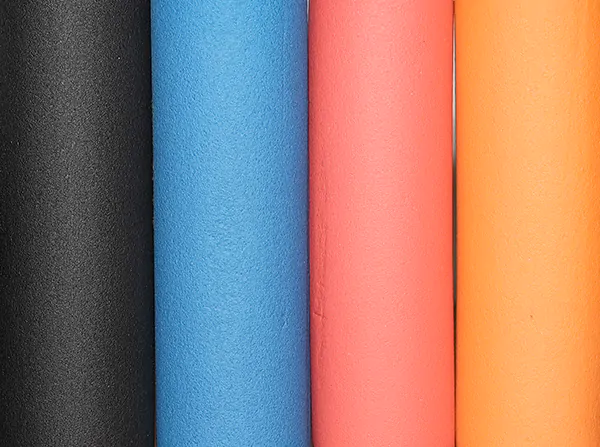
Rubber Foam (Elastomeric)

Closed-cell elastomeric insulation for condensation control on cold HVAC service. Integrated vapor resistance without a separate barrier. Flexible format fits tight mechanical spaces.

  • HVAC temperature range: typically -50°C to +105/120°C
  • Core property: closed-cell = no moisture absorption on cold pipes
  • Product forms: tubes, sheets, self-adhesive tape, pre-formed fittings

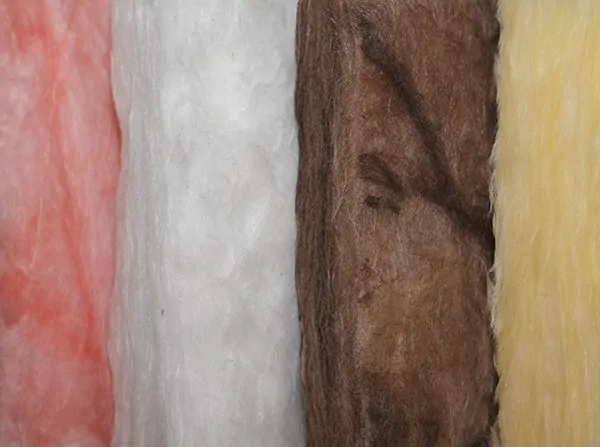
Glass Wool

Lightweight mineral fiber for duct wrapping, duct lining, and general HVAC thermal and acoustic insulation. Cost-effective for large duct surface areas. Available with foil, FSK, and other facing options.

  • HVAC temperature range: up to +350°C
  • Core property: lightweight + acoustic absorption + cost-effective coverage
  • Product forms: blankets (duct wrap), boards (duct liner), pipe sections

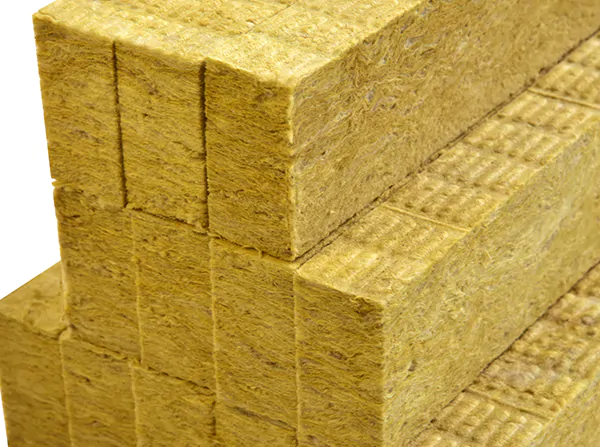
Rock Wool

Dense mineral fiber for high-temperature pipe service, fire-rated mechanical rooms, and acoustic-critical applications. Non-combustible classification. Higher density than glass wool for better acoustic performance.

  • HVAC temperature range: up to +650/700°C
  • Core property: non-combustible + high-temperature + acoustic density
  • Product forms: pipe sections, boards, blankets, wired blankets

Cellular Glass is also available for below-grade chilled-water distribution, buried mechanical service, and extreme-moisture HVAC applications. Temperature range: -268°C to +480°C. Moisture-proof, vapor-tight, and compressive. View Cellular Glass Products

What We Supply With the Materials

HVAC insulation procurement requires more than the right material — it requires the documentation that supports specification, code compliance, and inspection approval.

Thermal Performance Data

Every product supplied with thermal conductivity data, available thicknesses, and density specs. Share your thermal target or energy code requirement — we confirm which product and thickness matches.

Lambda value, R-value, thickness & density ranges

Fire & Smoke Documentation

HVAC fire/smoke requirements vary by installation location — ducts, plenums, mechanical rooms, and shafts each may have different requirements. We provide material-level fire reaction and smoke development data where available.

EN 13501-1, ASTM E84 (flame spread & smoke)

Condensation Control Data

Rubber foam and cellular glass products include vapor resistance and water absorption data — the properties that determine whether condensation will be controlled on cold HVAC service.

Vapor transmission, water absorption, mu-value

Product Certificates

ISO 9001, CE marking, and product-specific test reports. Share your project's compliance requirements and we confirm document availability.

ISO 9001, CE marking, datasheets, SDS

Project Showcase

Selected HVAC insulation projects demonstrating multi-material supply across different system types and building applications.

HVAC Project
Homes

EcoHome Retrofit Initiative

Utilized flexible glass wool duct wrap for all attic-run HVAC ductwork across 150 homes, ensuring minimal thermal loss, reduced energy consumption for heating/cooling by an average of 15%, and improved indoor comfort by maintaining consistent air temperatures.

HVAC Project
Townhouse

Harmony Row Residences

Utilized rock wool insulation in party walls and around utility shafts across 80 new townhouses. Achieved a 2-hour fire resistance rating, significantly enhanced soundproofing between units (STC 55+), providing residents with superior safety and acoustic privacy.

HVAC Project
Apartment Building

The Skyline Towers

Insulated all hot and cold water plumbing lines with rubber foam throughout a 30-story apartment building. Prevented condensation on cold water pipes, reduced heat loss from hot water pipes, and minimized plumbing noise transmission between apartments.

Supply Capability

We supply insulation materials for HVAC and mechanical projects — from single-building systems to large multi-building programs.

HVAC Project Types We Supply

  • Commercial office and retail HVAC systems
  • Hospital and healthcare HVAC
  • Hotel and hospitality mechanical systems
  • Industrial HVAC and process cooling
  • Residential multi-unit mechanical systems
  • District cooling and campus chilled-water distribution

Ready to source your HVAC materials?

Send the mechanical schedule with duct dimensions, pipe sizes, and operating temperatures — we will match each component to the right material and quote everything together.

Quick Material Match

Not sure where to start? Find your HVAC component below for a quick material direction.

"I need to insulate HVAC ducts"

Glass wool blanket (duct wrap) or board (duct liner). The standard duct insulation material. Choose facing type based on location — foil or FSK facing for vapor control, specific facings for plenum-rated locations.

"I need to insulate chilled-water pipes"

Rubber foam tubes. Closed-cell condensation control — the only correct choice for cold HVAC pipes. Do not use mineral wool on chilled-water pipes: it absorbs condensation moisture and fails.

"I need to insulate hot-water or heating pipes"

If within rubber foam's temperature range (up to ~105-120°C): rubber foam can serve. Above that: rock wool pipe sections. If non-combustible documentation is required: rock wool regardless of temperature.

"I need insulation for a mechanical room"

Rock wool board or blanket for equipment surfaces. Non-combustible, handles the temperature range, and provides acoustic absorption. Check the room's fire classification requirement.

"I need to insulate refrigerant lines for split or VRF"

Rubber foam tubes in sizes matched to refrigerant line diameters. Pre-slit for fast installation on existing lines.

"My project needs duct, pipe, and mechanical room insulation"

This is exactly what we do. Send the mechanical schedule with duct dimensions, pipe sizes, and operating temperatures — we will match each component to the right material and quote everything together.

Documentation & Standards

The following documentation and standard compliance can be provided with material supply. Document availability varies by product and configuration — include your documentation requirements in your inquiry and we will confirm what is available.

Product Documentation

Document Type Description
Technical Datasheets Thermal conductivity, density, dimensions, temperature limits, and vapor resistance data
Material Safety Data Sheets (SDS) Safety, handling, and composition data
Installation Guidance Product-specific handling and installation reference documents

Test Standards & Certificates

Products can be supplied with test reports and certificates per the following standards (availability varies by product):

Fire & Performance Test Standards
  • ASTM E84 — Surface burning characteristics (flame spread & smoke development)
  • EN 13501-1 — Reaction to fire classification
  • ASTM C612 — Mineral fiber block and board thermal insulation
  • ASTM C547 — Mineral fiber pipe insulation
  • ASTM C552 — Cellular glass thermal insulation
  • ASTM C534 — Preformed flexible elastomeric cellular thermal insulation
System Certificates
  • ISO 9001 — Quality management system
  • CE Marking — European conformity (where applicable)

Note: Fire/smoke ratings for HVAC insulation depend on the complete installation — material, facing, adhesive, and location. Plenum spaces, duct risers, and mechanical rooms each may have different requirements. We provide material-level data. Include specific requirements in your inquiry so we can confirm availability.

Get an HVAC Project Quote

Send the mechanical schedule with duct dimensions, pipe sizes, and operating temperatures — we will match each component to the right insulation material and provide a consolidated quotation.

Component-Matched Recommendation

Every inquiry receives a material recommendation matched to each HVAC component — ducts, cold pipes, hot pipes, and equipment — not a single-product suggestion.

Condensation-Verified Selection

Cold-service pipe recommendations are verified for condensation control — the right closed-cell material at the right thickness for the operating conditions.

Multi-Material Quotation

Rubber foam, glass wool, rock wool, and cellular glass quoted together — one price sheet for the entire mechanical system.

Typical response within 3 business days. All project information is treated as confidential.

Send Your Project Requirements

Describe the HVAC components, pipe sizes, duct dimensions, and any fire/smoke or performance requirements.

Optional: provide more detail to speed your quotation

Your information is secure and will only be used to respond to your inquiry.