





Mineral wool is common in passive fire protection, but the job it performs depends on the construction and the type of opening.
Mineral wool can be part of a firestop system or an approved fireblocking detail. It may serve as packing, backing, safing, or a coated barrier, but loose insulation alone is not automatically a rated firestop. The complete tested or code-approved arrangement controls the result.
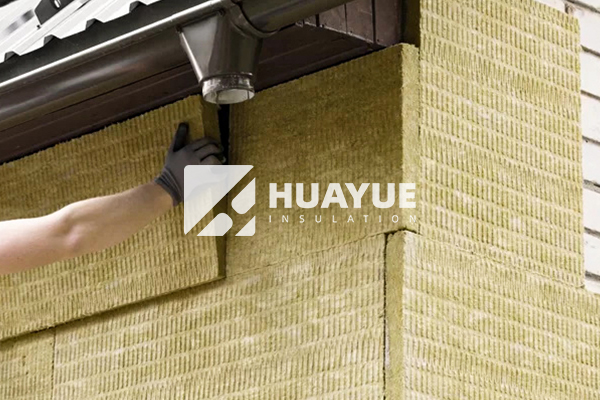
The practical question is therefore not only “Can mineral wool stop fire?” It is “Which application is this, and does the specified product and installation match the evidence for that application?”
Are Mineral Wool Fire Stopping and Fire Blocking the Same?
The terms sound similar, but they describe different construction tasks.
Firestopping protects penetrations or joints that interrupt a fire-resistance-rated construction. Fireblocking interrupts concealed pathways in combustible construction. Mineral wool may appear in either task, but the approval route and installation requirements are not interchangeable.
UL Solutions distinguishes fireblocking from firestopping: fireblocking uses approved materials to slow fire progression in concealed spaces, while firestopping is a listed system used where penetrations enter or pass through a fire-resistance-rated assembly. Local codes use their own definitions and accepted materials, so the project jurisdiction still governs.
| Task | Typical location | What mineral wool may do | Evidence to check |
|---|---|---|---|
| Firestopping | Pipe, cable, conduit, duct, joint, or other opening in rated construction | Packing, backing, safing, or part of a purpose-designed seal | Tested/listed system covering the exact opening and construction |
| Fireblocking | Concealed wall, floor, stair, soffit, or similar pathway in combustible construction | Fill an approved location with a permitted batt, blanket, or other detail | Applicable code provisions, specified material and maintained integrity |
| Ordinary insulation | Wall cavity, roof, tank, pipe, or equipment where no rated opening is being restored | Reduce heat transfer or provide acoustic control | Product and application requirements, not a firestop listing by default |
This distinction prevents two common errors. The first is treating any mineral wool batt placed near a cable or pipe as firestopping. The second is calling tank or process-pipe insulation a fire stop merely because the material has favorable fire behavior. A firestop has a specific location and function: it restores or protects an opening or joint in a fire-resistance-rated construction. Fireblocking has a different concealed-space function and may not carry the same time-rated system evidence.
How Does Mineral Wool Work Inside a Firestop System?
Mineral wool usually works with other components and with a defined installation geometry.
In a listed penetration or joint system, mineral wool can form heat-resistant packing or backing behind a sealant or coating. Its product type, depth, orientation, density, compression, position, and exposed-face treatment must follow the individual system detail.
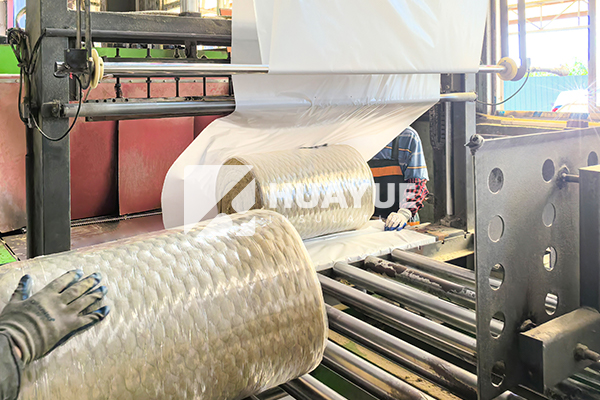
The mineral wool can help fill the opening, support the seal material, and limit heat transfer through the void. Depending on the tested design, the completed system may also include a firestop sealant, intumescent material, collar, wrap strip, mortar, coating, mechanical support, or another named component. These parts are not optional ingredients that can be mixed by appearance. They work together in the arrangement evaluated for the system.
ASTM E814 explains that penetration-firestop performance depends on the specific assembly of materials tested, including the number, type, and size of penetrations and the wall or floor in which the system is installed. This is why there is no universal mineral wool fire stop recipe. One system may call for mineral wool backing at a stated depth and compression; another may use a different product or no mineral wool at all.
The phrase “tightly packed” also needs a document behind it. The International Firestop Council notes that listed systems can specify how mineral wool backing is packed. Installers should therefore use the value and method in the selected listing, not a generic rule copied from another system. More compression is not automatically better, and substituting a convenient site batt can change the tested configuration.
Where Is Mineral Wool Firestopping Used?
The relevant system depends on whether the condition is a penetration, joint, perimeter void, or concealed-space block.
Mineral wool firestopping is commonly associated with through-penetrations, fire-resistant joints, and perimeter fire containment. Each application has its own test route, components, movement or support conditions, and limits; one detail cannot be transferred to another.
For a through-penetration, start with the rated wall or floor and the item passing through it. A metal pipe, combustible pipe, insulated pipe, cable bundle, conduit, cable tray, or duct can behave differently during fire exposure. The system evidence must cover the penetrant material and size, opening geometry, annular space, barrier construction, orientation, supports, mineral wool component, and the specified sealing material.
For a construction joint, the design must address the joint width, substrates, expected movement, packing orientation, seal depth, and installation at the required face or faces. A static gap stuffed with mineral wool is not evidence that a moving head-of-wall or floor joint will remain protected.
Perimeter fire containment is another distinct case. It addresses the void between a fire-resistance-rated floor and an exterior wall. The International Firestop Council warns that simply filling this void with mineral wool is not enough; the design can depend on approved spandrel insulation, safing insulation, mechanical attachment, reinforcement, compression, orientation, smoke-seal material, and protection of vulnerable framing components.
Finally, mineral wool placed around a tank, process line, or ordinary wall cavity may still be useful insulation, but it should not be described as firestopping unless it performs within a relevant approved system. Keeping the application names precise makes specifications, quotations, and inspections easier to compare.
Can Ordinary Mineral Wool Insulation Be Used as a Fire Stop?
Similar appearance does not establish that an insulation batt or board is permitted in a firestop system.
Use an ordinary mineral wool product only when the applicable firestop listing or fireblocking provision covers that exact product type and installation. A thermal or acoustic datasheet, generic noncombustibility claim, or similar density does not prove interchangeability.
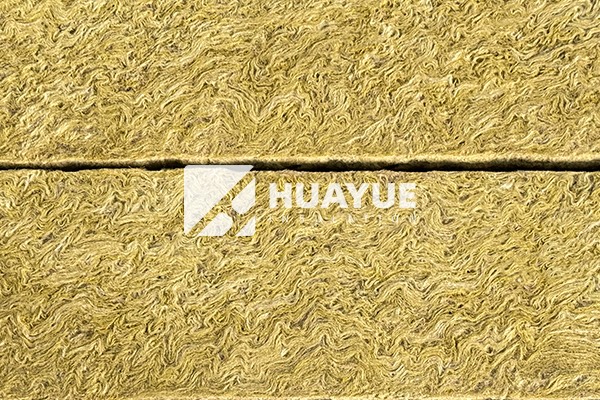
Mineral wool products differ in fiber structure, binder, density, thickness, facing, coating, rigidity, dimensions, and intended use. A listed system may identify a manufacturer and product, or it may define an allowed material with specific properties. Either way, the proposed material must fall inside that scope. “Mineral wool” on a quotation is not enough information for a safety-sensitive substitution.
The same boundary applies to rock wool terminology. Rock wool or stone wool is a type within the broader mineral-wool family. <code>ROCKWOOL</code> is also the trademark of an unaffiliated manufacturer; its listings and product evidence cannot be assigned to a SinoInsulation or another supplier’s product. If a project document uses “rockwool” loosely, clarify whether it means the generic material category or a named product.
Product reaction-to-fire evidence and firestop-system evidence answer different questions. A product classification describes the tested material or product specimen; a firestop-system rating applies to the complete tested installation. A favorable product result does not replace the system evidence needed for the opening or joint.
If a proposed substitution is not directly covered, do not improvise a field detail. Use the project’s accepted route for a qualified technical assessment or engineering judgment, and obtain approval from the responsible designer or authority before installation.
What Should You Verify Before Specification or Installation?
A useful submittal connects the site condition to one applicable system detail.
Identify the barrier and opening first, select a tested or code-approved detail second, and then match every material and installation limit. Product selection should follow the system—not replace it.
Use this review sequence:
- Define the condition. Record whether the work concerns a through-penetration, membrane penetration, construction joint, perimeter void, concealed-space fireblock, or ordinary insulation application.
- Identify the barrier. Confirm the wall, floor, floor-ceiling, exterior-wall, or other construction and its required fire-resistance rating where applicable.
- Describe the opening or joint. Record the penetrant type and size, insulation on the service, opening dimensions, annular space, joint width, orientation, and expected movement.
- Select the applicable evidence. Use the current listing, classification, test report, approved design, code detail, or accepted project-specific assessment for that exact condition.
- Match the mineral wool component. Verify the allowed product, form, density or other stated properties, thickness, cut size, depth, compression, orientation, joints, facings, coatings, and position.
- Match every companion component. Confirm sealant or coating type and depth, collars, wraps, fasteners, reinforcement, backing, supports, smoke seals, and permitted substitutions.
- Plan installation and inspection. Keep the detail available on site, identify inspection points before the work is concealed, label systems where required, and record any approved deviation.
Do not begin with a requested hour rating and ask a mineral wool supplier to “make it fit.” Begin with the construction and the accepted system route. This sequence produces a clearer quotation and reduces the risk of receiving a suitable insulation product that is not approved for the firestop detail.
Conclusion
Use mineral wool only within an approved fireblocking detail or a tested firestop system. To compare options, share the application and required system evidence.