







Blown-in mineral wool is a loose-fill insulation format for filling attic floors, wall cavities, and other hard-to-reach building spaces.
Yes. Mineral wool can be supplied as a loose-fill or blown-in product, but the material must be designed for machine installation; batts and boards should not be shredded and repurposed.
The right choice depends on more than the material name. Buyers should compare the installed density, settled R-value, required depth, attic conditions, installation method, and supplier support before placing an order.
Can Mineral Wool Be Blown-In?
Mineral wool is available in more than one physical form, and only the loose-fill form is intended to be blown.
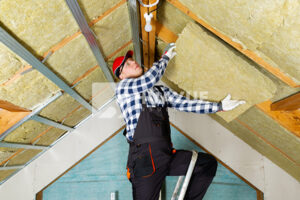
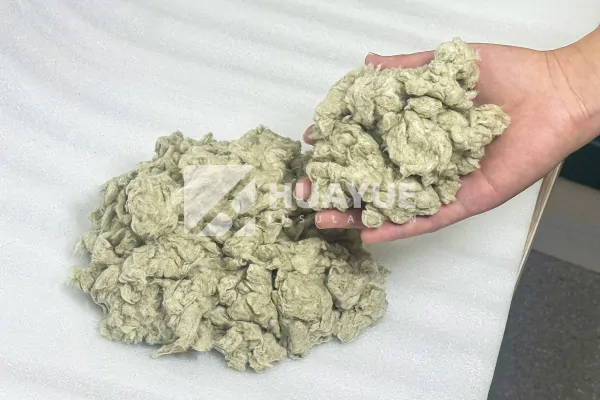
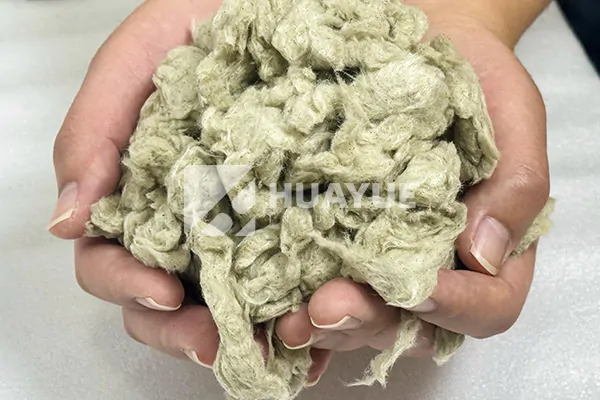
Loose-fill mineral wool can be blown with a machine into unfinished attic floors, enclosed wall cavities, timber-frame spaces, and other areas where a flexible hose can distribute the fibers.
The ENERGY STAR insulation guide lists mineral, rock, stone, or slag wool among the materials used for loose-fill and blown-in insulation. The NIST generic mineral wool profile describes blown mineral wool as fibers made from natural rock or iron-ore blast-furnace slag. In practical terms, “blown-in” describes the product form and delivery method, not a separate mineral family.
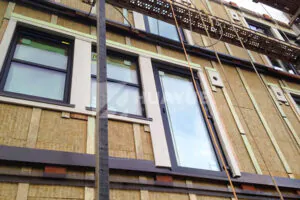
Installation normally uses a blowing machine, hopper, and hose. For an open attic floor, the installer distributes the material to an even depth across the ceiling plane. For an enclosed wall or knee wall, the cavity needs suitable netting, backing, or access holes so the material stays in place while the cavity is filled. The installation method therefore changes with the application; an attic floor and a closed stud bay should not be treated as the same job.
Do not assume that any mineral wool batt, board, pipe section, or slab can be fed through a blower. A loose-fill product has a fiber structure, packaging format, density range, and machine requirement intended for blowing. Using the wrong form can damage the insulation, create uneven coverage, or produce a density that does not match the available performance data. A supplier should confirm the product form, recommended equipment, installation density, coverage rate, and whether the application is open-blown, cavity-blown, or adhesive-assisted.
What Are the Downsides of Using Mineral Wool Blown-In Insulation?
Blown-in mineral wool can cover irregular spaces well, but it places more emphasis on installation control than a simple roll-out material.
The main drawbacks are lower availability than common loose-fill materials, sensitivity to installed density and depth, greater weight than loose-fill fiberglass, and the need for separate air sealing and ventilation details.
The DOE-funded PNNL loose-fill insulation tool identifies rock wool as the least common of the three loose-fill insulation types it compares. That may affect local installer experience, machine availability, lead time, or the ease of finding a contractor who can document coverage correctly. It does not make mineral wool unsuitable; it means the project should confirm the installation route before material is ordered.
Density is another important trade-off. PNNL lists settled loose-fill rock wool at about 1.7 lb/ft³ and a settling rate of roughly 2–4%. The same guidance warns against “fluffing,” which means installing below the manufacturer’s minimum density. Under-dense material can allow more airflow through the insulation and may settle excessively. The installer should follow the product’s coverage chart and target density rather than estimating the number of bags by eye.
Blown-in mineral wool can also add more load than loose-fill fiberglass. In PNNL’s comparison, the weight at R-38 is approximately 1.6–1.8 lb/ft² for rock wool versus 0.5–1.2 lb/ft² for fiberglass. These are generic comparison figures, not a structural approval for a particular building. Existing ceiling construction, access platforms, storage loads, and local requirements still need review.
Finally, insulation is not air sealing. The DOE Building America checklist states that fibrous insulation should not be used as an air-sealing method. Attic leaks, roof moisture, exhaust fans, combustion clearances, and soffit ventilation should be addressed before the loose fill is installed. A good mineral wool product cannot compensate for a wet attic, blocked ventilation path, or unsealed ceiling penetrations.
What Is the R-Value of Blown-In Mineral Wool Insulation?
The R-value of blown-in mineral wool is determined by the product, settled density, installed thickness, and test or coverage data—not by the words “mineral wool” alone.
DOE/PNNL guidance lists settled loose-fill rock wool at about R-3.0–R-3.3 per inch; approximately 11.5–13 inches is shown for R-38, but the current product data and installed density control the final design.
The PNNL comparison table gives loose-fill rock wool a settled R-value range of 3.0–3.3 per inch, a density of about 1.7 lb/ft³, and an estimated 11.5–13 inches to reach R-38. As a simple orientation only, 12 inches multiplied by R-3.0–R-3.3 per inch suggests about R-36–R-40 for the insulation layer. That estimate does not replace a current product coverage chart or account for framing, gaps, compression, thermal bridges, or the requirements of a complete assembly.
The U.S. ENERGY STAR attic guidance gives a broader estimate of roughly R-3–R-3.5 per inch for common fiberglass, cellulose, and mineral wool insulation. Its recommended insulation levels vary by climate zone, from R-30 to R-60 for attic additions in the listed U.S. zones. These figures show why the same material can require different thicknesses in different projects.
For a commercial or export inquiry, ask for the named product’s declared thermal resistance or conductivity, settled density, installed thickness, coverage per package, and the test method or standard used. If a buyer requests a target such as R-38, R-49, or a metric RSI value, the supplier should convert that target into a material quantity and installed-depth recommendation using the product’s own data. A customized density can be useful for a specific application, but customization does not automatically create a higher R-value; the density must be tied to verified performance and the intended installation method.
What Is the Best Blown-In Insulation for an Attic?
“Best” depends on whether the attic floor or the roofline is the thermal boundary and what the project must prove.
For an unfinished attic floor, blown-in mineral wool is a suitable option when its settled R-value, density, coverage, and installation method are documented; it is not automatically the best choice for every attic.
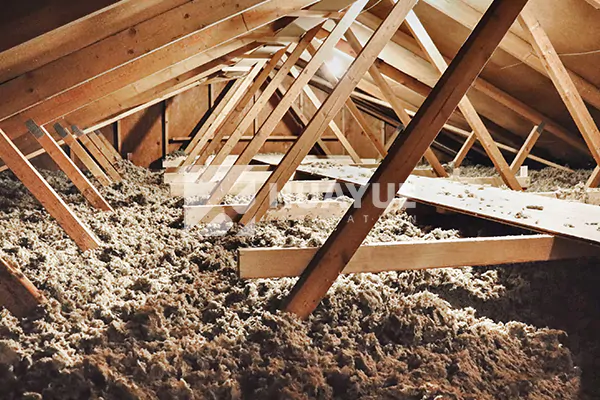
In a typical vented attic, loose-fill insulation is placed over the ceiling plane, while air sealing and ventilation are handled as separate parts of the system. The Building America attic guidance calls for inspection of roof leaks and moisture, air sealing of ceiling penetrations, soffit-to-ridge ventilation, and baffles that keep insulation out of the soffit path. The target is even coverage without voids, not simply a deep pile in the middle of the attic.
Mineral wool may be the right blown-in choice when the project values the mineral-wool material family, needs a loose-fill solution for irregular spaces, or requires a supplier to coordinate packaging, density, and application details. It may be less attractive when local installers are unfamiliar with it, when the available attic cannot accommodate the required depth or load, or when a different loose-fill product has better documented availability for the local code target. A product comparison should include:
- the required attic R-value or thermal resistance and local code;
- settled thickness, density, and coverage per package;
- installer and blower compatibility;
- weight added to the ceiling or attic floor;
- air sealing, baffles, access, and maintenance requirements; and
- moisture, pest, fire, acoustic, or other project requirements that need separate evidence.
If the roofline is the thermal boundary, the project is a cathedral ceiling, or the attic contains HVAC equipment, the decision is different from insulating an open attic floor. Do not select a blown-in material solely because it has a high nominal R-value per inch. First define the assembly, available depth, ventilation strategy, and inspection requirements.
Does HUAYUE Offer Mineral Wool Blown-In Insulation?
Supplier capability matters when the buyer needs a repeatable product, packaging format, or application plan rather than a one-off retail bag.
Yes. HUAYUE supplies mineral wool blown-in insulation and can discuss customized packaging, density, and application solutions for the project.
The most useful starting point is the application: open attic floor, enclosed wall cavity, timber-frame cavity, or another space. HUAYUE can then review the intended density and packaging requirements alongside the target thermal resistance, installed thickness, approximate quantity, and delivery destination. Additional details such as equipment, local code, facing, or installation method can be confirmed as the technical inquiry develops.
Customization should be treated as a route to a better project fit, not as a substitute for technical verification. Packaging affects handling, storage, and logistics; density affects installation behavior and must be matched to the product’s performance data; and an application solution must account for the complete assembly rather than the insulation core alone. For that reason, a buyer should request the current product description, recommended density, coverage information, installation guidance, and any applicable technical documentation before final approval.
For an RFQ, two details are enough to begin a useful discussion: the intended application and the target density or thermal-resistance level. Quantity, destination, packaging preference, and project drawings can follow once the product route is clear.
Conclusion
Choose blown-in mineral wool by settled R-value, density, depth, and installation conditions. HUAYUE can review the application and develop a customized supply solution.