







Choosing pipe lagging is less about wrapping a pipe and more about controlling heat, moisture, access, and damage across the complete insulation system.
Rock wool pipe lagging can be used around many hot and some cold pipes, but the system needs a close fit, suitable outer protection, and vapor control wherever condensation is possible.
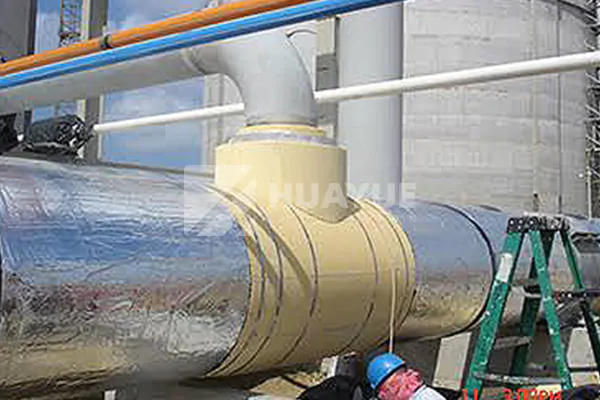
This guide answers the five questions that most often affect whether a rock wool pipe section is suitable: practical drawbacks, pipe fit, rodent damage, vapor barriers, and air gaps. Here, “rock wool” means generic rock or stone mineral wool, not the ROCKWOOL trademark.
What are the downsides of using ROCK WOOL insulation?
Rock wool is useful, but it is not a complete pipe-protection system by itself.
The main downsides are installation handling, added system components, potential moisture exposure, and the extra care needed around fittings, supports, and access points.
Rock wool is a fibrous insulation material, so cutting and fitting can release fibers that irritate skin, eyes, or airways. Installers should follow the product SDS and site controls, including suitable protective clothing, gloves, eye protection, dust control, and cleanup. The issue is normally concentrated during handling; it is not a reason to treat an installed, enclosed system as inherently unsafe.
The second trade-off is that the insulation core is not the same thing as a waterproof jacket or an air seal. A water-repellent pipe section can still be exposed to rain, wash-down water, leaks, or humid air through open joints. Outdoor and mechanically exposed pipework therefore needs an appropriate jacket or cladding, with the joints detailed so water cannot easily enter and remain at the pipe surface. Moisture at the wrong interface can create corrosion-under-insulation risk even when the mineral fibers themselves are inorganic.
Rock wool pipe sections can also demand more planning than flexible foam. The inner diameter must match the pipe, while elbows, flanges, valves, pipe shoes, hangers, and removable covers need their own details. A rigid or semi-rigid section may add weight and bulk, and extra labor can be required for cutting, banding, sealing, and jacketing. These costs are part of the installed system rather than a simple material-price comparison.
Finally, the best material depends on service temperature, moisture exposure, movement, fire requirements, and the available space. Rock wool is often attractive for hot or fire-sensitive pipework, but a cold, wet, frequently disturbed, or highly flexible installation may need a different insulation system or a carefully designed facing and vapor-retarder assembly.
Can you put ROCK WOOL around pipes?
Yes, but use a pipe-specific form wherever possible rather than forcing a flat board or batt around a cylindrical pipe.
Rock wool can be installed around hot-water, steam, HVAC, and other process pipes when the selected pipe section or wrap is rated for the service and fitted to the pipe size.
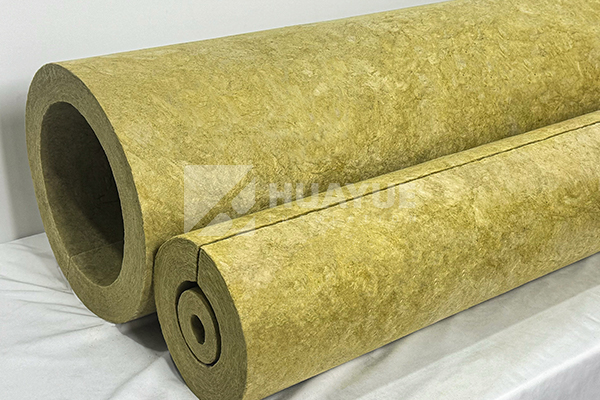
The National Insulation Association identifies mineral wool pipe insulation as a recognized mineral-fiber pipe product and points specifiers to ASTM C 547 for mineral-fiber pipe insulation. That does not make every rock wool board suitable for every pipe: the product form, temperature range, thickness, facing, and installation method still have to match the project. See the NIA materials and systems guide when preparing a specification.
For product-form context, see SinoInsulation’s rock wool insulation portfolio, then use the current named-product document—not a generic size assumption—for the final selection.
For straight runs, a pre-formed pipe section normally gives the most consistent geometry. Measure the actual pipe outside diameter, not only the nominal pipe size, and select a section with the required insulation thickness. Close the longitudinal joint, stagger circumferential joints between layers when a multi-layer system is used, and secure the insulation with the approved tape, bands, wire, or other fixing method. Do not tighten fasteners so aggressively that the insulation is crushed.
Elbows and fittings need more attention. Pipe sections may be cut into segments for a bend, while flexible mineral wool blankets or purpose-made fitting covers may be more practical for valves and irregular equipment. The objective is continuous coverage without open wedges, exposed pipe, or compressed hot spots. Supports and pipe shoes must also be designed so the insulation is not cut away unnecessarily or loaded in a way that creates a thermal bridge.
For cold lines, installing rock wool around the pipe is only the first step. The outer vapor-retarder layer and all joints must be continuous. For outdoor lines, add weather and mechanical protection. For hot lines near combustion appliances, maintain the appliance manufacturer’s clearance requirements; the DOE hot-water-pipe guidance illustrates why clearance around flues must be treated separately from ordinary pipe lagging.
Do mice chew through ROCK WOOL insulation pipe?
Rock wool may be less attractive than some soft nesting materials, but it should never be specified as a mouse-proof barrier.
Yes, mice can damage rock wool insulation and its facing under some conditions, so rodent exclusion must be designed separately from the thermal insulation.
The most useful distinction is between “not a preferred food source” and “cannot be damaged.” An EPA-indexed study exposed house mice to several insulation materials, including rock wool, and reported significant damage to every material tested; the study also recorded severe damage to aluminum-foil vapor barriers. The EPA research record is a useful warning against relying on material reputation alone.
In a pipework installation, rodents may enter through a gap around a wall penetration, roof opening, pipe support, cladding joint, drain, or service trench. Once inside, they can disturb the insulation, tunnel through weak areas, chew a facing, or build a nest beside the pipe. A gap in the lagging then becomes a local heat-loss path, a condensation point, or an opening through which moisture reaches the pipe surface.
The practical response is to close the entry route with a durable barrier appropriate to the temperature, fire, and maintenance requirements of the location. Protect exposed insulation with suitable jacketing, mesh, or a tested enclosure where the site has a recurring pest problem. Keep food, water, and nesting materials away from service areas, and inspect penetrations and removable covers during maintenance. Do not use a generic sealant, plastic mesh, or improvised metal detail close to a hot pipe without checking its temperature and fire suitability.
If an existing installation shows droppings, gnaw marks, disturbed fibers, damaged foil, or a new cold or wet spot, repair the access condition first. Replacing the visible insulation without correcting the route usually leaves the same failure ready to return.
Does ROCK WOOL pipe need a vapor barrier?
The answer depends mainly on pipe temperature, ambient humidity, and whether the pipe surface can fall below the surrounding air’s dew point.
Cold and chilled pipes generally need a continuous vapor retarder over the insulation; hot pipes usually do not need one for condensation control, but they still need suitable weather and mechanical protection.
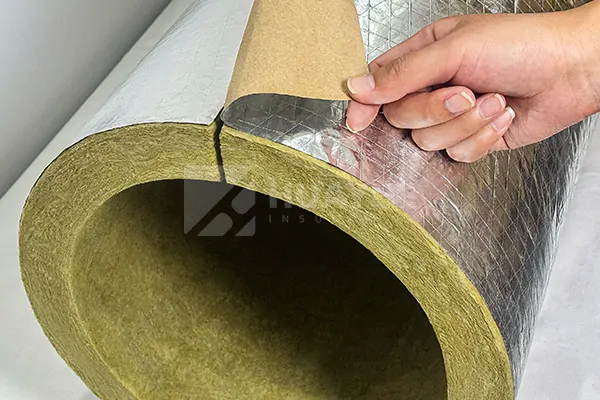
Rock wool itself is not a vapor barrier. It is a vapor-permeable fibrous core, so warm humid air can move through gaps or permeable surfaces toward a cold pipe. If that moisture reaches a surface below the dew point, condensation can form inside the system or on the pipe. The result may include wet insulation, icing, corrosion under insulation, damaged finishes, and loss of thermal control.
For cold service, use a product with an approved facing or add a compatible vapor-retarder system. Seal longitudinal and circumferential joints, terminations, fittings, supports, inspection covers, and penetrations. The DOE insulation checklist reinforces the installation principles of a continuous vapor retarder, sealed seams, secure fastening, and insulation that is not compressed. Although that checklist addresses hard ducts, the same continuity principle is relevant to a cold pipe lagging assembly; the project specification and product instructions control the final detail.
For hot-water and steam lines above ambient temperature, condensation is normally not the reason to install a vapor barrier. The outer layer may instead be selected for rain, wash-down, impact, corrosion control, cleanability, or appearance. A jacket that protects from bulk water is not automatically a vapor retarder, and a vapor retarder is not automatically a weatherproof or impact-resistant jacket. Treat those functions as separate requirements when the environment demands it.
Do not add a vapor barrier by habit to every pipe. An incorrectly placed or poorly sealed layer can trap water from leaks, make inspection harder, or interfere with a system that is intended to dry. Confirm the operating temperature, design humidity, insulation thickness, facing, joint sealant, and local code before finalizing the assembly.
Do I need an air gap with rock wool insulation pipe?
For ordinary contact-type pipe lagging, the aim is a snug fit—not a deliberately ventilated space between the pipe and the insulation.
You normally do not need an intentional air gap with rock wool pipe insulation; fit the section closely, close the joints, and avoid both voids and excessive compression.
The insulation works through its fibrous structure and the air held within that structure. A random annular gap can create a bypass route, allow air movement, make the outer surface harder to seal, and reduce confidence in the design calculation. Oversizing a pipe section just to leave space around the pipe is therefore not a reliable improvement. The DOE hard-pipe insulation aid calls for insulation to be held tight and not compressed, which captures the normal installation balance.
That does not mean every industrial insulation system must touch the steel. Some process-pipe designs intentionally use non-contact insulation with spacers and a controlled annular space to manage water movement and corrosion-under-insulation risk. Such a system is engineered as a complete assembly: the spacers, drainage path, cladding, pipe diameter used for the thermal calculation, and inspection method all matter. It is not the same as leaving an accidental gap under a standard pipe section, and it should not be improvised on site.
Also separate the pipe-to-insulation fit from the clearance around the finished jacket. A pipe rack, wall, cable tray, or neighboring line may need service clearance so the cladding can be installed and maintained. Supports may require high-density inserts, shields, or a different detail to prevent the insulation from being crushed. Those are system and access requirements, not a reason to create a loose air space inside the pipe lagging.
Before ordering, confirm the pipe outside diameter, insulation thickness, fitting geometry, support detail, jacket type, and whether the project specification calls for contact or non-contact insulation. That short check prevents most air-gap misunderstandings.
Conclusion
Choose rock wool pipe lagging by pipe size, service temperature, and moisture exposure; share the application and approximate operating condition for a useful product review.