






Rock wool board is a rigid mineral-wool insulation form, but its suitability depends on the assembly, handling conditions, pest access, and product evidence.
A rock wool board is not asbestos and is not automatically rodent-proof or suitable for every wall, roof, or industrial surface. Choose it by product form, assembly, and verified documentation—not by the material name alone.
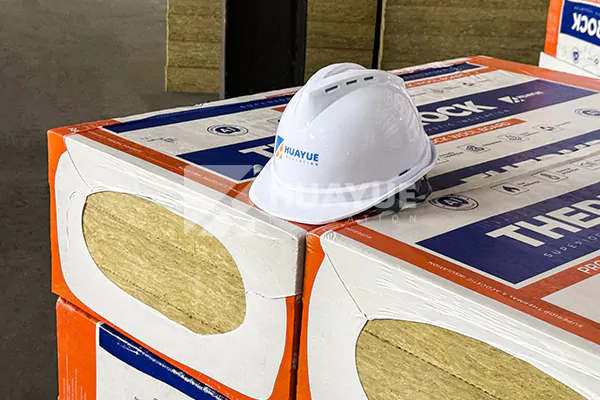
This guide explains what the board form means, where its trade-offs appear, and how to assess mice and asbestos questions before procurement or renovation.
What Is a Rock Wool Board?
Rock wool board is the panel form of a mineral-wool insulation family made from mineral fibres.
Rock wool, also called stone wool, is a man-made mineral fibre made from molten rock; a board is the rigid or semi-rigid panel form. Its application still depends on the named product and complete construction.
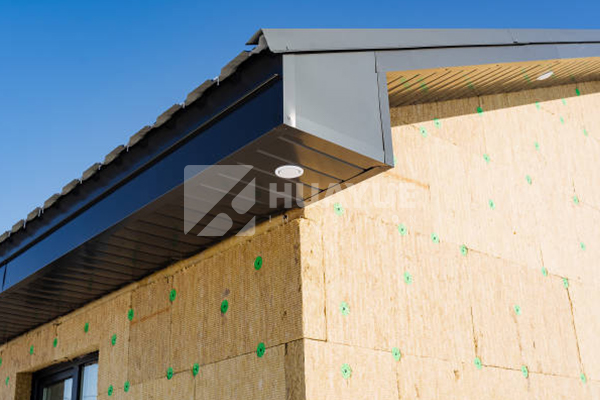
The NIOSH Pocket Guide identifies rock wool as a mineral-wool fibre produced from molten rock. In a quotation or technical submittal, “rock wool board” therefore describes a material family and physical form, not one universal specification. The board may be faced or unfaced, and its dimensions, density, mechanical properties, thermal data, fire classification, and moisture behaviour can vary by product and test method.
The form matters because a board is not interchangeable with every other rock-wool product. A blanket or roll is flexible, a batt is normally selected for a framed cavity, and a pipe section is shaped for cylindrical services. A board is more naturally considered where a flat, defined panel is required, but the project still has to confirm the substrate, support, fasteners, joints, exposure, and outer layers. A material name cannot approve a roof, wall, floor, equipment panel, or acoustic assembly by itself.
Terminology also needs care. Lowercase “rock wool” or “stone wool” is a generic material term. <code>ROCKWOOL</code> is an unaffiliated manufacturer brand, so a brand guide or brand test report must not be transferred to a different supplier’s board. Buyers should state whether they need a generic rock-wool board, a named manufacturer, or an approved equivalent.
For product selection, begin with the application and assembly. Then request the current named-product data sheet, safety data sheet, installation guidance, and any test or classification document that matches the same product, form, facing, thickness, and intended use. SinoInsulation’s rock wool board product route can help identify the relevant form, but the quoted model and current documents should control the final decision.
What Is the Downside of Rock Wool?
The main downside is not one universal defect; it is the added handling, fitting, control-layer, and evidence work that some projects require.
Rock wool can be a useful insulation material, but installers may need to manage fibre irritation, cutting and support, package weight, delivered cost, air leakage, and moisture-control details. These trade-offs vary by product and assembly.
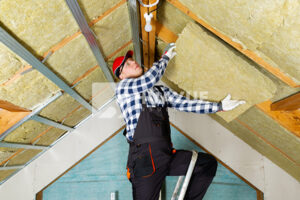
The first concern is handling. NIOSH lists skin, eye, and respiratory irritation as possible effects of mineral-wool fibre exposure. Cutting and fitting can release loose fibres or dust, especially in enclosed areas or during high-volume work. Review the selected product’s SDS and the site risk assessment; use suitable clothing, gloves, eye protection, ventilation, housekeeping, and respiratory controls where the exposure assessment requires them.
The second concern is installation effort. A rigid board can be useful where a defined panel is needed, but it still has to be cut around corners, openings, services, and penetrations. Poor joints, gaps, bulges, unsupported edges, or unnecessary compression can reduce the value of the intended insulation layer. Package weight and board stiffness can also affect unloading, overhead work, storage, and access planning. These are project variables, not fixed disadvantages for every rock-wool board.
Cost is another comparison issue. Material price alone does not describe the installed result. Freight, packaging, cutting waste, supports, membranes, facings, labour, storage, and document requirements may change the comparison. A lower purchase price can lose its advantage if it requires more accessories or cannot satisfy the same assembly requirement. Compare equivalent installed systems rather than applying a universal percentage to the material category.
Finally, rock wool is not an automatic air barrier or a complete water-control system. DOE guidance explains that air barriers and vapor retarders perform different functions, and the need and position of vapor control depend on climate and construction. A board may contribute thermal or acoustic control while the assembly still needs separate air sealing, drainage, weather protection, or vapor-control design.
| Potential downside | Why it matters | Practical control |
|---|---|---|
| Fibre and dust exposure | Cutting or disturbance can irritate skin, eyes, or the respiratory system | Follow the SDS, task assessment, and site controls |
| Fitting and support effort | Gaps, compression, and unsupported joints can change the installed result | Confirm dimensions, fixing, joint layout, and inspection method |
| Delivered cost and handling | Freight, waste, package weight, and labour can affect the total | Compare complete systems and actual package data |
| Separate air, water, and vapor control | Insulation alone does not close every leakage or moisture path | Coordinate the full building or equipment assembly |
Do Mice Chew Through Rock Wool Insulation Board?
Rock wool may be less attractive than some soft materials, but it should never be sold or specified as rodent-proof.
Yes. Mice can damage or tunnel through rock wool insulation under the right conditions. A controlled study found damage to rockwool-insulated panels, so rodent exclusion must come from sealed openings, protected details, and ongoing control—not from the board alone.
The University of Nebraska study on house-mouse activity tested several insulation materials in wall panels over six months and reported significant increases in thermal conductance for panels insulated with rockwool as well as other materials. This does not provide a universal field damage rate, and it does not prove that every board will fail in the same way. It does establish the safer procurement answer: rock wool is not an absolute barrier to mice.
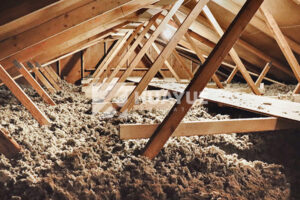
Rodents may enter through gaps around eaves, vents, doors, foundations, service penetrations, roof edges, or wall interfaces. Once inside a concealed cavity, they can move through accessible spaces, disturb insulation, contaminate surfaces, or damage adjacent wiring and membranes. A board’s mineral composition does not correct a missing closure detail. Nor should a lack of visible damage be treated as proof that the assembly is rodent-safe.
The CDC rodent-exclusion guidance notes that mice can pass through an opening about the width of a pencil and recommends sealing small gaps and using durable metal or mesh repairs for larger openings. For a building or industrial enclosure, apply that principle to the actual envelope: close penetrations, protect vents, repair damaged edge details, remove food and nesting opportunities, and inspect after installation. The correct barrier may be metal mesh, sheet metal, a sealed closure, or another approved detail; do not assume that stuffing insulation into a hole is a pest-control method.
For an RFQ, ask how the board will be retained and protected at edges, joints, service openings, and exposed zones. If rodents are already present, address the infestation and entry path before replacing insulation. Rock wool board can still be selected for thermal, acoustic, fire-review, or mechanical reasons when the product and assembly support those needs, but pest control remains a separate system responsibility.
Is Rock Wool Board Still Asbestos?
The words “rock wool” and “asbestos” describe different fibre categories, even though both may look fibrous in an old building.
Rock wool and asbestos are not the same material. A current rock-wool board should be identified by its product composition and safety documents, while old or unknown insulation must not be cleared by appearance or by a label alone. Test before renovation or removal.
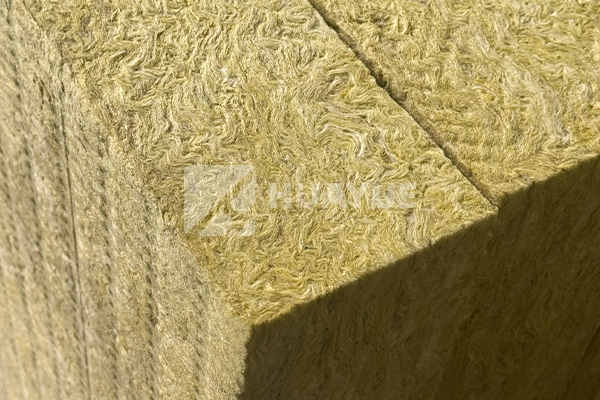
The ATSDR overview of synthetic vitreous fibres separates mineral wool—which includes stone wool and slag wool—from asbestos. NIOSH likewise identifies rock wool as a man-made mineral fibre produced from molten rock. Rock wool board does not “become asbestos” because it ages, gets dusty, or resembles another fibrous insulation.
The important qualification is the age and identity of the assembly. Historical sprayed fireproofing and insulation formulations were not always a single clean material. An EPA archive document records that some insulation materials consisted of mixtures of asbestos and rock-wool fibres. That does not mean a current commercial rock-wool board contains asbestos, and it does not identify any particular SinoInsulation product. It means that an old, unidentified, mixed, or damaged building material cannot be classified safely from a photograph or a casual name.
For newly purchased material, ask for the current product identity, composition statement or SDS, revision date, and any required project declaration. Do not transfer an “asbestos-free” statement from one product, brand, batch, or document to another without matching scope. If the project involves an existing building, follow EPA guidance on identifying asbestos: do not disturb suspect material unnecessarily, do not take a casual DIY sample, and use a qualified asbestos professional and laboratory when testing is needed.
That distinction is also why normal installation precautions for mineral wool do not replace asbestos controls. Mineral-wool fibre irritation and asbestos exposure are different evidence and safety questions. Treat each according to the material identity and the work being planned.
What Are the Disadvantages of Rock Wool Insulation Boards?
Board-specific limitations appear at joints, edges, fixings, handling points, and changes in geometry—not only in the mineral fibre itself.
Rock wool insulation boards can be a poor fit when the surface is curved, the board cannot be properly supported, the facing conflicts with the assembly, or the available evidence does not match the required use. The board form needs its own installation review.
The first board-specific issue is rigidity. A panel can provide a defined surface, but a defined surface also creates joints. Corners, penetrations, irregular substrates, cladding attachments, roof edges, and equipment supports need planned cuts and closures. A board that looks suitable on a sample table may be difficult to install without gaps when the real surface has tolerances, movement, or many services.
The second issue is geometry. A flat board is not automatically the right form for a pipe, elbow, vessel, large-radius tank, or broad flexible wrap. Depending on the application, a blanket, pipe section, lamella, batt, or another approved form may reduce fitting problems. This is a form-selection question, not a claim that one material family is always better.
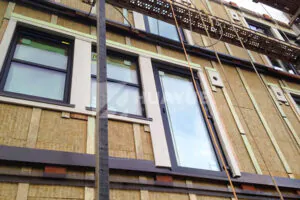
The third issue is that facing and control layers can change the decision. Foil, mesh, tissue, coating, or another facing may affect handling, seams, vapor diffusion, surface protection, fire behaviour, or compatibility with adhesives and membranes. A facing should not be described as a universal vapor barrier, waterproof layer, or fire-rated assembly. Confirm its function within the complete design.
| Board limitation | Buyer consequence | What to confirm |
|---|---|---|
| Rigid panel joints and cut edges | More layout and closure work at openings and penetrations | Dimensions, tolerances, joint detail, and cutting method |
| Support and fixing requirements | Movement or compression can create gaps or damage | Substrate, fasteners, adhesive, retainers, and load path |
| Weight and package handling | Lifting, storage, freight, and overhead installation may need planning | Package mass, coverage, access, and handling instructions |
| Wrong form for curved or irregular surfaces | Offcuts, poor fit, or excessive compression can increase | Board versus blanket, pipe, lamella, batt, or custom form |
| Product evidence does not match the assembly | A board data sheet may not prove a wall, roof, or equipment rating | Product identity, test scope, facing, thickness, and assembly |
The final disadvantage is evidence transfer. A product document for one density, thickness, facing, or test specimen cannot automatically prove another board or the finished construction. For a serious purchase, match the quotation, product label, data sheet, SDS, installation method, and required test or classification report. If those documents do not identify the same product and application, the technical comparison is incomplete.
Conclusion
Choose rock wool board by verified product and assembly evidence. Share the application and approximate use with SinoInsulation for a focused review; dimensions and quantity can follow.