







Mineral wool price varies by product form, specification, quantity, delivery basis, and market.
There is no single global mineral wool price. A comparable quote must identify the product form, thickness, density, facing, coverage, quantity, destination, and whether freight, tax, or installation is included.
The questions below show how to turn a broad price search into a comparable B2B quote.
How Much Does Mineral Wool Cost?
Buyers usually want a number first, but the right number depends on what the quote covers.
For a useful budget, express mineral wool price on a consistent area basis—such as currency per square meter or square foot—after matching the product and cost scope. A retail package figure is not an export or installed price.
The first distinction is the price boundary. A material-only figure may cover the insulation product at the seller’s stated location. A delivered-material figure may add packaging, freight, insurance, local delivery, duty, tax, unloading, or other logistics. An installed figure may also include labor, cutting, access equipment, fasteners, membranes, sealants, cleanup, and inspection. These boundaries can produce very different totals even when the product name looks similar.
The U.S. Department of Energy explains that insulation cost depends on the material type and the required R-value, while retail costs vary widely. That is useful context, but it is not a current global price list. The required R-value itself depends on insulation type and thickness, and the project climate and assembly can change the design target. A buyer should therefore treat any online range as a dated, local benchmark unless the source identifies the product, coverage, currency, and cost scope.
For a small local purchase, the package price divided by the stated coverage can provide a practical material-only reference. As one concrete reference, the current rock wool insulation price per square foot guide records a dated U.S. retail-only snapshot of $1.40–$3.24 per square foot across three named batt listings reviewed on July 17, 2026. That range is not a global mineral wool price, export quote, or installed cost. For a construction order, the more useful benchmark is delivered cost per usable square meter or square foot for the selected product; recheck price, coverage, and scope before use.
Before accepting a number, ask four simple questions: What exact form is quoted? What area or volume does the quantity cover? Which delivery term and destination apply? Which costs are excluded? If the answer to any of these is missing, the “mineral wool price” is not yet comparable.
How Much Does Mineral Wool Cost per Square Foot or Square Meter?
Per-area mineral wool price is calculated from the quoted sales unit and the product thickness, then normalized to the same coverage and delivery boundary.
Per-area mineral wool price is calculated from the quoted sales unit and the product thickness, then normalized to the same coverage and delivery boundary. The formula is simple, but the inputs must be product-specific.
The correct conversion depends on how the supplier sells the product. Use the product’s declared dimensions, thickness, density, pack coverage, and commercial terms rather than substituting a generic value.
| Quoted sales basis | Basic normalization | Buyer must confirm |
|---|---|---|
| Price per piece | Piece price ÷ usable area per piece | Length, width, cutting allowance, and actual usable coverage |
| Price per package | Package price ÷ declared package coverage | Pieces per pack, thickness, compression, and package rounding |
| Price per cubic meter | Price per m³ × thickness in meters | Whether the price is material-only and which thickness applies |
| Price per metric ton | Price per tonne × density in kg/m³ × thickness in meters ÷ 1,000 | Product density, thickness, moisture basis if relevant, and area coverage |
For example, a cubic-meter quote cannot be converted fairly without the thickness. A metric-ton quote cannot be converted fairly without the density and thickness. A pack price cannot be compared with a board price until the package coverage and waste assumptions are visible. The resulting number should be labeled material-only, delivered, or installed; do not blend these scopes into one unlabeled rate.
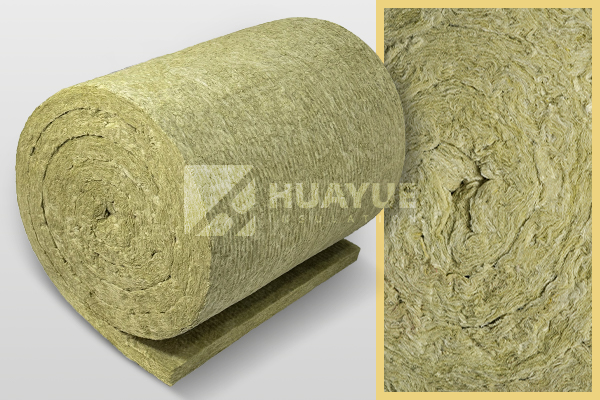
The rock wool insulation sizes guide is useful when a buyer is still deciding between board, batt, blanket or roll, and pipe section. These forms use different measurement systems: a board is normally ordered by thickness, width, and length; a roll by thickness, width, length, and coverage; and a pipe section by pipe outside diameter, insulation thickness, and section length. The same “price per square meter” label can conceal different cutting, packing, and installation assumptions.
For a project estimate, calculate net area first, add only the approved waste or cutting allowance, round to complete packages or order units, and then add the costs excluded from the supplier’s rate. Keep the worksheet fields separate so another reviewer can reproduce the result. This makes the quote auditable and prevents a low package price from hiding poor usable coverage or an incomplete delivery scope.
Is Mineral Wool More Expensive Than Fiberglass?
A comparison is only useful when both materials are matched to the same design requirement and commercial scope.
Often, yes for comparable products, but the difference is not a fixed percentage. Form, thickness, density, facing, order quantity, logistics, and installation scope can widen or narrow the apparent gap.
Mineral wool is often presented as the higher-priced option in consumer and contractor comparisons, while fiberglass is often presented as the lower-cost baseline. That pattern can be directionally useful, but it is not a universal procurement rule. A flexible roll, a rigid board, a high-density acoustic product, and a preformed pipe section are not interchangeable products. Nor are a local retail pack, an ex-works export quote, and an installed wall assembly comparable prices.
Start with the required function, not the material label. The ENERGY STAR insulation guide lists both fiberglass and mineral wool among insulation materials used in different product forms and applications. It also notes that performance depends on installation quality. A product that costs less per package may be a poor comparison if it does not fit the cavity, thickness, fire strategy, acoustic target, service condition, or approved assembly.
Normalize the comparison in this order:
- Match the application and product form, such as wall batt, board, roof board, blanket, or pipe section.
- Match the required thermal or other documented performance basis, including the applicable test method where specified.
- Match thickness, dimensions, facing, quantity, packaging, and usable coverage.
- Convert material-only offers to the same unit, then add freight, duty, tax, accessories, and labor on the same basis.
- Record exclusions and assumptions separately instead of rewarding the quote with the shortest description.
This comparison may show fiberglass as the better budget route, mineral wool as the better fit for a documented project requirement, or a mixed-material design as the most practical answer. The result should come from the project brief and named-product evidence, not from a fixed claim that one material always costs a certain percentage more.
Is Mineral Wool Worth the Extra Cost?
The answer depends on whether the selected product solves a requirement that a lower-cost alternative cannot meet at the same total project cost.
Mineral wool is worth a higher price when its documented product and assembly characteristics solve a project requirement that a lower-cost option does not. If another product meets the thermal target and system requirements, the premium may not be justified.
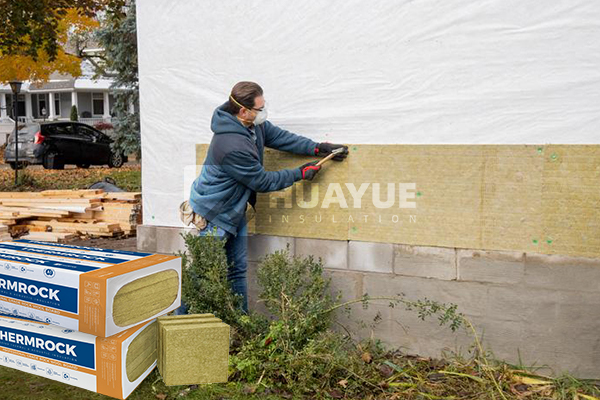
The premium can make sense when the project specification names mineral wool, when the available assembly needs its particular form, or when the design team has documented requirements for fire behavior, acoustic treatment, temperature exposure, moisture management, or dimensional stability. Those are selection reasons, not blanket performance promises. The exact product, thickness, density, facing, test basis, and assembly still need confirmation.
It may not make sense to pay more when the project has a strict material budget, ample space, a straightforward thermal target, and a properly installed alternative that satisfies the same code and design requirements. A cheaper material can also become more expensive if it requires extra thickness, additional layers, more complicated supports, more cutting, or a different installation sequence. Conversely, a premium product does not automatically reduce energy bills, maintenance, or replacement cost; those outcomes depend on the whole assembly, workmanship, climate, use, and operating conditions.
Use a total-cost comparison instead of a product-price comparison. Include the selected insulation, compatible membranes or facings, fasteners and accessories, packaging, freight, duty and tax, site handling, labor, equipment, waste, and any required documents or inspections. Then separate one-time costs from the project’s expected service and maintenance assumptions. The DOE insulation guidance emphasizes that climate and assembly requirements influence insulation decisions, and that air sealing is a separate part of envelope performance.
The most defensible answer is conditional: mineral wool is worth the extra cost when its verified scope aligns with the project’s governing requirement and the normalized total remains acceptable. If the requirement is not defined, the right next step is to clarify the assembly before choosing the cheaper or more expensive material.
What Are the Disadvantages of Mineral Wool?
The main cost-related disadvantages are a potentially higher upfront price, greater shipment weight, and more careful handling or fitting.
The main cost-related disadvantages are a potentially higher upfront price, greater shipment weight, and more careful handling or fitting. Mineral wool also does not remove the need to design air, moisture, and vapor control for the complete assembly.
First, the material price may be higher than a basic fiberglass option for a comparable coverage target, especially when the selected mineral wool has a denser or more rigid form. Second, weight and package volume can affect freight, unloading, storage, and manual handling. The effect is not fixed: it depends on product density, thickness, pack configuration, order size, distance, and delivery method.
Third, rigid or semi-rigid products can require more accurate cutting and fitting around penetrations, framing, joints, or pipe fittings. Poor fit can create gaps or compression, which means the buyer may pay for material without receiving the intended coverage or assembly result. Installation should follow the named product’s current instructions and safety data sheet; do not assume that a generic mineral-wool label supplies all handling or installation requirements.
Fourth, insulation is not the same as air sealing. ENERGY STAR states that insulation performance depends on installation quality, and DOE guidance treats air sealing as a separate building-envelope measure. A mineral wool quotation should therefore not be treated as a complete air, vapor, water, or fire-control system unless the full assembly and supporting evidence say so.
For procurement, make the disadvantages visible in the RFQ rather than hiding them in a unit price. State the application, form, thickness, density or performance target, facing, net area, quantity, destination, delivery term, packaging needs, required technical documents, and installation boundary. Ask each supplier to list inclusions and exclusions. This gives the buyer a fair basis to compare a mineral wool offer with fiberglass or another insulation material without assuming that the lowest initial number is the lowest project cost.
Conclusion
Define the product and delivery scope before comparing mineral wool price. For a quote, send the application and approximate quantity first; dimensions, destination, and documents can follow.