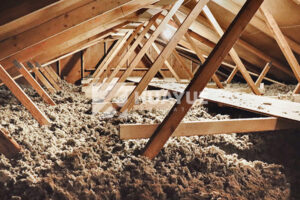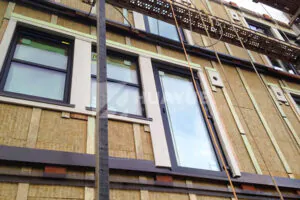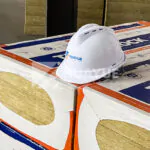





Semi-rigid mineral wool insulation holds its shape while remaining easy to cut and fit, making it useful for walls, roofs, equipment, and selected industrial assemblies.
The main trade-off is practical rather than universal: semi-rigid mineral wool can support thermal, acoustic, and fire-control goals, but it may be heavier, cost more to install, irritate skin during handling, and still require a separate air, vapor, or moisture-control strategy.
The right decision depends on the product form, facing, climate, substrate, service conditions, and the complete assembly. The questions below explain where mineral wool helps, where it has limits, and what a buyer should confirm before approval.
What Is Semi-Rigid Mineral Wool Insulation?
The word “semi-rigid” describes how the insulation behaves during handling and installation, not a universal performance rating.
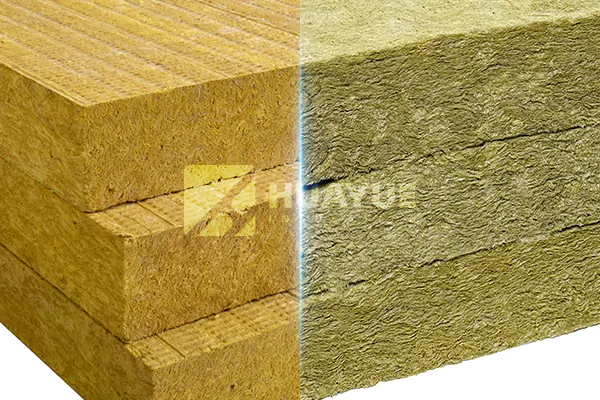
Semi-rigid mineral wool is a shaped mineral-fiber insulation product that is stiffer than a loose blanket but can still be cut, fitted, and adapted to construction irregularities. It may be supplied as boards, slabs, batts, or other engineered forms.
Mineral wool is a family term. It can include rock wool made from rock-based feedstock and slag wool made with furnace slag; it should not be confused with natural wool, fiberglass, or refractory ceramic fiber. A procurement review should therefore name the actual product, form, facing, thickness, density where relevant, and application rather than approving “mineral wool” as if it were one specification.
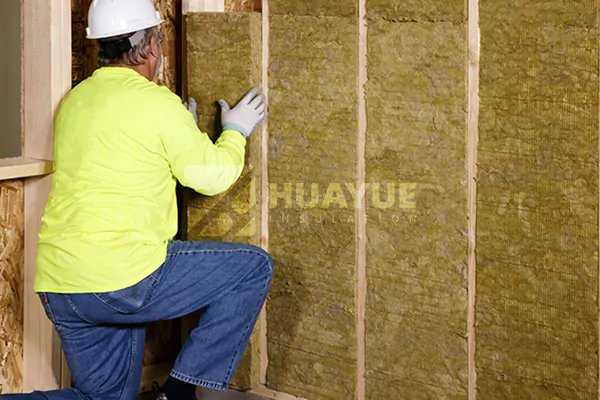
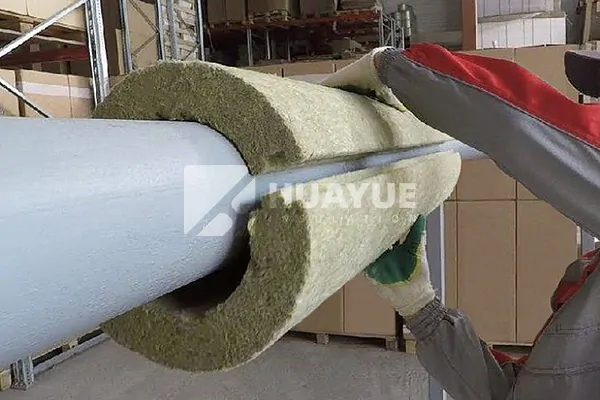
Semi-rigid products are commonly considered where the insulation must stay in place, bridge a defined area, or provide a stable surface for the next layer. Boards and slabs are often reviewed for continuous insulation, cavity walls, roofs, equipment, or panel systems. Batts are considered for framed cavities and partitions. Pipe sections and other shaped forms are selected around equipment geometry. The form changes cutting, support, joints, packaging, access, and inspection.
Semi-rigid does not mean load-bearing, waterproof, self-sealing, or automatically suitable for every temperature or fire requirement. A product may be easy to handle but still need mechanical retention, a jacket, a weather layer, an air-control layer, a vapor retarder, or a tested assembly. The useful starting question is: “What must this insulation do in this assembly?” The material name comes second.
For a quotation or technical submittal, identify the application, product form, available space, target thermal or acoustic outcome, moisture exposure, temperature where relevant, quantity, destination, packing needs, and required documents. This gives suppliers enough context to match the request to a named product and its evidence.
What Are the Downsides of Mineral Wool Insulation?
Mineral wool can be a strong candidate, but its limitations affect estimating, handling, installation, and moisture design.
The main downsides are possible fiber irritation, higher installed cost in some comparisons, greater weight than lighter alternatives, cutting and fitting effort, and the need to design air, vapor, and bulk-water control separately.
The first issue is handling. Cutting or disturbing mineral wool can release fibers or dust that irritate the skin, eyes, or respiratory system. This does not mean every product creates the same exposure, and it does not replace the selected product’s safety data sheet. It does mean installers should avoid unnecessary bare-skin contact, use the controls specified for the product and task, keep the work area ventilated, and clean up without spreading dust.
The second issue is installed cost. A fair comparison includes delivered material, cutting waste, accessories, fasteners, membranes or facings, labor, lifting, storage, documentation, and inspection. Mineral wool may be the better fit when the assembly needs its particular combination of properties, but a lower-cost material may be more suitable when the project is controlled mainly by budget, low weight, or simple installation. There is no responsible universal percentage for how much more mineral wool will cost.
Weight is the third practical limitation. A dense board, slab, or shaped section can increase lifting effort, overhead handling, support requirements, freight weight, and access planning. Product form and density matter, so package weight and fixing requirements should be confirmed from the named product documents before the work is scheduled.
Mineral wool also requires accurate fitting. Gaps, compressed areas, unsupported edges, open joints, and poorly treated penetrations can weaken the intended assembly result. Fibrous insulation should not be treated as an automatic air seal. If the wall, roof, tank, duct, or pipe system needs air control, vapor control, weather protection, or condensation control, those functions must be assigned to the appropriate layer and detailed at joints and penetrations.
Finally, mineral wool is moisture-tolerant in many applications but is not a substitute for leak prevention or drainage. Wet insulation, facings, supports, and adjacent materials require inspection and a project-specific decision on drying or replacement. These limitations do not disqualify mineral wool; they identify the conditions that should be solved before purchase.
How Should Semi-Rigid Mineral Wool Be Selected and Installed?
Selection should start with the assembly and exposure, then move to product form, documents, and installation details.
Choose semi-rigid mineral wool when its verified product data and the complete assembly meet the project’s thermal, acoustic, fire, moisture, space, handling, and documentation requirements; reconsider it when a controlling requirement remains unresolved.
Use this sequence for a practical review:
- Define the assembly. Record whether the product is for a framed wall, roof, floor, façade, equipment, vessel, duct, pipe, partition, or another system. The surrounding layers determine whether vapor diffusion, air leakage, bulk water, condensation, fire exposure, or mechanical support controls the design.
- Select the form. A board or slab may suit a continuous surface; a batt may suit a framed cavity; a pipe section may reduce fitting work around a defined pipe size. Do not substitute one form’s test result for another form without checking scope.
- Confirm the control layers. A facing can change vapor behavior, but a vapor retarder is not automatically an air barrier or waterproof layer. The need and position of a vapor retarder depend on climate, indoor conditions, cladding, service temperature, local requirements, and the intended drying path.
- Plan the installation. Confirm substrate condition, retention, joints, penetrations, edge treatment, weather exposure, access, cutting tools, housekeeping, and the sequence for closing the assembly. A neat fit is part of performance control, not only appearance.
- Match the evidence. Ask for the current product data sheet, safety data sheet, relevant test reports, installation guidance, and any documents required for the project. Check that the named product, form, thickness, density, facing, test method, and assembly scope match the requirement.
The same checklist helps compare mineral wool with glass wool, foam, cellular glass, or rubber foam. Compare equivalent installed systems rather than material names alone. If the project is driven by condensation control on a cold pipe, a faced or jacketed shaped product may be reviewed differently from unfaced cavity batts. If the project is driven by a framed-wall cavity, fit, support, drying, and local code may matter more than a product’s reputation in another application.
A useful RFQ starting point
For an initial inquiry, send the application and approximate operating environment. Add the product form, target performance, dimensions, quantity, destination, packing, and document requirements when available. This keeps the first exchange light while giving the supplier enough information to identify the right product path.
Frequently Asked Questions
These questions address the handling, pest, moisture, and mold concerns most often associated with mineral wool selection.
The short answer: avoid bare-hand contact, do not treat rock wool as rodent-proof, choose vapor control by assembly, and expect mineral wool itself not to feed mold when moisture is managed.
What are the downsides of mineral wool insulation?
The main downsides are possible irritation during cutting and installation, higher installed cost in some projects, heavier handling, careful fitting, and the need for separate air, vapor, and moisture control. The impact depends on the product form and assembly.
Do mice chew through rock wool insulation?
Rock wool is generally less attractive and harder for rodents to use than softer nesting materials, but it is not a guaranteed rodent-proof barrier. Mice may exploit gaps, edges, penetrations, or existing routes. Seal entry points and protect vents, joints, and exposed areas with a suitable physical barrier.
Can I touch mineral wool with bare hands?
Avoid unnecessary bare-hand contact. Mineral wool fibers can irritate skin and eyes, especially when the product is cut or disturbed. Follow the selected product’s SDS and task assessment; use suitable gloves, long sleeves, eye protection, ventilation, and housekeeping controls as required.
Do I need a vapor barrier with mineral wool insulation?
Not automatically. The need, class, and location of a vapor retarder depend on climate, interior humidity, wall or roof layers, cladding, service temperature, local code, and the intended drying direction. Do not add a low-permeance layer simply because the insulation is mineral wool; an incorrectly placed layer can trap moisture.
Will mold grow on mineral wool insulation?
Mineral wool is inorganic and generally does not provide food for mold growth. However, persistent water, condensation, dust, paper facings, wood framing, drywall, or other organic debris around the insulation can still support mold in the assembly. Fix the moisture source, dry affected materials promptly, and inspect the complete system.
Conclusion
Semi-rigid mineral wool works best when its form, handling requirements, control layers, and evidence match the complete assembly. Start an inquiry with the application and operating environment.