







Faced fiberglass insulation needs an assembly decision before it needs a staple gun.
Check that the facing is the intended vapor-control layer, place it on the side specified for the complete assembly, fit the batt at full thickness without gaps, then enclose the facing as the product instructions and local requirements require.

Fiberglass, fibreglass, and fibre glass insulation are common names for the same material family; the correct installation still depends on the exact batt, facing, climate, and wall, ceiling, floor, or roof design. This guide covers the installation decision, not a substitute for the product label or project drawings.
How Does Fiberglass Insulation Work?
Fiberglass insulation slows heat flow by holding still air within its glass-fiber structure.
Its installed thermal performance depends on the intended thickness being kept continuous: gaps, voids, wet material, or unnecessary compression can reduce the result of the insulation layer.
In a faced product, the insulation core and the facing do different jobs. The core supplies the thermal layer. Kraft or foil facing can add an installation tab and, depending on the named product and assembly, a vapor-retarder function. It is not automatically a complete air barrier, water-resistive barrier, fire barrier, or a universal moisture solution.
For an accurate selection, distinguish three questions before work starts:
- Does the cavity need fiberglass insulation, and what full installed thickness can it accept?
- Does the assembly need an attached facing, a separate vapor-control layer, or neither?
- Which layer is responsible for air sealing, bulk-water control, fire protection, and the interior finish?
That separation prevents a common mistake: treating a kraft-faced batt as if it solves every enclosure-control function. The U.S. Department of Energy explains that insulation performance is affected by installation quality, including gaps and compression; air leakage must be addressed as a separate enclosure detail. DOE insulation guidance
What Should You Check Before Installing Faced Insulation?
Start with the complete assembly, the product label, and the cavity—not a universal rule about which way paper should point.
Confirm the application, location, existing layers, cavity size, facing type, moisture strategy, services, and required interior finish before opening the package.
For an exterior wall, attic floor, ceiling, basement wall, garage separation, or roof, map the layers from one side to the other. Note any existing polyethylene, foil-faced foam, closed-cell spray foam, membrane, paint system, or other low-permeance layer. A second vapor-control layer can change how an assembly dries, so it deserves design review rather than an on-site guess.
Inspect the work area for leaks, wet framing, damaged wiring, open penetrations, heat-producing equipment, and conditions that prevent the product from being installed as labeled. Do not conceal a water problem with insulation. Cut batts on a stable surface with the tools and protective equipment specified by the manufacturer’s label and safety documentation.
Use a simple pre-install check:
| Confirm | Why it matters | What to record for a product inquiry |
|---|---|---|
| Assembly and location | Vapor-control position is assembly-specific | Wall, ceiling, attic, floor, or roof use; country/project location |
| Cavity dimensions | The batt must fit at its intended thickness | Framing depth, spacing, and target thermal requirement |
| Existing control layers | Extra facings can restrict drying | Existing membrane, foam, facing, or interior finish |
| Facing and enclosure | Facing type affects fastening and exposure limits | Kraft, foil, other facing, and required finish |
| Services and hazards | Fit and clearance must be maintained | Wiring, piping, fixtures, penetrations, and special assemblies |
Manufacturer guidance remains decisive for the named product. For example, ThermGlas product literature distinguishes unfaced, kraft-faced, and foil-faced batt forms and directs installers to current product instructions and local vapor-retarder requirements; its exact product data remains subject to document review before being used for a project specification.
How Do You Install Faced Fiberglass Insulation?
Install faced fiberglass by fitting the correct batt continuously into the cavity, keeping its intended thickness, and fastening only by the approved method.
Place each batt gently against the cavity sides and back; trim or split it around services, avoid compression and open channels, and use the product-approved friction-fit or stapling method to keep the facing and batt secure.
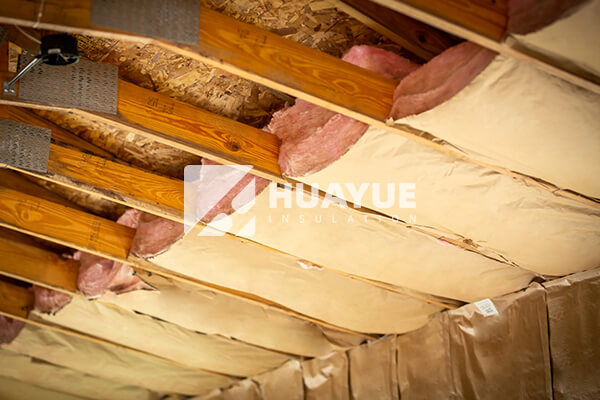
- Measure before cutting. Match the batt width and thickness to the framing cavity. Cut accurately rather than pulling an undersized batt wide or forcing an oversized one into place.
- Fit the insulation continuously. The batt should contact the cavity surfaces without folded edges, large voids, or compression. Small pieces may be needed at headers, corners, and blocking.
- Work around services. Split or cut the batt as the approved detail requires so insulation remains fitted around wires, pipes, and boxes. Do not push the full batt behind an obstruction and leave a gap on the accessible side.
- Set the facing as designed. Follow the assembly decision and the product label. Do not select the direction solely from a warm-side slogan when climate, cooling use, exterior insulation, or interior finishes change the moisture design.
- Fasten only as required. Some faced batts can be friction-fit; products with tabs may be face-stapled or inset-stapled according to their instructions and the required finish. Staples should secure the batt, not stretch torn facing or hide a poor fit.
- Inspect before enclosure. Check all edges, corners, penetrations, facing seams, and service areas. Correct gaps, wet material, damaged facing, or wrong placement while the cavity is still open.
The North American Insulation Manufacturers Association’s homeowner installation guidance likewise emphasizes fitting batts fully and maintaining the facing and support details appropriate to the application. Insulation Institute attic and ceiling guidance
Which Way Should the Facing Go and When Should You Stop?
Facing direction follows the approved vapor-control strategy for the assembly, not the product name alone.
In many heating-dominated framed assemblies, kraft facing is placed toward the conditioned side; however, local code, climate, cooling operation, exterior layers, and existing vapor-control materials can change the correct detail.
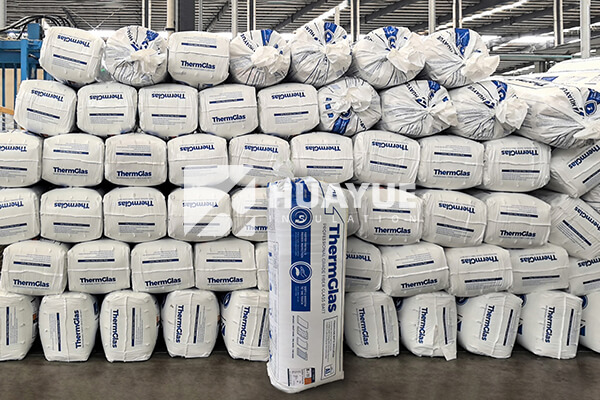
Use the facing only when the assembly calls for it. Do not install faced fiberglass over another faced layer or a separate vapor retarder without confirming the design. Do not use an attached facing as a substitute for an air barrier, drainage plane, waterproofing, or a required fire-protective finish.
Stop and obtain a qualified project decision before closing the cavity when any of these apply:
- The wall, roof, or basement has a moisture history, bulk-water entry, or wet materials.
- There is already a low-permeance layer on the opposite side of the cavity.
- The project is in a humid, mixed, cooling-dominated, below-grade, or otherwise unfamiliar assembly.
- The facing may remain exposed, or the assembly includes a fire, electrical, or special-use requirement.
- The label, local requirements, and drawings appear to conflict.
Kraft-faced insulation should not be left exposed merely because the fiberglass core is noncombustible. Knauf’s current product guidance states that kraft facing is paper-faced, should not be left exposed, and should not be installed over another vapor retarder without reviewing the application. Those instructions are manufacturer-specific, so confirm the equivalent direction for the product actually being installed. Knauf faced vs. unfaced guidance
Frequently Asked Questions
Order a named fiberglass insulation product only after the assembly decision and installation conditions are clear.
A useful request identifies the application and project location first; then it confirms cavity dimensions, thermal target, facing construction, required finish, quantity, packaging, documents, and current installation instructions.
For a B2B request, do not assume every fiberglass, fibreglass, or fibre glass insulation batt has the same facing, fire-exposure condition, width, thickness, or fastening detail. Ask for the current named-product datasheet, label, safety documentation, and installation guide. This is especially important when a quotation involves a kraft, foil, or other faced configuration.
SinoInsulation’s role on this page is to help buyers frame the installation and assembly question, then route technical glass-wool product selection to the relevant specialist review. Send the application and country or project location to start; provide the layer build-up, framing details, facing type, thermal target, quantity, packing, and requested documents as available. That gives the supplier and project team the information needed to evaluate the appropriate product path without presenting an unverified product claim as a design answer. Before approving an order, keep the final product label and installation instructions with the project file so the crew works from the current configuration rather than a generic description.
Does faced fiberglass insulation always need staples?
Not always. Some batts can be held by friction fit, while tabbed products may use approved face- or inset-stapling. Follow the named product’s instructions and the required finish; staples cannot correct an undersized, damaged, or poorly fitted batt.
Can faced insulation be installed over faced insulation?
Do not add a faced batt over an existing faced layer or other vapor-control layer without an assembly review. The combined layers can affect drying and moisture behavior. An unfaced product may be the appropriate alternative when the insulation layer needs no attached facing.
Can paper-faced fiberglass insulation stay exposed?
Do not assume it can. Paper or kraft facing can have exposure and finish restrictions. Check the current product label, the required interior finish, and local project requirements before leaving a faced product visible.
Is fiberglass insulation the same as fibreglass or fibre glass insulation?
Yes. These spellings generally describe the same glass-fiber insulation material family. They do not confirm a particular product form, facing, thickness, thermal value, or installation detail.
Conclusion
Install faced fiberglass only after the assembly, facing role, fit, fastening, and enclosure are confirmed; then inspect the cavity before it is closed.