







Choosing rock wool for soundproofing starts with the noise problem and the construction—not with a universal density or a product name.
The best rock wool is a product whose documented acoustic behavior and installation suit the complete wall, ceiling, floor, or room-treatment design. Rock wool can help absorb sound in a cavity or room, but it cannot make a poorly sealed or rigidly connected construction soundproof on its own.
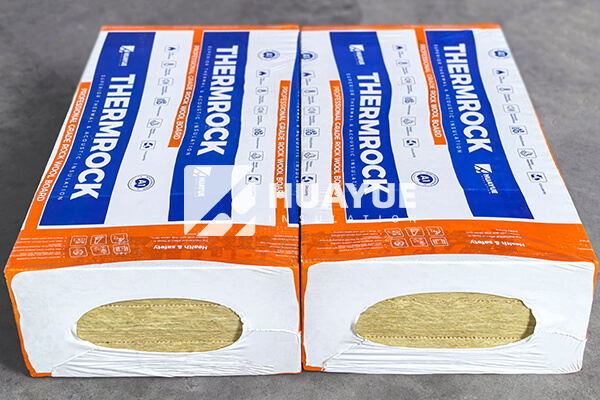
This guide separates sound absorption from sound isolation, then shows what to compare before specifying rock wool soundproofing panels or batts.
Is Rock Wool Good for Soundproofing?
Rock wool can be a useful part of an acoustic solution, especially where a porous absorber is needed in a cavity or as part of a room-treatment panel.
Yes—rock wool is good for soundproofing when it is selected for the actual acoustic task and installed in a suitable system. Its contribution is different from the sound isolation delivered by the complete construction around it.
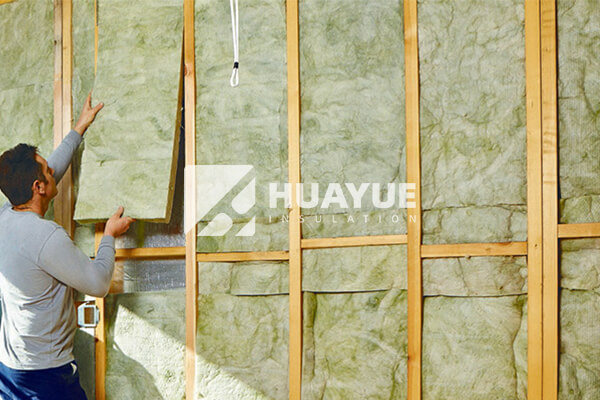
The word “soundproofing” often combines two different goals. Sound absorption reduces reflected sound energy in a room or cavity, which can make a space less reverberant. Sound isolation reduces sound transmitted from one room, enclosure, or building side to another. The two goals can work together, but they are not measured or selected in the same way.
For example, an exposed acoustic panel may use rock wool behind an acoustically suitable cover to control reverberation in a room. Its performance depends on the product, thickness, cover, mounting, air gap, frequency range, and the surface area treated. A wall or ceiling cavity uses rock wool differently: it is one layer inside an assembly that must also manage mass, spacing, connections, joints, services, doors, glazing, and other leakage paths.
The U.S. Federal Highway Administration notes that cavity partitions, acoustic blankets, resilient attachments, added mass, and sealing all affect sound attenuation. That is why a material-only claim is not enough for a partition specification. A cavity fill may help the assembly, while an untreated perimeter gap, rigid bridge, or duct path can still limit the finished result. Its construction guidance is a useful reminder to evaluate the system rather than one layer in isolation.
Use rock wool where the available product data and assembly design support the stated job. Do not expect it alone to solve low-frequency vibration, impact transmission, structure-borne equipment noise, or leakage through openings. Those problems may require decoupling, added mass, resilient supports, isolation details, sealing, or a separate vibration-control design.
Which Rock Wool Is Best for Sound Insulation?
The best option matches a defined source, receiver, frequency concern, construction depth, mounting method, and tested assembly or product-data scope.
Do not choose by density alone. Compare rock wool products at the intended thickness and installation, then verify the relevant test report or assembly documentation before treating a result as a project requirement.
The most helpful first question is: what sound are you trying to control? Speech across a partition, reverberation in an equipment room, traffic through an external wall, footsteps through a floor, and vibration from machinery follow different paths. Write down the source, the receiving location, the construction type, and the desired outcome before asking suppliers to compare products.
For a wall, ceiling, or floor, begin with the complete construction. A credible comparison should identify the board layers, framing or joists, cavity depth, insulation placement, resilient elements, seals, penetrations, doors, glazing, and relevant junctions. When an airborne isolation rating is presented, confirm that it applies to that tested construction—not merely to the rock wool board or batt. The Federal Highway Administration defines STC as a single-number description of attenuation for wall- or panel-type constructions; it is not a universal label for an insulation product. Its glossary also distinguishes absorption, attenuation, and STC.
For room treatment or an exposed panel, compare sound-absorption information under equivalent conditions. Ask how the sample was mounted, whether there was an air gap, which facing or fabric was used, the sample thickness, the frequency results, and the test method. A single-number absorption summary is useful only within its stated test conditions. It cannot prove how a different thickness, facing, mounting depth, or wall system will perform.
Use a short decision table to keep the comparison honest:
| Project question | Evidence to compare | Why it matters |
|---|---|---|
| Is the goal room absorption or separation between spaces? | Defined acoustic objective and receiver location | Prevents using an absorber as though it were a complete isolation system |
| What form is needed? | Board, batt, blanket, panel design, or cavity-fill compatibility | Ensures the product can be installed as designed |
| How will it be installed? | Thickness, cavity depth, facing, mounting, and support detail | These conditions can affect acoustic behavior and fit |
| What will the completed system achieve? | Complete assembly description and applicable acoustic documentation | Keeps project performance claims at assembly scope |
| What could bypass the material? | Gaps, joints, penetrations, ducts, doors, glazing, and structural bridges | Identifies flanking and leakage risks before installation |
The word “panel” should also be clarified. Rock wool soundproofing panels may mean rigid rock wool boards used inside a wall, an acoustic treatment panel made from several components, or a supplier’s named product. Ask for the exact construction and test scope rather than assuming the label guarantees the same result in every application.
How Should You Specify Rock Wool Soundproofing Panels?
Specify the acoustic task and construction first; then request comparable product data, the matching assembly evidence, and installation details that protect the design intent.
A useful specification identifies the intended application, product form, thickness limit, facing or cover, support method, and required acoustic documentation—while keeping any claimed rating tied to the tested product or complete assembly.
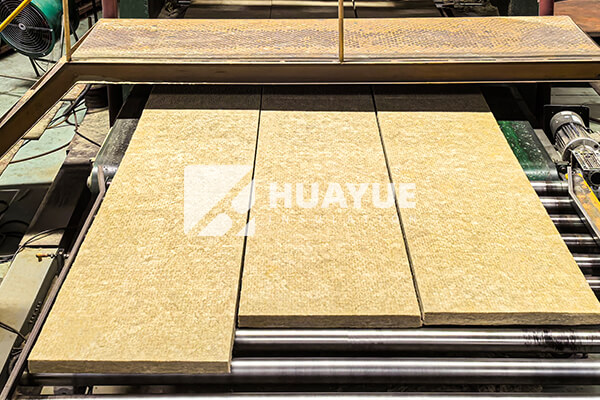
Density can be included in a specification when it is relevant to the named product, handling, fit, support, or the applicable test document. It should not be used as a stand-alone promise that a denser product will always absorb more sound or block more noise. Changes in thickness, airflow behavior, mounting, facings, and the construction around the material can change the result. The sensible choice is the product with evidence for the intended use, not automatically the heaviest option.
Before approval, request the product identity, current data sheet, intended thickness, dimensions, facing, mounting method, acoustic test method and conditions, and any assembly document that supports the proposed construction. For partitions and ceilings, compare the drawing with the tested or engineered configuration. If the project involves moisture, fire, exposed surfaces, hygiene, mechanical loads, or service-temperature requirements, review those requirements separately; an acoustic document does not establish all other performance properties.
Installation deserves the same attention as material selection. Keep cavity fill continuous without unplanned gaps or compression. Coordinate penetrations, electrical boxes, pipe supports, access panels, ducts, perimeter sealing, and junctions before closing the construction. Where a design relies on resilient channels, clips, floating layers, or isolated equipment supports, follow the assembly detail closely; a hard connection can create a path around the intended acoustic layers.
For a supplier inquiry, start with the application and approximate construction depth. Then add the sound source, drawing or section detail, target documentation, dimensions, quantity, destination, and any facing or environmental requirements when available. This provides enough context to identify a suitable rock wool form without making a universal performance promise.
Conclusion
The best rock wool suits the acoustic task and a well-sealed assembly. Share your application and construction depth to begin a focused product discussion.