







Old fiberglass insulation does not become ineffective on a fixed birthday, but its condition and installation still determine whether it is doing its job.
Fiberglass insulation has no universal expiry date. Evidence from wall batts used for 31–54 years shows that old material can remain intact and thermally functional. Keep it only when it is dry, properly fitted, uncontaminated, and suitable for the required assembly performance.
The useful question is therefore not simply “How many years old is it?” It is “What has happened to it, and does the installed assembly still meet the building’s needs?”
Does Fiberglass Insulation Degrade Over Time?
Age alone tells you very little about the condition of fiberglass insulation inside a wall, ceiling, or attic.
Fiberglass does not have a standard age at which it suddenly goes bad. Long service is possible, but no single study or generic lifespan estimate can guarantee the performance of every product, installation, or building assembly.
The best direct evidence is more useful than an unsupported “80–100 years” promise. In a 2017 evaluation commissioned by the North American Insulation Manufacturers Association, Home Innovation Research Labs tested eight fiberglass batt samples removed from residential exterior walls. The samples had served for 31 to 54 years, with an average service duration of 40 years.
The measured average R-value was 95.5% of the labeled R-value across the eight samples. The batts were intact, retained their thickness, and could withstand removal, shipping, and laboratory handling. This shows that fiberglass insulation can remain functional for several decades under real building conditions.
The study also states an important limitation: the original installed R-values were unknown. Its results cannot isolate the effect of aging or prove that every 40-year-old batt retains a particular percentage of its initial performance. The sample was small, covered specific wall batts, and did not test every product form or exposure condition.
That makes “no automatic expiry date” a defensible conclusion. It does not make “all fiberglass lasts a lifetime” a defensible guarantee. Loose-fill fiberglass, faced batts, duct insulation, industrial products, and material exposed to leaks or repeated disturbance need their own condition and system assessment.
What Actually Makes Fiberglass Insulation Go Bad?
Most practical failures come from moisture, contamination, compression, gaps, or physical disturbance rather than the passage of time by itself.
Fiberglass insulation has effectively gone bad when it can no longer provide the required coverage, thickness, cleanliness, or assembly performance. The cause may be a leak, pests, damage, poor installation, or changed project requirements—not simply age.
The following conditions change the decision:
| Condition | Why it matters | Appropriate response |
|---|---|---|
| Wetness, water staining, mold, or persistent odor | Water can affect the insulation and adjacent porous materials; contamination may make recovery inappropriate | Stop the moisture source and obtain a qualified assessment; replace affected material where required |
| Compression or lost thickness | Compressing a fiberglass batt below its labeled thickness reduces its overall R-value | Check the installed depth against product information; correct or replace affected sections |
| Gaps, voids, or misalignment | Heat can bypass insulation that does not fill and align with the intended cavity | Refit, patch, or reinstall so the cavity is continuously covered |
| Pest nesting, droppings, or torn material | Contamination and displaced fibers cannot be judged by age alone | Control the pest source and assess the affected area for safe removal and replacement |
| Renovation or repeated access damage | Foot traffic, wiring work, pipe repairs, and stored items can move or flatten insulation | Inspect after work and restore the intended coverage before closing the assembly |
ENERGY STAR guidance for existing attics tells users to look for wet or damp insulation, mold or rot in nearby framing, and insufficient insulation depth. Its installation guidance also emphasizes that batts should fill cavities without gaps, voids, or compression. These are observable performance conditions, unlike a generic number of years.
An energy-bill increase, draft, or uncomfortable room can justify an investigation, but none proves that old fiberglass is the cause. Air leakage, HVAC operation, windows, moisture, and other envelope defects can produce similar symptoms. Diagnose the building rather than assigning every problem to insulation age.
Is 20-, 30-, or 50-Year-Old Fiberglass Insulation Still Good?
An old installation may still be usable, but a visual glance or the construction date alone cannot confirm its current thermal performance.
Twenty-, thirty-, or fifty-year-old fiberglass can remain serviceable when it is dry, intact, correctly positioned, and thick enough for the current requirement. Inspect its condition and the full assembly before deciding to keep or replace it.

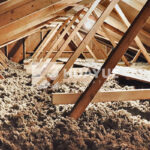
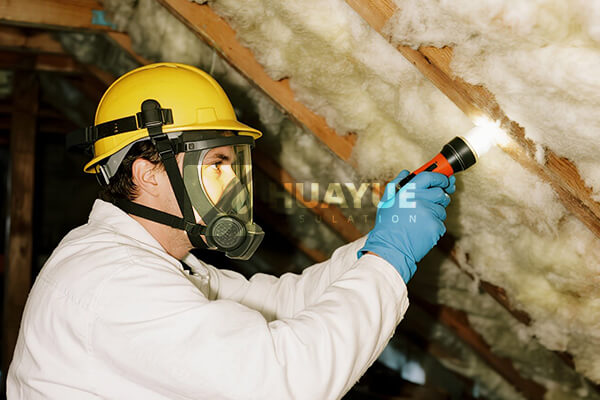
Start with accessible areas and document what you find. Look across the full insulated plane rather than examining one clean sample. Record signs of water entry, staining, damaged facings, missing sections, compression, sagging, animal activity, and work performed since installation. In an attic, compare insulation depth across several locations and check whether material has been moved away from hatches, eaves, wiring routes, or service areas.
Then separate material condition from current design requirements. Insulation may be physically intact yet provide less thermal resistance than a renovation, code, owner standard, or energy target now requires. That is not the same as the fiberglass “expiring.” The existing layer may sometimes remain while the assembly is upgraded, provided moisture, air-sealing, electrical, fire-safety, access, and compatibility issues are resolved by the project team.
Hidden wall insulation is harder to judge. Do not open finished construction casually or disturb unknown old building materials without an appropriate plan. An energy assessment, infrared survey under suitable conditions, targeted inspection opening, or contractor evaluation can help identify missing coverage and moisture risks. Each method has limitations, so conclusions should be tied to the inspected location and conditions.
For commercial or managed properties, retain photographs, product labels where visible, repair history, leak records, and any available drawings or specifications. This creates a better replacement decision than an assumed installation date alone and helps buyers avoid purchasing a complete replacement when only a limited damaged area requires work.
When Should Fiberglass Be Kept, Repaired, Added To, or Replaced?
The right action depends on whether the existing material is sound and whether the complete assembly still meets its intended requirement.
Keep dry and intact insulation that remains suitable. Repair displaced sections, add compatible insulation when more performance is required, and replace material that is wet, contaminated, badly compressed, damaged, or impossible to verify for the intended use.
Use this sequence before specifying replacement:
- Define the problem. Confirm whether the concern is age, water damage, comfort, energy use, a renovation target, or a documented performance shortfall.
- Inspect the assembly. Check coverage, installed thickness, alignment, facings, supports, penetrations, moisture evidence, contamination, and adjacent materials.
- Correct the cause. Repair leaks, manage condensation, control pests, and plan air sealing or access work before adding new insulation.
- Choose the intervention. Preserve sound areas, refit or patch local defects, add an appropriate layer when the design allows it, or remove and replace affected material.
- Verify the result. Confirm that the final insulation type, thickness, facing, installation, and documentation match the project requirement.
Water damage deserves a conservative response. U.S. EPA water-damage guidance lists fiberglass insulation among porous materials that may need to be discarded, and EPA guidance for fiberglass duct material recommends replacement when it is wet, visibly moldy, or has an unacceptable odor. The affected area and safe removal method should be determined from the actual water source, contamination, product form, and assembly—not from a generic lifespan article.
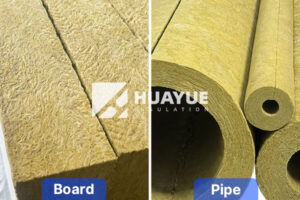
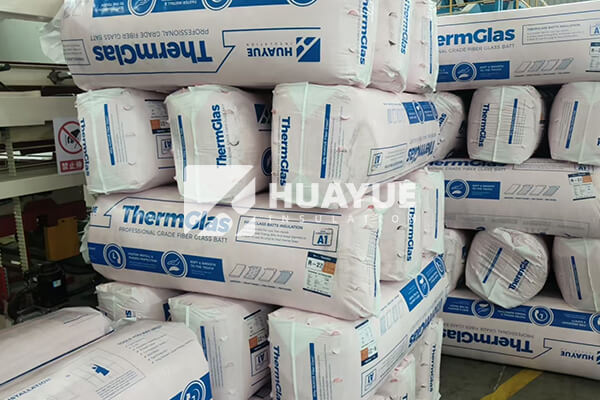
If new material is needed, match it to the application rather than ordering “fiberglass insulation” as a single interchangeable product. Batts, blankets, boards, loose-fill products, and pipe or duct insulation have different installation and documentation needs. SinoInsulation provides broad material education; detailed glass-wool form and specification review belongs with the ThermGlas product system.
For an initial product discussion, share the application and required insulation form. Dimensions, target performance, facing, quantity, destination, and document needs can follow as the selection is narrowed.
Conclusion
Fiberglass insulation has no fixed expiry date. Judge it by verified condition and assembly requirements, then keep, repair, add to, or replace only where needed.