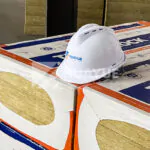








Blow-in rock wool is loose-fill rock wool delivered through a blowing machine; standard boards and batts cannot simply be blown into a cavity.
Yes—rock wool can be blown in when it is manufactured and documented as loose-fill or blowing wool. Rock wool boards, batts, and rolls are different forms and should not be fed into a blowing machine.
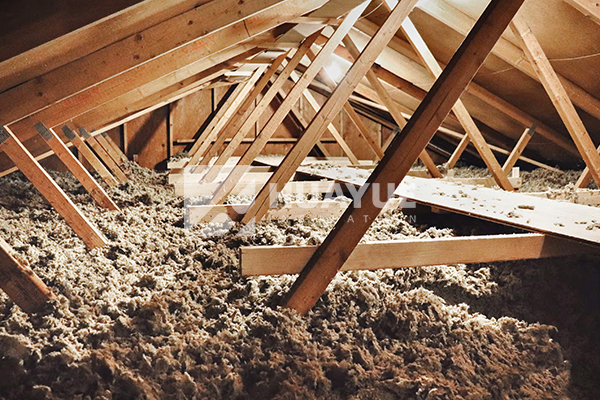
That distinction matters because “blown-in” describes the installation method, while rock wool describes a material family. The right choice depends on the product form, installed density, assembly, access, moisture strategy, and project documents.
Can ROCK WOOL insulation be blown-in?
The answer depends on the product form, not the words “rock wool” alone.
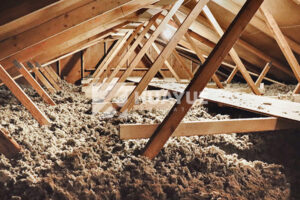
A dedicated loose-fill rock wool product can be blown into suitable attics, wall cavities, ceilings, and other spaces; standard board, batt, and roll products cannot.
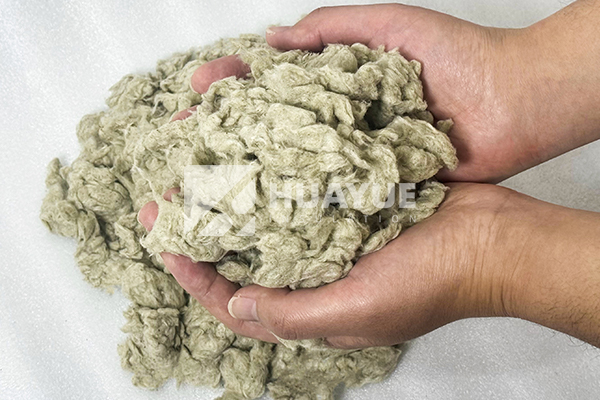
“Blown-in” and “loose-fill” are closely related terms, but they describe different parts of the same decision. Loose-fill is the physical form: small fibers or granules supplied without the rigid shape of a board or the continuous shape of a roll. Blown-in describes how that material is moved into the target space, normally with a blowing machine, hose, and a product-specific installation method.
The U.S. Department of Energy’s Building America guidance lists mineral wool among the materials that may be used as blown-in, loose-fill fiber. The CDC/NIOSH description of mineral wool fiber also distinguishes rock wool as a manmade mineral fiber produced from molten rock. These sources support the category distinction, not a universal specification for every supplier.
In practice, the named product document should answer four questions before a buyer approves the method:
- Is the product designed for dry blowing, dense packing, spray application, or another method?
- Is it intended for an open attic, a closed wall cavity, a ceiling, or a different space?
- What installed density, thickness, coverage, and settlement allowance apply?
- What equipment, installer skill, support, ventilation, and clearance conditions are required?
This is why a quotation should say “rock wool loose-fill” or “rock wool blowing wool” when that is the requirement. A request that only says “rock wool insulation” could be answered with a board, batt, blanket, pipe section, or loose-fill product. For a broad form overview, use the SinoInsulation rock wool range and then confirm the loose-fill route against the current named-product documents.
Is ROCK WOOL better than blown-in insulation?
The comparison is not exactly like-for-like because one term identifies a material and the other identifies an installation method.
Rock wool is not automatically better than blown-in insulation. Compare loose-fill rock wool with blown-in fiberglass or cellulose against the project’s thermal, fire, acoustic, moisture, access, cost, and documentation requirements.
“Blown-in insulation” may mean loose-fill fiberglass, cellulose, mineral wool, or another product. A better comparison therefore starts by naming both the material and the form. The useful question is not “rock wool or blown-in?” but “which loose-fill product can meet this assembly’s requirements at the required installed density and thickness?”
| Decision factor | Loose-fill rock wool may fit when | What still needs confirmation |
|---|---|---|
| Irregular spaces | The material must reach awkward edges, voids, or areas where cutting batts would create waste. | Coverage, access, installation method, and inspection plan. |
| Fire-related design | The project is considering a mineral-fiber option for a fire-sensitive assembly. | The named product’s reaction-to-fire data and the complete tested assembly. |
| Thermal target | The product can meet the target at its documented installed density and thickness. | Test method, mean temperature, density, thickness, and local code. |
| Acoustic work | The loose-fill material is part of a cavity or ceiling design where absorption is useful. | The full construction, seals, penetrations, and tested acoustic result. |
| Moisture control | The assembly can keep the insulation dry and provide the required vapor or water-control layers. | Climate, service condition, facing or jacket, joints, and drying path. |
| Commercial practicality | The market has suitable products, equipment, installers, and delivery options. | Current availability, equipment cost, labor, freight, and replacement access. |
Loose-fill can provide useful coverage in irregular spaces, but coverage is not the same as an air seal. The DOE guide describes blown-in fiber as conforming to spaces, while its installation guidance also stresses that air leakage around penetrations and control layers must be addressed separately. The same principle applies to rock wool: the fibers can fill a cavity, but the complete assembly still needs a deliberate air-control strategy.
Fire and acoustic comparisons also need scope discipline. A result for one product sample does not become a rating for every rock wool product, and a material classification does not become a fire-resistance rating for a wall, roof, floor, or penetration. If rock wool is being considered because of fire or sound requirements, ask for the current named-product evidence and the tested construction that matches the project.
For a buyer comparing forms rather than materials, the SinoInsulation batt-versus-blown-in overview can be used as a neighboring route. This article keeps the narrower responsibility: deciding whether the loose-fill rock wool form is the right material-and-method combination.
What are the downsides of using ROCK WOOL insulation?
Rock wool can be useful in loose-fill form, but the benefits do not remove handling, installation, moisture, or documentation trade-offs.
The main rock wool trade-offs are fiber exposure during handling, equipment and installer dependence for loose-fill, possible weight and logistics differences, and the need for separate air, vapor, and moisture control.
First, fibrous insulation needs sensible work controls. Cutting, moving, or blowing mineral fibers can create dust or airborne fibers, and the OSHA synthetic mineral fibers guidance provides exposure-limit context for mineral wool fibers. The correct controls depend on the task, workspace, product safety data sheet, local rules, and exposure assessment. Buyers should not turn a general article into a universal respirator or PPE prescription; they should require the installer to follow the applicable safety program.
Second, loose-fill rock wool is dependent on the installation method. It may require a suitable blower, hose, trained labor, access planning, and a way to confirm the installed coverage. If the local contractor market does not support the selected product, a technically suitable material may still be impractical for the job. A board, batt, blanket, or another loose-fill material may be easier to source or repair, depending on the application.
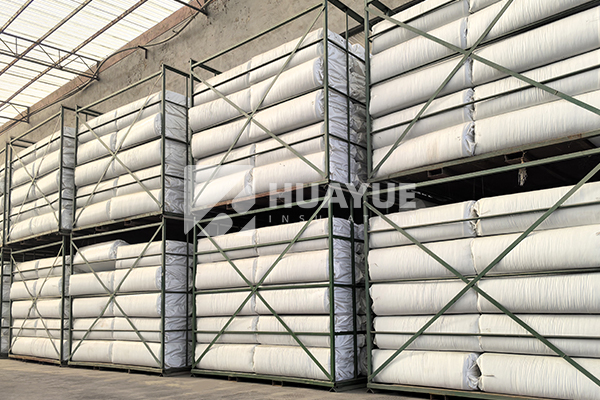
Third, product form affects handling and logistics. Dense rock wool products can be heavier to lift or support than lighter alternatives, but loose-fill comparisons should use the named product’s bag weight, installed density, coverage, and freight details rather than a generic “rock wool is heavy” statement. These fields also affect storage, loading, labor, and the amount of material needed to reach the design thickness.
Fourth, rock wool does not automatically solve the other control layers. It is insulation, not a universal air barrier, vapor retarder, waterproofing layer, or fire-resistance-rated assembly. In an attic, wall, ceiling, pipe, or equipment system, the surrounding air, vapor, water, support, and protection details still matter. The broader mineral-wool disadvantages guide covers material-level trade-offs; this page should remain focused on the additional decisions created by loose-fill installation.
For procurement, the practical response is to compare installed systems rather than material names. Request the current product data sheet, installation table, safety data sheet, and any relevant test report for the exact loose-fill product. Keep exact density, thermal values, fire classifications, emissions, packaging, and availability tied to the named product and approved documents.
What are the downsides of using blown-in insulation?
Blown-in insulation can reach irregular spaces efficiently, but the method introduces control points that are easier to miss than with an exposed batt or board installation.
Common blown-in drawbacks include machine dependence, harder visual inspection after enclosure, sensitivity to installed density and coverage, separate air-sealing work, and material-specific moisture or settling risks.
The first drawback is access and equipment. A blower, hose route, loading area, power supply, and appropriate installer may be needed. Open attic blowing and closed-cavity dense packing are not the same operation. A wall retrofit may require controlled access openings and a method for checking that the cavity is filled without blocking wiring, services, ventilation, or other required clearances.
The second is verification. Once a cavity is closed, the buyer may not be able to see whether the material reached every corner, achieved the intended density, or avoided voids. This makes the installation record and coverage calculation more important. The DOE renovation guide explains that loose-fill can improve coverage in irregular spaces, but it also warns that installation density and placement affect performance. An underfilled or poorly distributed layer should not be treated as equivalent to the same nominal depth installed correctly.
The third is settlement or movement risk, which depends on the material, application, density, cavity orientation, and installation method. Do not use a generic settlement percentage for every loose-fill product. Ask for the named product’s installation table and distinguish nominal thickness, minimum installed thickness, settled thickness, and coverage. If those fields are missing, the buyer cannot make a reliable quantity or performance comparison.
The fourth is that blown-in insulation is not an air-sealing shortcut. Seal major penetrations, joints, access hatches, and other leakage paths with the specified air-control materials before or during the insulation work. In a vented attic, preserve required ventilation paths and clearances around heat-producing equipment and electrical components. The exact details depend on the local code and assembly, so a blowing machine cannot replace design review.
Finally, moisture behavior belongs to the material-and-assembly combination. A loose-fill product that becomes wet, is exposed to wind, or is installed where vapor control is missing may not deliver the intended result. Keep the enclosure dry, manage water and vapor movement, and confirm the product’s handling and recovery instructions before closing the cavity. These limitations do not make blown-in insulation a poor choice; they define the controls needed to use it responsibly.
Is ROCK WOOL still asbestos?
The question usually comes from confusion between several fibrous insulation materials and from uncertainty about older loose-fill products.
No—rock wool and asbestos are different materials. Rock wool is a manmade mineral fiber made from molten rock; an unknown older insulation should still not be identified by appearance or disturbed without appropriate assessment.
The CDC/NIOSH Pocket Guide lists rock wool as a manmade mineral fiber produced by blowing steam or air through molten rock. Asbestos is a separate group of naturally occurring fibrous minerals. The material names may both include “wool” or “fiber,” but that does not make them the same substance.
The safety step is different for a known current product and an unidentified existing material. For a current procurement, ask for product-specific composition information and any required asbestos statement or test report, making sure the document names the product and applies to the supplied form. Do not convert a standard reference or a supplier’s general statement into proof for every product in a category.
For renovation, appearance is not enough. The U.S. EPA’s vermiculite guidance explains that some vermiculite insulation may be contaminated with asbestos and should not be disturbed casually. That warning concerns vermiculite, not rock wool, but it is an important reminder that old loose-fill materials can be misidentified. If the existing insulation is unknown, damaged, or likely to be disturbed, stop work and use a qualified asbestos professional or an appropriately accredited laboratory process required in the project jurisdiction.
One more procurement detail matters: <code>ROCKWOOL</code> may refer to a trademarked brand, while <code>rock wool</code> is the generic material term. SinoInsulation’s rock wool and mineral wool terminology guide explains why an RFQ should state whether it requires a particular brand, generic rock wool, or an approved equivalent. This article does not imply that SinoInsulation supplies the ROCKWOOL brand.
Conclusion
Choose loose-fill rock wool only when its product form, installation controls, assembly requirements, and documents match the job. Share the application and approximate operating condition for a focused product route.