






Yellow fiberglass is common, but color alone cannot identify a product’s performance, composition, safety status, age, or manufacturer.
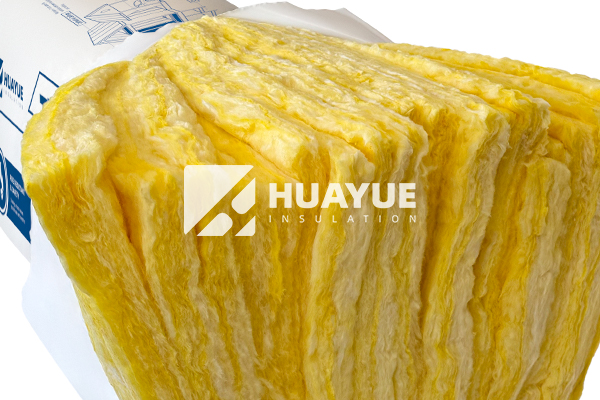
Yellow fiberglass insulation is glass-fiber insulation with a yellow appearance. The color may help with visual recognition, but buyers should use the product label, datasheet, test scope, dimensions, facing, and installed condition—not color—to identify it, compare performance, or decide whether old material is safe to disturb.
Fiberglass insulation, fibreglass insulation, and fibre glass insulation are spelling variants. This guide focuses on what yellow color can—and cannot—tell owners, contractors, and B2B buyers.
What Is Yellow Fiberglass Insulation?
Yellow fiberglass is a visual description within the wider fiberglass insulation family, not a separate technical grade or guaranteed formulation.
Fiberglass is a synthetic material made from fine glass fibers and widely used for insulation. Yellow, pink, and white can all be associated with fiberglass products, but a color does not establish the exact product form, binder, facing, thermal value, fire result, emissions result, or intended application.
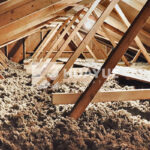
CDC/NIOSH describes fibrous glass as synthetic fiber made from tiny particles of glass and notes its use in insulation. In a visual attic-inspection guide, ENERGY STAR lists lightweight yellow, pink, or white fibers as probable fiberglass. “Probable” is the important boundary: color is a useful clue, not conclusive identification.
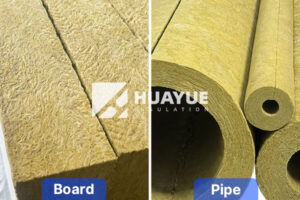
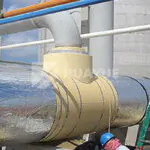
Yellow material may appear as batts, rolls, loose fibers, boards, pipe sections, duct insulation, or faced products. Those forms are not interchangeable. Their dimensions, density, thermal data, handling instructions, facings, installation methods, and test documents may differ even when their color looks similar. Conversely, products in different colors may serve the same general application while still requiring product-by-product approval.
When identifying installed material, start with any label, packaging, specification, invoice, maintenance record, or manufacturer document. Record the location, product form, facing, approximate dimensions, physical condition, and whether the color is uniform or newly changed. Do not infer a brand from color. Do not infer that yellow proves a particular binder chemistry, recycled content, formaldehyde status, fire classification, acoustic rating, or R-value.
For new procurement, write “yellow” as an appearance requirement only when color matters for identification or customer preference. Keep it separate from performance and compliance requirements. If color acceptance is important, use an approved physical sample and define how batch-to-batch appearance will be reviewed; photographs and screen displays can shift color.
Does Old Yellow Fiberglass Insulation Contain Asbestos?
The age and yellow appearance of insulation cannot confirm whether it contains asbestos, so uncertain material should not be sampled or disturbed casually.
Old yellow insulation may be fiberglass, but color and texture cannot rule asbestos in or out. The U.S. EPA says suspected material cannot be identified by sight alone. If records are missing and renovation or damage may disturb it, use a trained, accredited asbestos professional for assessment and sampling.
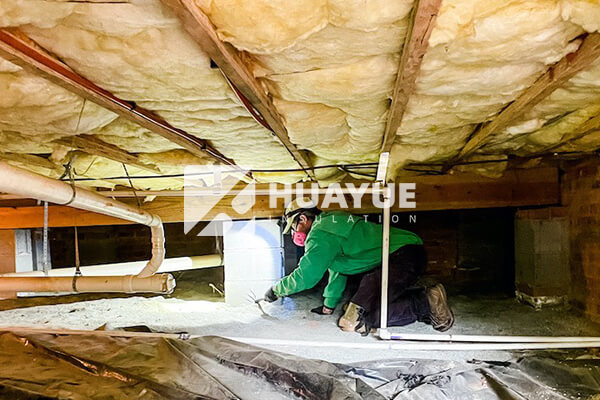
The U.S. EPA’s asbestos guidance advises treating uncertain material as potentially asbestos-containing and leaving it alone when possible. EPA also warns that taking a sample incorrectly can release fibers and be more hazardous than leaving the material undisturbed. This means a photograph, building age, yellow color, or “cotton-like” description is not enough for a safe yes-or-no conclusion.
Use a risk-based sequence instead:
- Check building records, product labels, renovation documents, and the installed location.
- Determine whether the material is intact and whether planned work will cut, remove, drill, scrape, or otherwise disturb it.
- If the material is damaged, unlabeled, or likely to be disturbed, stop work around it and follow local asbestos rules.
- Have any required inspection and sampling completed by appropriately trained and accredited professionals, with analysis by a qualified laboratory.
- Use the professional result—not appearance—to plan retention, repair, encapsulation, or removal.
Even confirmed fiberglass deserves controlled handling. NIOSH notes that fibrous-glass exposure can affect the eyes, skin, and lungs, and that risk depends on dose, duration, and the work being performed. Buyers and contractors should obtain the current Safety Data Sheet and installation instructions for the identified product, then apply the employer’s exposure-control program and applicable local requirements.
Age alone also does not decide whether fiberglass must be replaced. Inspect the complete assembly for moisture, compression, gaps, contamination, pest activity, damaged facing, heat exposure, and air leakage. The correct action depends on the material identity, condition, project scope, and governing rules—not on a generic lifespan claim.
Does Yellow Color Change Insulation Performance?
Color is not a thermal, acoustic, fire, moisture, emissions, or durability measurement and should never substitute for product-specific evidence.
Yellow fiberglass is not automatically better or worse than pink, white, green, or brown insulation. Compare the exact product and thickness using declared or tested data, the relevant test method, application limits, installation instructions, and the surrounding assembly. Similar color does not mean equivalent performance.
The U.S. Department of Energy’s insulation fact sheet explains that an insulation material’s R-value depends on its material type, thickness, and density. Installation quality and the complete building assembly also matter. Color is not one of those performance variables.
Use this comparison framework when reviewing yellow fiberglass offers:
| Decision field | What color can show | Evidence that should govern the decision |
|---|---|---|
| Product identity | A visual appearance clue | Manufacturer, exact designation, label, form, and intended use |
| Thermal performance | Nothing conclusive | Declared R-value or thermal conductivity, thickness, units, test method, and conditions |
| Fire performance | Nothing conclusive | Named product or assembly, test standard, classification or result, facing, and scope |
| Acoustic performance | Nothing conclusive | Tested product or assembly, thickness, mounting conditions, frequency data, and project target |
| Moisture control | Nothing conclusive | Assembly design, facing or vapor-control properties, exposure limits, and installation details |
| Health and emissions | Nothing conclusive | Current SDS, composition or emissions documents, product identity, and applicable requirements |
| Dimensions and packaging | Approximate visual cues only | Datasheet, tolerances, pack coverage, compression details, labels, and receiving inspection |
Avoid comparing a generic R-value-per-inch range with a supplier’s named product as though they have the same scope. Likewise, a report for one sample, thickness, density, facing, plant, or assembly does not automatically cover another yellow product. Check the report number, sample description, issue date, test method, declared result, legal entity, manufacturing site where relevant, and any stated limitations.
Installed performance can also fall short when batts have gaps, voids, compression, or poor fitting around services. Approval should therefore cover both the product evidence and the installation or inspection plan. A color match may be useful for appearance, but it is not a substitute for either review.
How Should Buyers Evaluate Yellow Fiberglass Products and Suppliers?
A useful RFQ converts the color-led search into a named product, documented requirement, comparable offer, and controlled approval process.
Tell suppliers the application, product form, required performance, dimensions, facing, quantity, destination, packing, and documents. Ask each supplier to identify the exact offered product and every deviation. Specify yellow only as a separate appearance requirement, then qualify the product and supplier through traceable evidence.
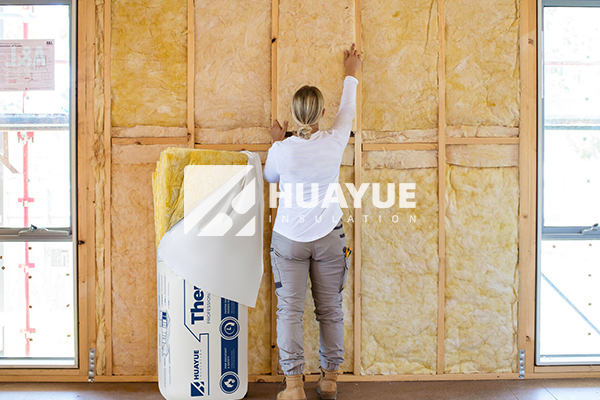
Begin with the application: building envelope, interior partition, roof, HVAC, duct, pipe, equipment, or another defined use. Then state whether the requirement is for batts, rolls, blankets, boards, pipe sections, loose fill, or a faced product. A broad request for “yellow fiberglass” can attract offers that are visually similar but technically incomparable.
Include these fields in the RFQ and submittal review:
- Exact product designation, manufacturer, manufacturing site where relevant, and intended application.
- Required thermal, acoustic, fire, moisture, emissions, or mechanical evidence, with the governing project or market requirement.
- Thickness, width, length, density or grade where relevant, facing, edge detail, tolerances, and approved color sample if needed.
- Current datasheet, SDS, installation instructions, test reports, declarations, and certificates required for review.
- Quantity, pack coverage, compression or recovery information, labeling, pallet or bale limits, weather protection, and receiving checks.
- Price basis, currency, Incoterm, payment terms, delivery schedule, warranty scope, exclusions, and a written deviation list.
- Sample approval, inspection, traceability, nonconformance handling, and change control for product, plant, facing, dimensions, documents, or packaging.
The supplier’s evidence should answer the decision being made. A quality-management certificate does not prove thermal performance. A thermal report does not prove a fire classification. A reference to an ASTM, EN, ISO, BS, AS/NZS, or other standard does not by itself prove that the exact product has been tested, certified, or accepted for the project.
SinoInsulation’s fiberglass insulation product range can help route an inquiry by form. Before approval, request current documents for the exact quoted product and confirm which claims, options, and certificates apply to it. For an efficient response, share the application, required performance, dimensions, facing, quantity, destination, packing constraints, and document list rather than color alone.
Conclusion
Yellow identifies appearance, not performance or safety; verify old material professionally when uncertain and compare new products through named, scoped, current evidence.
For a product review, send the application, required form and performance, dimensions, facing, quantity, destination, packing needs, and approval documents.