







Wet fiberglass insulation may be recoverable, but the water source, contamination, physical condition, and access for drying determine the next step.
Fiberglass insulation can dry after limited clean-water exposure if it is exposed to airflow and handled quickly. There is no universal drying time. Replace or professionally assess material exposed to contaminated water, visible mold, lasting saturation, or physical damage.
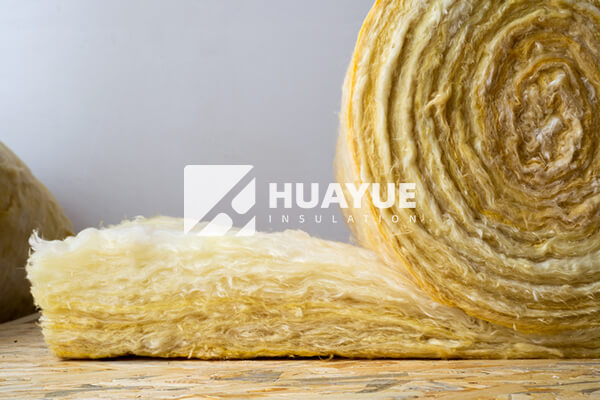
The important decision is not simply whether fiberglass can dry. It is whether the insulation and the surrounding assembly can be made completely dry and safe to close again.
When Can Wet Fiberglass Insulation Be Dried?
The possibility of drying depends first on what made the insulation wet and what happened to its installed condition.
Limited clean-water wetting may allow drying and assessment. Contaminated water, mold, persistent odor, damaged facing, or insulation that remains matted, compressed, or misshapen points toward removal and replacement.
Guidance is not identical for every situation. The U.S. Environmental Protection Agency’s water-damage guidance takes a conservative approach and lists fiberglass insulation among materials to discard and replace. An insulation-industry article published by the National Insulation Association describes a narrower possibility: fiberglass exposed to clean water may sometimes be dried and retained when it dries promptly, returns to its original thickness, and has no contamination.
Those positions are best read as different risk boundaries, not as a contradiction that can be settled by looking at the surface. The following triage table is a practical decision aid, not a substitute for a site assessment:
| Observed condition | Appropriate next step | Why it changes the decision |
|---|---|---|
| Limited clean-water wetting; material is accessible and retains its form | Expose, dry promptly, and assess before reuse | Drying can be observed, and the material’s condition can be checked |
| Water source is unknown, dirty, sewage-related, or chemically contaminated | Remove and replace; use qualified remediation support where needed | Drying does not remove all contaminants or resolve exposure concerns |
| Visible mold, persistent musty odor, damaged facing, matting, sagging, or lost thickness | Remove and replace the affected material | Physical or microbial damage remains after surface moisture disappears |
| Insulation is hidden, heavily saturated, or cannot be checked throughout | Open the assembly or obtain professional assessment | An unseen wet layer cannot be confirmed dry from the room side |
Stop the leak, condensation, or other moisture source before deciding what to save. If water continues entering the assembly, fans and dehumidifiers cannot solve the underlying problem. Also inspect adjacent drywall, sheathing, framing, fasteners, and facings; the glass fibers are only one part of the wet assembly.
How Long Does Wet Fiberglass Insulation Take to Dry?
Drying time cannot be predicted from the material name alone, and a dry-looking surface does not prove that the full assembly is dry.
There is no reliable universal answer. Treat 24–48 hours as the window to dry or remove wet materials to reduce mold risk—not as a promise that fiberglass insulation will be completely dry within that period.
The 24–48-hour guidance appears in public-health advice from the U.S. Centers for Disease Control and Prevention and the National Institute for Occupational Safety and Health. It tells building occupants and remediation teams to act quickly. It does not establish a fiberglass product drying time, and it does not mean that material is safe to reuse merely because two days have passed.
Actual drying is affected by the amount of water, the length of exposure, relative humidity, air temperature, air movement, insulation thickness and form, facing materials, and whether both the insulation and cavity surfaces are accessible. A lightly damp, unfaced batt laid open in controlled conditions presents a different drying problem from saturated faced insulation sealed behind drywall. The surrounding wood, gypsum, or sheathing may also remain wet after the exposed surface appears dry.
For this reason, do not rely on a countdown such as “two days,” “three days,” or “one week.” Start mitigation immediately, monitor the whole affected area, and base the closure or replacement decision on verified dryness and material condition. If the insulation cannot be exposed, inspected, and dried throughout the action window, removal is generally the more defensible route than waiting for hidden moisture to disappear.
Can Fiberglass Insulation Dry Inside a Closed Wall?
An intact wall can conceal moisture and restrict the airflow needed to dry insulation and the materials around it.
Do not assume wet fiberglass will dry safely behind closed drywall. The cavity may need to be opened so the water source, insulation, framing, sheathing, and drywall can be inspected and dried before the assembly is closed again.

Drying potential depends on how the wall is built. Drywall, sheathing, paint, membranes, and facings can limit the direction in which moisture can escape. Air movement in the occupied room may therefore have little effect on water held deeper in the cavity. A fan pointed at an intact wall is not evidence that the insulation behind it has dried.
EPA flood-cleanup guidance says not to seal flooded wall cavities or refinish wet surfaces until the materials are completely dry inside. It also notes that drying an affected building can take days to weeks. That building-level range should not be converted into a fiberglass drying-time promise; it shows why restoration must consider the complete assembly rather than the batt alone.
Moisture meters can help compare certain surrounding materials with unaffected areas, but the reading must be interpreted for the material and instrument being used. One surface reading cannot verify every layer of a wall. Where the source involved contaminated water, widespread flooding, visible mold, electrical systems, or inaccessible construction, involve an appropriately qualified restoration professional instead of experimenting with in-place drying.
Before reinstalling insulation or replacing drywall, confirm that the water source has been corrected, affected material has been removed where required, and the accessible cavity materials are dry. Closing too early can hide the very condition the repair was meant to resolve.
How Should a Facility or Project Team Handle Wet Insulation?
A consistent response sequence helps teams separate urgent damage control from the later decision to reuse or purchase replacement insulation.
Stop the water source, identify the water category, expose and document the affected area, remove material that cannot be safely recovered, dry the assembly, and verify conditions before reinstatement.
Use the following sequence as a project checklist:
- Control the source. Repair the leak or condensation cause and prevent further water entry.
- Define the affected area. Record where water traveled, not only where staining is visible. Include adjacent finishes and construction layers.
- Identify contamination. Treat sewage, floodwater, chemicals, and unknown water more conservatively than a small clean-water leak.
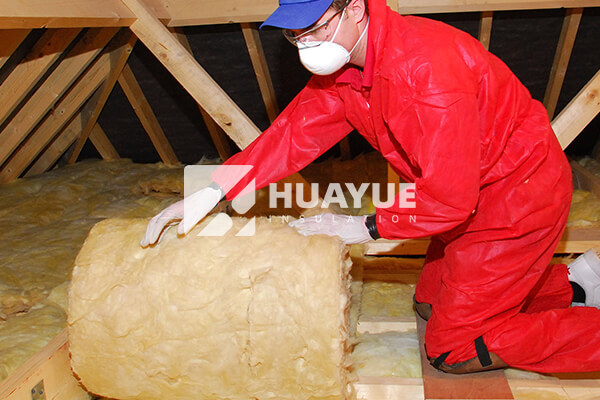
- Create safe access. Expose insulation and cavity materials sufficiently for inspection; use qualified help when the scope or hazards exceed the team’s competence.
- Dry or remove. Use controlled airflow and dehumidification only where recovery is appropriate. Remove affected insulation when contamination, mold, damage, or incomplete drying prevents defensible reuse.
- Verify before closure. Compare the affected assembly with dry, unaffected materials and retain the inspection or remediation record required by the project.
For commercial work, the reuse decision may also be influenced by the project specification, insurer, warranty conditions, remediation plan, or authority responsible for approving the repaired assembly. Those requirements can be more conservative than general material advice.
If replacement is required, record the application, original product form, facing, cavity or equipment dimensions, and any project documentation requirements. SinoInsulation can remain the broad material-routing page, while detailed glass wool product selection and product-specific documentation belong with the ThermGlas glass wool specialist. Do not substitute a new batt or roll solely because it shares the generic name “fiberglass insulation.”
Conclusion
Fiberglass may dry after limited clean-water exposure, but act within 24–48 hours, inspect the complete assembly, and replace contaminated, moldy, damaged, or unverifiable material.