







Fiberglass insulation has no single R-value; the result depends on the product, thickness, form, and installation.
Standard-density fiberglass batts are commonly reported at about R-2.9 to R-3.8 per inch, while high-density batts may reach about R-3.7 to R-4.3 per inch. These are planning ranges—not a substitute for the selected product’s declared R-value.
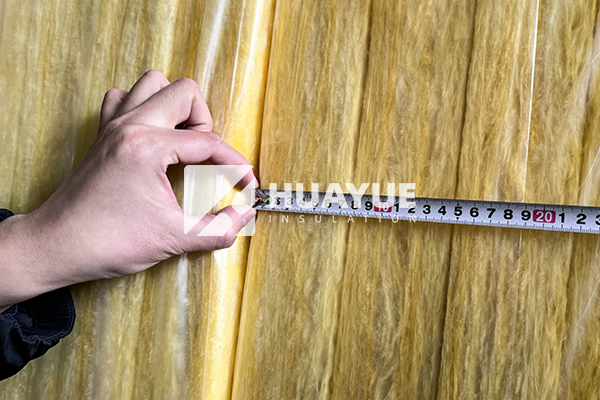
The number matters because it helps compare thermal resistance, but a sound decision also requires the right product form, available space, installation quality, and assembly design.
What Does Fiberglass Insulation R-Value Measure?
R-value describes resistance to heat flow through a material or defined construction under stated conditions.
A higher R-value means greater resistance to heat flow. It does not automatically prove better air sealing, moisture control, fire performance, acoustic performance, or suitability for a particular wall, roof, duct, tank, or pipe.
R-value is useful because it gives designers and buyers a common thermal-resistance reference. The value printed on a fiberglass batt normally applies to that product at its declared thickness and test conditions. It should not be read as a universal property of every fiberglass product, or as a complete rating for the wall, ceiling, floor, or mechanical system around it.
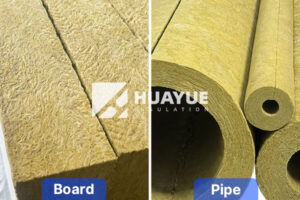
Product form also matters. Fiberglass and fibreglass are different spellings for the same material family, while batt describes a pre-cut blanket form. Loose-fill fiberglass, rolls, boards, and pipe insulation can use different densities, thicknesses, test conditions, and installation methods. A single “fiberglass R-value per inch” number therefore works only as an early estimate.
For example, ENERGY STAR uses approximately R-3.2 per inch as a rough field estimate for existing fiberglass batts during an attic check. A U.S. Department of Energy guide gives wider planning ranges: about R-2.9 to R-3.8 per inch for standard-density fiberglass batts and R-3.7 to R-4.3 per inch for high-density batts. When a product label or current data sheet is available, its declared value should replace the rough estimate.
Why Is Product R-Value Different from Whole-Assembly Performance?
A product label describes the insulation layer; a completed wall or roof includes framing, fasteners, linings, cavities, junctions, and air paths.
An R-13 batt does not make every finished wall an R-13 wall. Framing and other heat-flow paths can reduce the assembly’s effective resistance, while continuous layers and other components may add resistance.
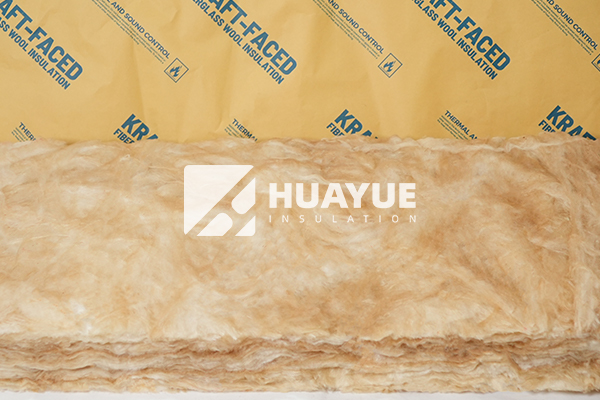
This distinction matters when comparing specifications. A cavity-insulation schedule may state the nominal R-value of the batt, while an energy calculation may require a whole-assembly U-factor or effective R-value. Those figures answer different questions. Substituting one for the other can make two proposals look equivalent when their constructions are not.
Consider a framed wall. The batt fills most cavities, but heat can also move through studs, plates, headers, gaps around services, and junctions with floors or roofs. The percentage and conductivity of those parallel paths affect the finished result. The same labeled batt can therefore contribute to different assembly performance in wood framing, metal framing, or a system with continuous exterior insulation.
R-value also does not replace other design checks. A higher thermal resistance does not establish vapor-control placement, condensation safety, air-barrier continuity, clearance requirements, or compliance of the completed construction. For a fair comparison, place product R-value beside the assembly calculation and the relevant project requirements. This keeps a useful product number from becoming an unsupported system guarantee.
How Can Installation Affect Fiberglass Insulation Performance?
Fiberglass insulation depends on its specified thickness, full cavity contact, and consistent coverage to deliver the intended result.
Gaps, voids, uneven thickness, misalignment, and unplanned compression can reduce the benefit expected from a labeled batt. Fiberglass also does not replace the air-control layer required by the assembly design.
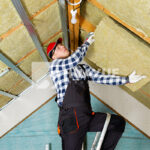
A batt should fit the intended cavity without being folded, bunched, or forced around wiring, pipes, brackets, and electrical boxes. Splitting or trimming the material neatly around obstructions helps maintain continuous coverage. Small neglected areas can create disproportionate heat-flow paths, especially when repeated across a large wall or ceiling.
Compression requires more care than a simple yes-or-no rule. Pushing a batt into a shallower cavity generally changes its total installed R-value. The remaining value cannot be derived safely from a universal percentage because products, original thicknesses, and compression depths differ. Use the manufacturer’s data for that exact product and installed thickness, or select a batt designed for the available space. The dedicated guide on compressing fiberglass insulation covers that decision in more detail.
Air leakage is a separate issue. Fiberglass can slow heat conduction through the insulated area, but gaps in the assembly’s air-control layer can still carry heat and moisture with moving air. The practical inspection should therefore check both the insulation installation and the continuity of the intended air barrier. Treating those as separate layers leads to a more realistic result than asking the batt alone to perform both jobs.
How Should Buyers Use R-Value When Comparing Fiberglass Insulation?
Start with the project’s thermal target, then compare products that can meet it within the available construction and documented conditions.
Compare the declared R-value at the offered thickness—not material names alone. Then verify form, dimensions, facing, test basis, installation fit, and whether the number describes a product layer or the complete assembly.
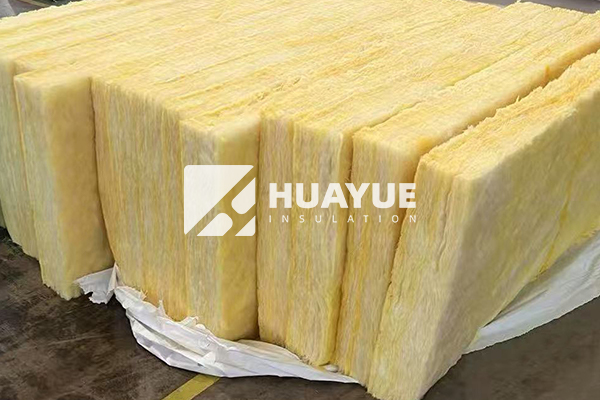
The following sequence keeps the comparison focused without turning an initial inquiry into a full technical submittal:
| Check | Why it matters | What to request |
|---|---|---|
| Application and assembly | Establishes whether the insulation is for a wall, ceiling, floor, roof, duct, pipe, or another defined use | Drawing or short assembly description when available |
| Target thermal value | Separates a project requirement from a supplier’s default product | Required product R-value, assembly U-factor, or RSI value with units |
| Available space | Prevents choosing a batt that must be compressed or leaves part of the cavity empty | Clear cavity depth, width, and obstruction information |
| Product form and facing | A batt, roll, board, or loose-fill product may require a different installation and documentation route | Exact form, facing, and intended orientation |
| Declared performance | Confirms that the quoted number belongs to the offered configuration | Current product label or data sheet with thickness and test basis |
| Installed-quality plan | Protects the design intent across repeated cavities and junctions | Cutting, fitting, support, inspection, and air-control responsibilities |
Do not automatically select the highest R-value in a supplier’s range. A higher value is useful only when the product fits the available space, aligns with the assembly design, and can be installed as documented. If a proposal changes thickness, facing, form, or product family, compare the full configuration again rather than treating the R-value as the only changed field.
SinoInsulation can help route a broad material or application request. Detailed glass wool product selection, facings, dimensions, and model documentation belong in the specialist ThermGlas product review rather than in a generic R-value article.
Frequently Asked Questions
Several short questions help separate spelling, product form, and system performance without repeating a full batt specification guide.
Fiberglass and fibreglass refer to the same material family, while batt identifies a product form. In every case, use the declared value of the selected product and keep it separate from whole-assembly performance.
Is fibreglass insulation different from fiberglass insulation?
No. “Fiberglass” is the common American spelling, while “fibreglass” is widely used in British and other English. The spelling does not change thermal performance. Product form, thickness, density, facing, test conditions, and installation are the relevant differences.
Does batt insulation have one R-value per inch?
No. Batt insulation can be made from different materials and in different densities and configurations. Even within fiberglass, public planning ranges vary. Use the product label or current data sheet for the offered batt instead of applying one generic per-inch value to every product.
Is a higher R-value always the better choice?
Not by itself. The selected insulation must meet the project target and fit the available assembly. A higher labeled value that requires unverified compression, conflicts with the design, or cannot be installed continuously may not deliver the intended result.
Can product R-values be added together?
Thermal resistances of appropriate, continuous layers may be combined in a calculation, but the finished construction still needs a valid assembly method. Framing, gaps, interfaces, air films, and parallel heat-flow paths can change the result, so simple addition should not replace the project’s required calculation.
Conclusion
Use fiberglass R-value as a thermal comparison tool, then confirm product thickness, assembly context, and installed fit. For product routing, share the application and target R-value.