







Poor insulation increases energy loss and risks system failure. At high process temperatures, most solutions degrade. You need insulation sheets that maintain performance above 600°C, meet EN standards, and resist compression.
Rock wool insulation sheets deliver λ values down to 0.034 W/m·K, withstand temperatures up to 750°C, meet Euroclass A1 fire classification, and offer densities from 80 to 200 kg/m³.
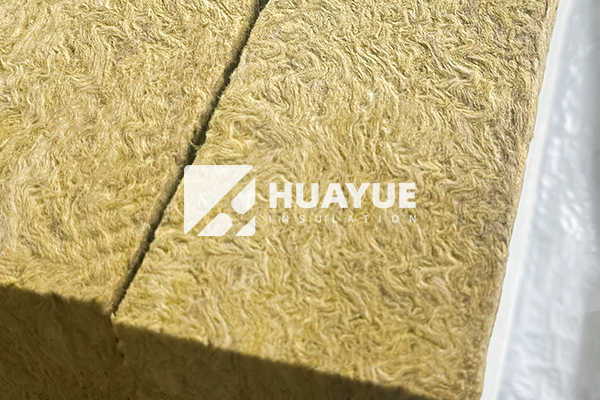
Some industrial lines run above 500°C with constant vibration. Hans, you need insulation that won’t sag or lose thickness over time. Here’s what to expect in real-world use.
What are the negatives of ROCK WOOL insulation?
Breakdown under wet conditions, fiber shedding, and installation errors cause real headaches. Corrosion under insulation (CUI) is a top risk.
Rock wool insulation sheets can absorb up to 1.0 kg/m² of water if left unprotected, and loose fibers may cause 2-5% λ value degradation if not properly installed.
Moisture Sensitivity
Rock wool is hydrophobic at the fiber level, but capillary action can draw in water at sheet joints or damaged foil. Water uptake increases λ value and risks CUI on carbon steel. In our lab, water absorption (EN 1609, partial immersion) does not exceed 1.0 kg/m² for our standard sheets, but installation errors can double this.
Fiber Release
Cutting or handling the sheets releases airborne fibers. Our factory tests show average respirable fiber counts below 1 fiber/cm³ (EN 15051), but careless handling can spike this. While not classified as carcinogenic (per EU note Q), you should use dust extraction and mask protocols.
Mechanical Damage
Rock wool insulation sheets with densities under 100 kg/m³ compress under pipe clamps. We recommend ≥120 kg/m³ for high-traffic zones. Compressive strength at 10% deformation: 30–45 kPa (EN 826).
Table: Water Uptake vs. λ Value Change
| Condition | Water Absorption (kg/m²) | λ Value Change (%) |
|---|---|---|
| Lab (EN 1609) | 0.8 | +0.5 |
| Field, poor seal | 1.6 | +2.0 |
Mineral Wool Insulation Rock Wool: The Best Choice for Your Project?
Not all mineral wools perform equally at high temperature. Some fail EN 13162 standards above 250°C.
Rock wool insulation sheets rated for 650–750°C, EN 13162 and DIN 4102 compliant, maintain compressive strength >35 kPa at 10% deformation, with λ value from 0.034–0.040 W/m·K depending on thickness.
Product Grades and Compliance
There are key differences between glass wool, slag wool, and rock wool. Glass wool softens above 400°C. Slag wool can have higher shot content, lowering insulation efficiency. Our rock wool insulation sheets use basalt as the main raw material, ensuring fiber integrity at continuous operation up to 750°C (tested per EN 14706).
- Thermal conductivity (λ): 0.034 W/m·K (at 10°C), 0.040 W/m·K (at 100°C)
- Operating temperature: 650°C continuous, 750°C peak
- Fire classification: Euroclass A1 (EN 13501-1)
- Density: 80–200 kg/m³ (customizable)
- Thickness: 30–150 mm (standard), up to 200 mm on request
Certification
All our insulation sheets carry CE marking under EN 13162. Factory production control audits and third-party lab tests verify batch consistency. Each shipment includes a Declaration of Performance (DoP) and test certificates.
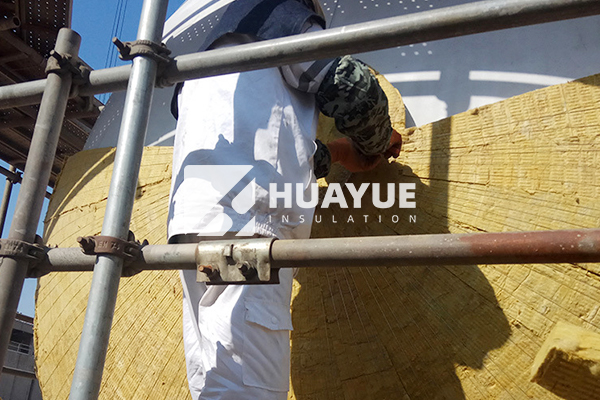
Is ROCK WOOL good for insulation?
Thermal loss, fire safety, and installation reliability are critical. Your system needs insulation that won’t sag or char after years of service.
Rock wool insulation sheets provide λ values down to 0.034 W/m·K, Euroclass A1 fire resistance, and maintain >90% thickness after 10,000 hours at 600°C.
Long-Term Performance
Thermal Conductivity
We test every batch according to EN 12667. At 50 mm thickness, the steady-state λ value is 0.035 W/m·K at 10°C. At 200°C, λ value rises to 0.045 W/m·K. For best efficiency, use double-layer installation with offset joints.
Fire and Smoke
Our sheets are non-combustible, Euroclass A1. No smoke, no toxic gas. This meets all German chemical plant fire requirements (B1, DIN 4102).
Dimensional Stability
Under 600°C for 10,000 hours, rock wool insulation sheets retain >90% thickness (per EN 1604), minimizing energy loss from settling.
Case Example
On a 450°C process line, after 3 years, surface temperature remained <65°C with only 2% insulation thickness loss (site data, 2021).
How dangerous is working with Rock wool insulation for a week without a mask?
Short-term exposure risks eye and skin irritation, and inhalation of fibers above 1 fiber/cm³ can cause respiratory discomfort.
Handling rock wool insulation sheets without a mask for a week can expose workers to 2–4 fibers/cm³ air, exceeding recommended OEL (1 fiber/cm³, EU), but fibers are biosoluble and not classified as carcinogenic.
Exposure Risks and Controls
Fiber Release
Cutting, fitting, or tearing rock wool insulation sheets releases respirable fibers. Our production lines minimize shot content and binders, but on-site, measured fiber release ranges from 0.5 to 4 fibers/cm³ depending on method (EN 15051 test).
Health Effects
Exposure for one week above 1 fiber/cm³ may cause:
- Temporary upper airway irritation
- Mild skin itching (especially wrists, neck)
- Eye watering
No chronic damage is expected. The fibers are biosoluble and clear from the lungs quickly (EU note Q).
Protection Steps
- Wear a P2/N95 mask during handling and cutting.
- Use safety goggles and gloves.
- Ventilate the workspace.
- Use vacuum extraction when cutting sheets.
Do not skip PPE, especially during overhead work or in confined spaces.
Can mold grow in ROCK WOOL insulation?
Moisture ingress is the main risk. Mold only grows if sheets remain wet for weeks, usually due to failed vapor barriers.
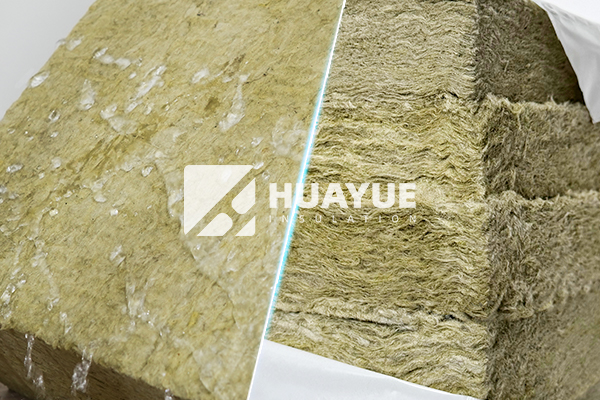
Rock wool insulation sheets are inorganic and have zero nutritional value for mold, but if water content stays above 20% for 14+ days, surface mold can grow on accumulated dust or binder.
Mold Resistance and Prevention
Inherent Mold Resistance
Our rock wool insulation sheets are classified as non-nutritive (EN ISO 846). The fibers themselves do not support mold. Mold can grow only on organic contaminants or dust on the insulation surface, not the rock wool.
Water Management
Field failures occur when vapor barriers (aluminum foil, mastic) are poorly sealed. Lab soak tests show no mold on clean sheets after 28 days at >95% RH, but field samples with oil/dust can show mold spots after 2 weeks if left saturated.
Installation Best Practices
- Use fully sealed vapor barriers on cold surfaces (<15°C).
- Inspect joints and penetrations weekly during commissioning.
- Replace any wet or contaminated sections immediately.
Conclusion
Rock wool insulation sheets provide λ values down to 0.034 W/m·K, maintain Euroclass A1 fire safety, and retain mechanical strength up to 750°C—delivering stable, certified insulation for demanding industrial use.