



Incorrect selection of insulation can lead to energy losses, safety risks, or compliance failures. The wrong type of mineral wool may underperform at high temperatures or fail fire tests.
The main types of mineral wool for industry are rock wool (λ: 0.033–0.040 W/m·K, up to 650°C), glass wool (λ: 0.032–0.044 W/m·K, up to 450°C), and slag wool (λ: 0.045 W/m·K, up to 350°C). All are certified to EN 13162 and CE marked.
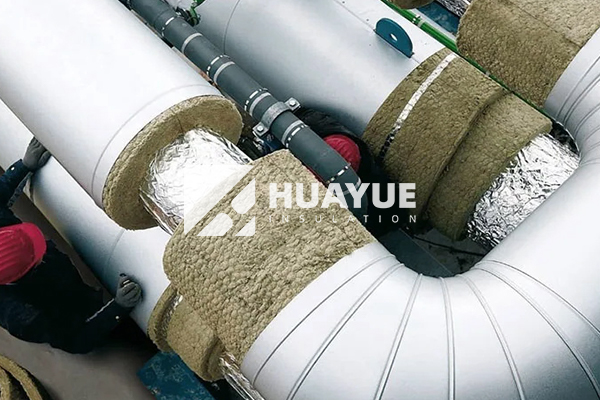
Thermal engineers often face a choice: Which type of mineral wool is reliable for critical lines, vessels, or equipment? Each application has unique temperature, fire, and mechanical demands.
What is the best mineral wool?
Specifying the wrong mineral wool causes unnecessary heat loss and potential safety issues. Some products can’t handle the temperature or mechanical load.
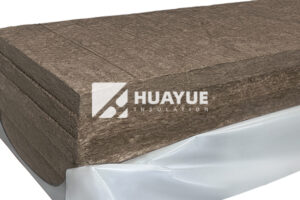
Rock wool with λ = 0.035 W/m·K, density 120 kg/m³, Euroclass A1, and tested to EN 13162, is the best mineral wool for most industrial thermal insulation above 250°C.
Why rock wool outperforms
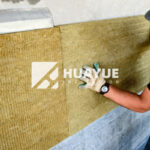
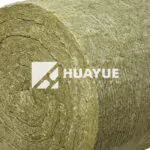
Rock wool fibers are spun from basalt at over 1400°C. This results in a non-combustible, chemically stable material. In our factory, we produce rock wool with densities from 40 to 200 kg/m³. For process temperatures between 250°C and 650°C, we recommend 100–140 kg/m³ boards or pipe sections. Their λ value remains stable (0.035–0.040 W/m·K at 50°C mean temperature, tested per EN 12667).
Key Specs — HUAYUE Rock Wool
| Property | Value |
|---|---|
| λ (thermal conductivity) | 0.035 W/m·K (50°C) |
| Density | 120 kg/m³ (±15) |
| Max temp | 650°C |
| Fire class | Euroclass A1 |
| Water absorption | <1.0 kg/m² (EN 1609) |
| Compressive strength | ≥ 40 kPa (10% strain) |
| Standard | EN 13162, DIN 4102 |
| Certification | CE marked |
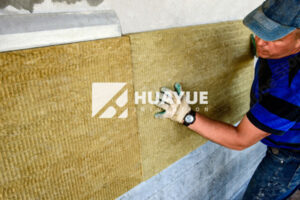
Rock wool maintains dimensional stability after repeated thermal cycles. In our tests, shrinkage is <2% after 24 hours at 650°C. Low chloride content (<10 ppm) prevents corrosion under insulation (CUI). For vertical vessels or pipework, mechanical resistance is critical; 120 kg/m³ boards resist compression and vibration.
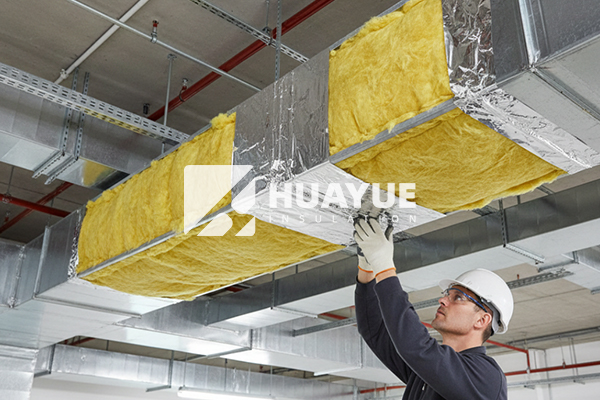
What is the downside of rock wool?
Some mineral wool types absorb water, lose insulation value, or shed fibers, causing corrosion or air quality issues.
Rock wool can display water absorption up to 1 kg/m² (EN 1609), and loose fibers may require surface facings in clean areas. It is heavier (80–200 kg/m³) than glass wool, increasing handling effort.
Limitations in challenging conditions
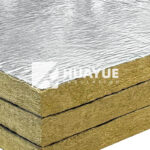
Rock wool offers excellent thermal and fire performance, but its open structure can hold water if not protected. For outdoor or humid areas, we factory-laminate aluminum foil or glass cloth facings to reduce moisture uptake. In our tests, uncoated rock wool can absorb up to 1.0 kg/m² of water.
Fiber migration is another concern, especially in air-handling units or cleanrooms. Where fiber shedding is critical, we recommend glass wool with binder or factory-applied veil facings. Rock wool’s higher density (typically 100–200 kg/m³) can make manual installation more labor-intensive. Lighter glass wool (10–48 kg/m³) is easier to cut and fit on irregular shapes.
When not to use rock wool
- Direct exposure to water or high humidity without facing
- Cleanrooms or food processing with strict fiber emission limits
- Where minimum weight is required (e.g., suspended ceilings)
We always advise checking the application scenario and required certifications before specifying rock wool.
What is another name for mineral wool?
Different terminology leads to confusion. Engineers may encounter regional or trade names in specifications, making product sourcing complex.
Mineral wool is also known as stone wool, slag wool, or man-made vitreous fiber (MMVF) in EN and DIN standards. All refer to types of mineral wool based on composition.
Alternative names and standards
Mineral wool is the generic term for fibrous insulation made by melting and spinning inorganic raw materials. The main types are:
- Rock wool (stone wool): made from basalt or diabase
- Slag wool: made from blast furnace slag
- Glass wool: made from recycled glass
European technical documents, including EN 13162 and DIN 4102, often use “mineral wool” for all three. The CE marking under the Construction Products Regulation (CPR) covers all MMVF products. Some older German specs still mention “Steinwolle” (stone wool) or “Schlackewolle” (slag wool).
Overview of synonyms
| Name | Composition | Standard Term |
|---|---|---|
| Rock wool | Basalt/diabase | Mineral wool |
| Stone wool | Basalt/diabase | Mineral wool |
| Slag wool | Blast furnace slag | Mineral wool |
| Glass wool | Glass cullet/sand | Mineral wool |
| MMVF | Any inorganic fiber | Harmonized standard |
When reading technical specs or MSDS, always check the exact composition and EN/DIN references.
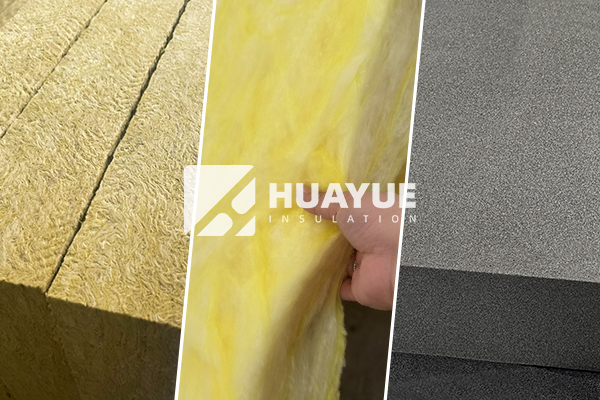
What are the three main types of wool?
Misunderstanding the types of mineral wool can result in incorrect insulation selection. Each has different properties and use cases.
The three main types of mineral wool are rock wool, glass wool, and slag wool. For industrial use: rock wool (up to 650°C, λ 0.035 W/m·K), glass wool (up to 450°C, λ 0.040 W/m·K), slag wool (up to 350°C, λ 0.045 W/m·K).
Types of mineral wool — detailed comparison
1. Rock wool (Stone wool)
- Made from basalt/diabase
- λ = 0.033–0.040 W/m·K (EN 12667)
- Max temp: 650°C
- Density: 80–200 kg/m³
- Fire: Euroclass A1 (non-combustible)
2. Glass wool
- Made from recycled glass/sand
- λ = 0.032–0.044 W/m·K
- Max temp: 450°C
- Density: 10–48 kg/m³
- Fire: Euroclass A1/A2
3. Slag wool
- Made from blast furnace slag
- λ = 0.045 W/m·K
- Max temp: 350°C
- Density: 80–150 kg/m³
- Fire: Euroclass A1
| Type | λ value (W/m·K) | Max Temp (°C) | Density (kg/m³) | Fire Class |
|---|---|---|---|---|
| Rock wool | 0.035 | 650 | 120 | A1 |
| Glass wool | 0.040 | 450 | 32 | A1/A2 |
| Slag wool | 0.045 | 350 | 100 | A1 |
All types comply with EN 13162, DIN 4102, and carry CE marking. Selection depends on required temperature, mechanical load, and fire rating.
Are rock wool and mineral wool the same?
Ambiguity in terms leads to specification errors. Substitute materials may not meet process conditions.
Rock wool is a type of mineral wool, specifically made from basalt or diabase. All rock wool is mineral wool, but not all mineral wool is rock wool. EN 13162 covers both.
Clarifying standards and application
“Mineral wool” is the family name encompassing rock wool, glass wool, and slag wool. In EN and DIN standards, rock wool products must meet the same basic fire and thermal criteria as other mineral wool types. However, only rock wool offers certified performance up to 650°C and the highest Euroclass A1 rating at high density.
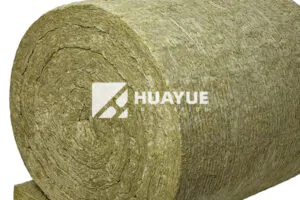
For example, our rock wool pipe sections (120 kg/m³, tested to EN 13468) retain compressive strength and λ value after 1000 hours at 400°C, while glass wool loses up to 15% thickness under the same test. For applications requiring 100% non-combustibility, always specify mineral wool with Euroclass A1 and verify the test report.
Rock wool is the preferred choice when high temperature, fire, and mechanical resistance are critical. In lower temperature or acoustical applications, glass wool may be suitable.
Conclusion
The types of mineral wool—rock wool, glass wool, and slag wool—differ in temperature resistance (up to 650°C), λ value, and application range. Always match the type to your process: check λ, density, and EN 13162 compliance.