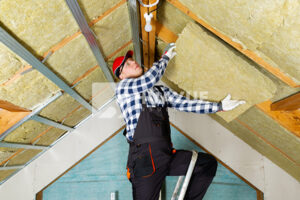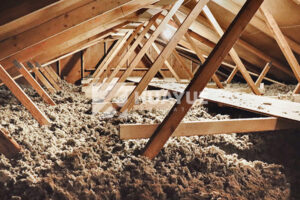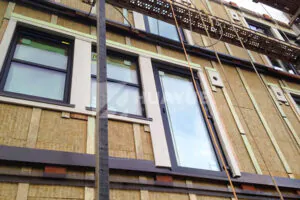






Rock wool rainscreen insulation is a proven solution for architects and building envelope engineers seeking high thermal and fire performance in rainscreen cladding systems.
Rock wool rainscreen insulation is a non-combustible, vapor-permeable mineral wool board designed for use behind ventilated rainscreen cladding, delivering robust thermal and fire protection without trapping moisture.
What is rock wool rainscreen?
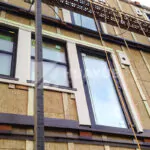
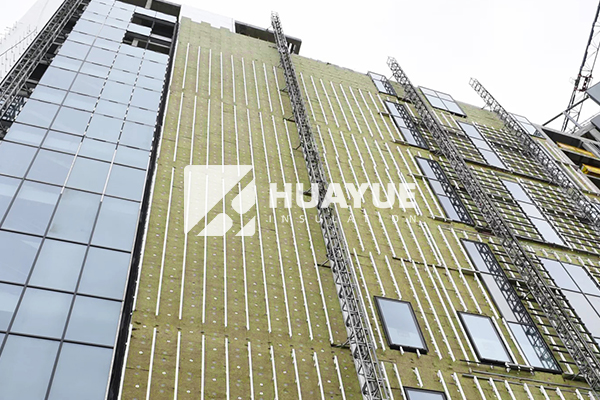
Rock wool rainscreen refers to mineral wool insulation boards, batts, or slabs specifically engineered for use behind ventilated rainscreen cladding systems. These products are manufactured from spun natural rock fibers, creating a dense, non-combustible structure. Rainscreen systems are designed to protect the building’s structural wall by providing a ventilated cavity between the insulation and the cladding, allowing moisture to escape and preventing water ingress.
Rock wool insulation is ideal for this application because it offers:
- High thermal resistance (R-value): Helps maintain interior comfort and energy efficiency.
- Fire safety: Rock wool is non-combustible and can withstand temperatures above 1000°C, helping to delay fire spread.
- Moisture management: Its vapor permeability allows moisture to escape, reducing risk of condensation and mold.
- Acoustic performance: Provides sound attenuation, improving occupant comfort.
- Dimensional stability: Resists sagging or deformation, ensuring long-term performance.
The rainscreen system typically consists of:
| Component | Description |
|---|---|
| Structural wall | Load-bearing element |
| Rock wool insulation | Mineral wool board, batt, or slab |
| Air/vapor barrier (optional) | Controls moisture movement |
| Ventilated cavity | Allows air and moisture to escape |
| Cladding panels | Exterior finish, protects insulation |
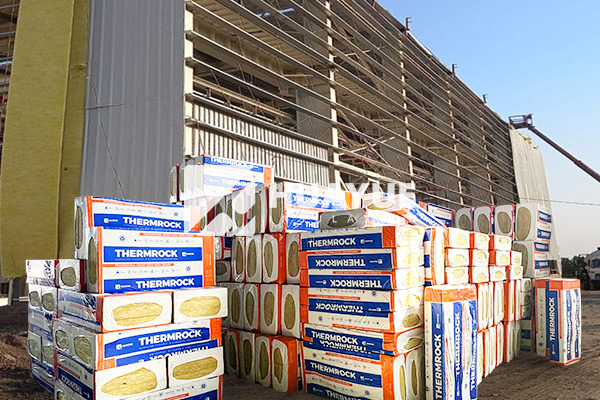
When specifying rock wool for rainscreen, buyers should select products with appropriate density, thickness, and facing for their climate zone and fire requirements. Boards are the most common form, but batts and slabs may be used for irregular surfaces.
Do I need a vapor barrier when using ROCK WOOL?
A vapor barrier is not always required when using rock wool insulation in rainscreen systems. Rock wool itself is vapor-permeable, allowing moisture to pass through and escape via the ventilated cavity. Whether a vapor barrier is needed depends on climate, wall assembly, and building use.
In most rainscreen applications, a vapor barrier is unnecessary because rock wool supports moisture management. However, in cold climates or high humidity environments, a vapor barrier may be advised on the warm side of the wall to prevent condensation within the insulation layer.
Key considerations:
- Climate: In warm, humid climates, vapor barriers are less common. In cold climates, they may be needed to prevent condensation.
- Wall assembly: If the structural wall is sensitive to moisture or contains materials prone to mold, a vapor barrier could be beneficial.
- Building use: Spaces with high interior humidity (e.g., pools, kitchens) may require additional moisture control.
Consult local building codes and envelope engineers for guidance. Proper placement and selection of vapor barriers are critical to avoid trapping moisture.
What should B2B buyers know about rock wool rainscreen #3
When sourcing rock wool rainscreen insulation, B2B buyers should evaluate several technical and supply chain factors to ensure optimal performance and project success.
Specification and certification:
- Density: Typical boards range from 80–150 kg/m³ for exterior walls.
- Thickness: Common thicknesses are 50–200 mm, depending on thermal targets.
- Fire rating: Look for products classified as Euroclass A1 (non-combustible).
- Thermal conductivity: λ-values typically range from 0.034–0.040 W/m·K.
- Acoustic performance: Check for tested sound absorption coefficients.
Packaging and supply:
- Boards are supplied wrapped or stacked on pallets for ease of handling.
- Custom sizes and facings (e.g., water-repellent, black veil) are available for specific rainscreen requirements.
- Reliable suppliers offer consistent quality, technical support, and short lead times.
Lifecycle cost:
Rock wool’s durability and fire resistance can reduce maintenance and replacement costs. Its vapor permeability helps prevent moisture-related issues, lowering long-term repair expenses.
%[rock wool insulation product detail for rainscreen specification](https://sinoinsulation.com/wp-content/uploads/2026/05/rock-wool-insulation-product-detail-for-rainscreen-specification.jpg”rock wool insulation product detail for rainscreen specification")
What should B2B buyers know about rock wool rainscreen
Installation and performance tips:
- Correct fit: Boards should tightly abut without gaps to avoid thermal bridges.
- Fixing method: Mechanical fixings or adhesive systems must be compatible with both the insulation and cladding.
- Cavity ventilation: Ensure clear airflow in the cavity to remove moisture.
- Compatibility: Verify that insulation, vapor barriers, and cladding are compatible in terms of fire, moisture, and thermal requirements.
- Customization: Some projects require custom board sizes, thicknesses, or facings—coordinate with manufacturers early.
Supplier reliability:
- Choose suppliers with proven track records in rainscreen insulation.
- Ensure product consistency, technical documentation, and after-sales support.
- Request samples and test reports to confirm product properties.
Regulatory compliance:
- Products should meet local fire, thermal, and environmental standards.
- Documentation should include test results, certifications, and installation guidelines.
| Selection Criteria | Typical Values / Options | Notes |
|---|---|---|
| Density | 80–150 kg/m³ | Higher density for fire/acoustic |
| Thickness | 50–200 mm | Based on thermal requirements |
| Facing | Water-repellent, black veil | For moisture and aesthetic needs |
| Fire Rating | Euroclass A1 | Non-combustible |
| Packaging | Palletized, wrapped | For transport and storage |
| Customization | Size, facing, edge finish | Project-specific |
FAQ
What is the main benefit of rock wool in rainscreen cladding?
Rock wool provides superior fire and thermal protection, while allowing moisture to escape from the wall assembly.
How does rock wool compare to glass wool for rainscreen?
Rock wool is more fire-resistant and denser; glass wool is lighter but less suited for exterior rainscreen fire requirements.
Can rock wool rainscreen boards be cut onsite?
Yes, boards can be cut with standard insulation knives to fit around penetrations and irregular shapes.
Is rock wool rainscreen insulation suitable for high-rise buildings?
Yes, rock wool’s fire performance makes it ideal for high-rise and commercial structures.
Does rock wool rainscreen insulation require special handling?
No, but PPE (gloves, masks) is recommended due to fiber dust during cutting and installation.
Can rock wool rainscreen be used in retrofit projects?
Yes, it is suitable for both new build and retrofit rainscreen applications.
Conclusion
Rock wool rainscreen insulation offers architects and engineers reliable fire and thermal performance for ventilated cladding systems, with proven durability and moisture management. Selecting the right product and supplier ensures long-term success and compliance.