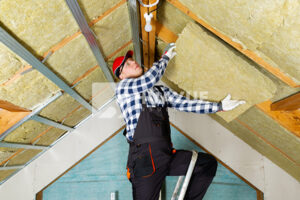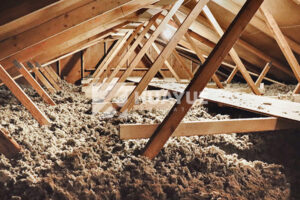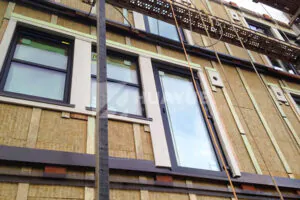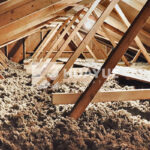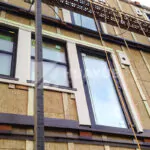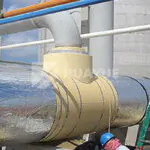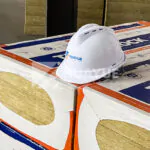








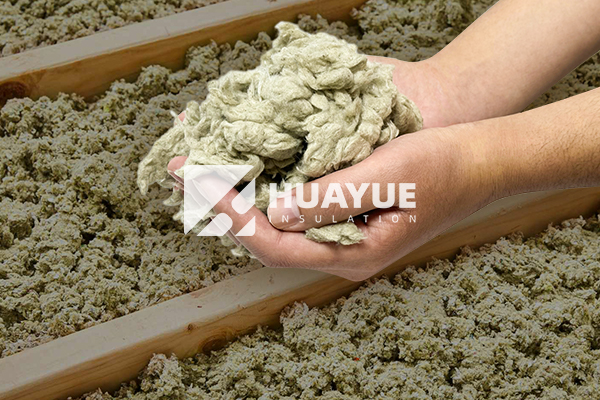
Rock wool loose fill insulation is a mineral fiber product designed for thermal and acoustic insulation in building cavities, attics, and hard-to-reach spaces.
Rock wool loose fill insulation provides fire resistance, sound absorption, and effective thermal performance, making it suitable for insulating irregular or complex building spaces. It is non-combustible and resists moisture, but may settle over time and requires proper installation.
What is the downside of ROCK WOOL loose-fill?
The main downside of rock wool loose fill insulation is material settling over time, which can reduce thermal performance if not properly installed or topped up. It can also generate dust during installation, requiring protective equipment for workers.
Rock wool loose fill is made from spun stone fibers that are blown or poured into cavities. While it offers excellent fire resistance and is not a food source for mold or pests, installers should be aware of:
- Settling: Over years, the fibers may settle, potentially creating air gaps. This can be mitigated with correct installation density and occasional maintenance.
- Dust Generation: The fibers are lightweight and can create airborne particles during handling. Workers should use masks, goggles, and protective clothing.
- Moisture Resistance: While rock wool itself is hydrophobic, improper installation (e.g., in continuously wet environments) can still lead to performance issues.
- Cost: Rock wool is typically more expensive per cubic meter than fiberglass loose fill, impacting project budgets.
- Specialized Equipment: Proper installation often requires blowing machines to ensure even coverage and correct density, especially in large or complex areas.
What is the R-value of ROCK WOOL loose-fill insulation?
The R-value of rock wool loose fill insulation typically ranges from R-3.0 to R-4.0 per inch (RSI 0.52–0.70 per 25 mm), depending on density and installation quality.
Practical Details:
- Thermal Resistance: The R-value measures resistance to heat flow. Higher values mean better insulation.
- Density Impact: The installed density affects the R-value. Under-blown material results in lower thermal performance, while over-blowing can lead to settling.
- Typical Applications: Achieving recommended R-values for attics or cavity walls usually requires 8–15 inches (200–380 mm) of rock wool loose fill, depending on local energy codes.
- Comparison: Rock wool’s R-value is competitive with glass wool and cellulose loose fill options.
Sample R-value Table (per inch):
| Material | Typical R-value/inch | Notes |
|---|---|---|
| Rock wool loose fill | 3.0 – 4.0 | Depends on density |
| Fiberglass loose fill | 2.2 – 2.7 | Lower density, more settling |
| Cellulose loose fill | 3.2 – 3.8 | May absorb moisture |
When to use loose-fill insulation?
Loose-fill insulation is ideal for insulating irregular, hard-to-access, or retrofitted spaces where batt or board products are impractical.
Common Use Cases:
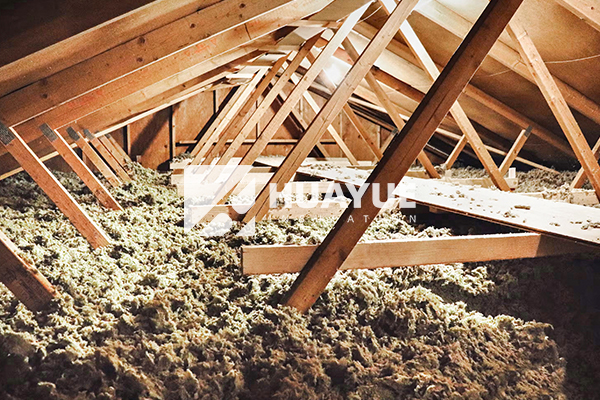
- Attics: Loose fill is easily blown into attic spaces, filling around joists, wiring, and obstructions.
- Wall Cavities: It can be injected into closed wall cavities during retrofits without removing drywall.
- Complex Geometries: Loose fill adapts to non-standard shapes, voids, and penetrations.
- Topping Up Existing Insulation: It can be added over existing insulation to improve overall R-value.
Selection Advice:
- Loose fill is not recommended for open wall cavities in new construction unless a netting or membrane is used to contain the fibers.
- It is preferred when labor access is limited or when minimizing demolition is a priority.
Should I use Rock wool or fiberglass loose-fill insulation?
Choosing between rock wool and fiberglass loose-fill insulation depends on performance needs, budget, and project requirements.
| Feature | Rock Wool Loose Fill | Fiberglass Loose Fill |
|---|---|---|
| Fire Resistance | Non-combustible (A1 rating) | Non-combustible |
| R-value per inch | 3.0 – 4.0 | 2.2 – 2.7 |
| Settling Tendency | Moderate | Higher |
| Moisture Resistance | High (hydrophobic) | Moderate (can absorb some) |
| Sound Absorption | Excellent | Good |
| Cost | Higher | Lower |
| Dust During Installation | Moderate | Lower |
| Weight | Heavier | Lighter |
Selection Guidance:
- Use Rock Wool when fire resistance, sound control, and durability are priorities, such as in commercial buildings, schools, or hospitals.
- Use Fiberglass when budget constraints are tight, or when a lighter material is required for delicate structures.
- Both materials require skilled installation to achieve optimal performance.
What should B2B buyers know about rock wool loose fill insulation?
Key Considerations for Procurement and Specification:
- Product Specifications: Confirm fiber diameter, bulk density, and thermal conductivity values. Request technical datasheets for precise figures.
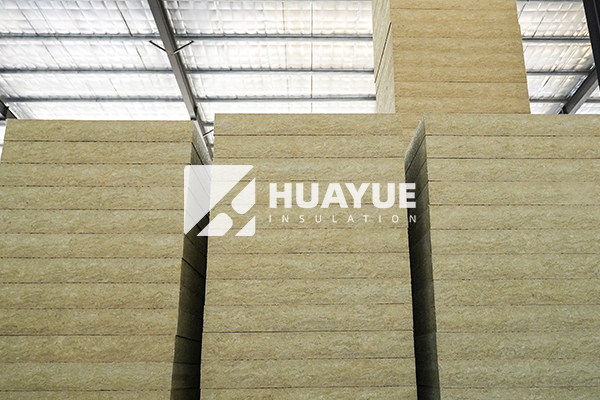
- Packaging: Rock wool loose fill is typically supplied in compressed bags or bulk sacks. Ensure the packaging suits your handling and storage needs.
- Quality Consistency: Source from reputable manufacturers with stable production lines to guarantee batch-to-batch consistency.
- Certification: While rock wool is naturally non-combustible, check for compliance with local fire and building codes.
- Lead Time and Logistics: Plan for production and delivery schedules, especially for large projects. Bulk shipments may require advance notice.
- Customization: Some suppliers offer tailored fiber lengths, densities, or packaging for specific project requirements.
- Installation Support: Ask about installation training, equipment rental, or on-site technical support.
- Lifecycle Cost: Consider initial cost, maintenance (e.g., topping up settled areas), and long-term energy savings.
- Supplier Reliability: Evaluate supplier reputation, after-sales service, and ability to meet project timelines.
FAQ
Q1: Is rock wool loose fill insulation safe to handle?
Yes, but installers should wear gloves, masks, and goggles to avoid skin and respiratory irritation from airborne fibers.
Q2: Can rock wool loose fill be used in exterior walls?
Yes, if properly contained with membranes or netting and protected from moisture ingress.
Q3: Does rock wool loose fill support mold growth?
No, rock wool is inorganic and does not provide a food source for mold, fungi, or pests.
Q4: How is rock wool loose fill installed?
It is typically installed using a blowing machine, which distributes the fibers evenly into cavities or attics.
Q5: What is the typical packaging size for rock wool loose fill?
Bags range from 15 to 25 kg, but bulk options are available for large-scale projects.
Conclusion
Rock wool loose fill insulation offers reliable fire resistance, sound absorption, and thermal performance for complex building spaces. Proper installation, supplier selection, and maintenance are key for long-term effectiveness.