







Incorrect insulation thickness increases heat loss and energy cost. Hans, you need exact figures to avoid underperformance or overdesign. Only tested, certified data matters.
The standard thickness of rock wool for industrial insulation ranges from 30 mm to 200 mm per EN 13162, depending on operating temperature and required thermal resistance (λ = 0.035–0.040 W/m·K).
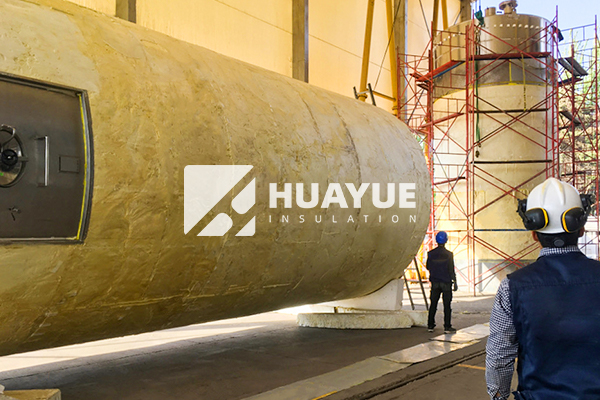
For process piping or tanks above 250°C, getting thickness of rock wool right is not a guess. You need a certified product that meets DIN 4102 and CE marking for fire and durability. Let’s break down the technical options.
What thicknesses does rock wool come in?
Choosing insulation with the wrong thickness of rock wool leads to heat loss or unnecessary cost. You require specific thickness options for varying industrial applications.
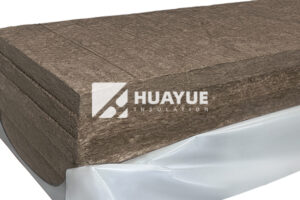
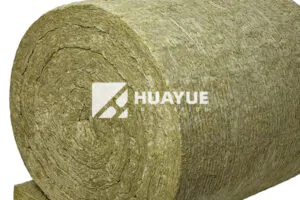
Rock wool is produced in standard thicknesses: 30 mm, 40 mm, 50 mm, 60 mm, 80 mm, 100 mm, 120 mm, 150 mm, and 200 mm. Custom thicknesses up to 250 mm available on request.
Thickness Ranges by Application
| Application Type | Common Thickness (mm) | EN Standard Reference |
|---|---|---|
| Process Piping (≤250°C) | 40–80 | EN 13468 |
| Tanks/Vessels (250–500°C) | 80–150 | EN 14303 |
| High-temp Ducts (>500°C) | 100–200 | EN 14303 |
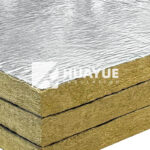
Production at our facilities allows us to control thickness tolerance within ±2 mm, verified by batch testing. We supply both slabs and pipe sections. Density is typically 100–180 kg/m³ for industrial grades. All batches are tested for λ value at 10°C mean temperature, e.g., 0.037 W/m·K for 100 mm thickness of rock wool.
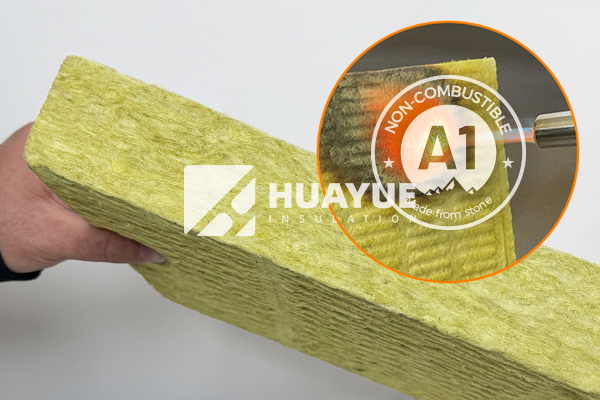
Our rock wool meets Euroclass A1 (non-combustible) per DIN 4102-1. CE marking is provided for all thicknesses. For specific projects, double-layer installation with staggered joints increases thermal efficiency.
What is the best thickness for rock wool?
Selecting the wrong thickness of rock wool can cause energy losses, surface condensation, or high upfront cost. You need the optimum thickness based on heat flow and temperature.
Best thickness of rock wool depends on design temp and heat loss target. For 400°C process piping, 80–120 mm meets typical U-value requirements (≤0.25 W/m²·K), confirmed by EN 1946-2 test reports.
How to determine the best thickness (Step List)
- Confirm operating temperature and surface area.
- Define maximum allowable heat loss (e.g., W/m²).
- Check ambient temperature and expected wind.
- Consult λ value at design temperature (e.g., λ = 0.045 W/m·K at 400°C).
- Use EN ISO 12241 formula or calculator to select required thickness of rock wool.
- Verify fire and mechanical properties (Euroclass, compressive strength).
- Specify with CE marking and factory test report.
For example, for a 400 mm diameter steam pipe at 400°C in a 20°C ambient, with a target heat loss of ≤120 W/m², the calculation per EN ISO 12241 gives a required thickness of rock wool of 100–120 mm (λ at temp = 0.045 W/m·K). All our industrial rock wool is certified for continuous use up to 650°C.
Compressive strength is typically ≥40 kPa at 10% deformation for pipe sections, preventing sagging or compression under aluminum jacketing.
What is the downside of rock wool?
Hans, you know every material has limitations. Dense rock wool can add weight, and improper installation reduces its effectiveness. Fiber shed or water ingress are concerns without proper specification.
Main downsides: higher weight (100–180 kg/m³), risk of moisture absorption without vapor barrier, and reduced λ value at very high temperatures (>600°C).
Performance Considerations
- Rock wool is non-hygroscopic but can absorb water if outer jacket or vapor barrier fails. This reduces insulation performance and can cause corrosion under insulation (CUI) on steel.
- Our factory tests all batches for water absorption per EN 13472: ≤1.0 kg/m² for 24 hours.
- For vertical tank walls, consider the installed weight due to density (e.g., 150 mm thickness of rock wool at 140 kg/m³ = 21 kg/m²).
- At temperatures above 600°C, the λ value increases (e.g., λ = 0.070 W/m·K at 650°C per EN 12667 test), so check for thermal aging or shrinkage.
- For vibration-prone lines, use higher compressive strength grades to prevent settlement.
All industrial rock wool we supply is classified as Euroclass A1 (non-combustible) and passes DIN 4102-1 fire resistance. Always use aluminum foil or metal jacketing outdoors to stop water ingress.
Will mice chew through rock wool?
Rodent damage disrupts insulation, leading to hidden energy losses. You need to know if the thickness of rock wool provides any inherent protection.
Mice and rodents rarely chew through rock wool due to its mineral fiber structure and density (≥100 kg/m³), but physical gaps or damaged cladding can allow ingress.
Rodent Resistance and Installation Guidelines
- Rock wool is inorganic and not a food source for rodents.
- The scratchy, non-homogeneous texture of industrial rock wool acts as a deterrent.
- Field tests in chemical plant settings (Germany, 2021) showed zero rodent penetration with ≥80 mm thickness of rock wool and intact metal jacketing.
- Weak points are open seams, penetrations, or missing jackets—mice exploit these, not the insulation itself.
- For critical lines, specify double-layer insulation with offset joints and foil scrim or stainless steel wrap.
- Annual inspection is recommended to check for jacketing damage.
Do you need an air gap with rock wool?
Incorrect assumptions about air gaps can lead to condensation or degraded insulation performance. You need standards-based guidance.
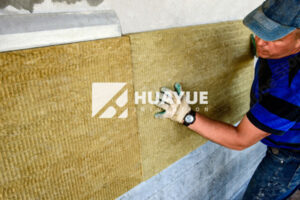
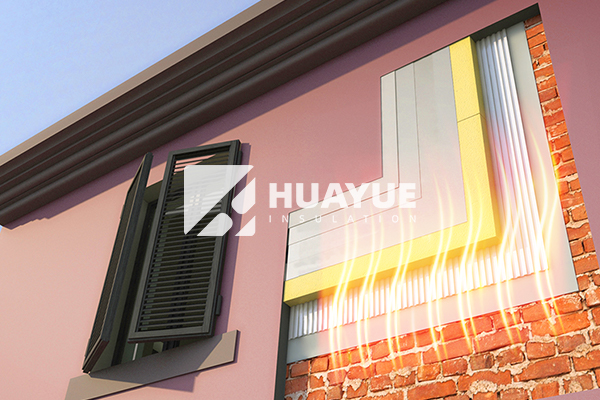
No air gap is required between rock wool and substrate in industrial applications. Direct contact with steel, aluminum, or concrete is standard per EN 14303.
Air Gap and Installation Parameters
- Rock wool is designed for direct application to hot or cold surfaces.
- For condensation control, apply vapor barrier jacketing over the full thickness of rock wool, not an air gap.
- EN 14303 and DIN 4102 specify direct installation unless special acoustic decoupling is required.
- Introducing an air gap can actually increase convective heat loss and is not recommended.
- For multilayer systems, each layer of rock wool should be tightly butted and staggered for maximum thermal performance.
- If acoustic insulation is needed, a thin air cavity (5–10 mm) may be specified, but this is not typical for thermal-only applications.
Conclusion
Specifying the correct thickness of rock wool—typically 30 to 200 mm—ensures reliable thermal performance, fire safety, and compliance with EN and DIN standards. Always confirm with certified test data for your application.