







Acoustic mineral wool is widely used to manage noise, but its value depends on whether the project needs absorption, sound isolation, or room-acoustic treatment.
Yes—acoustic mineral wool can absorb sound in cavities and acoustic panels. It does not soundproof a wall by itself: mass, separation, airtightness, and the complete tested assembly still control sound transmission.
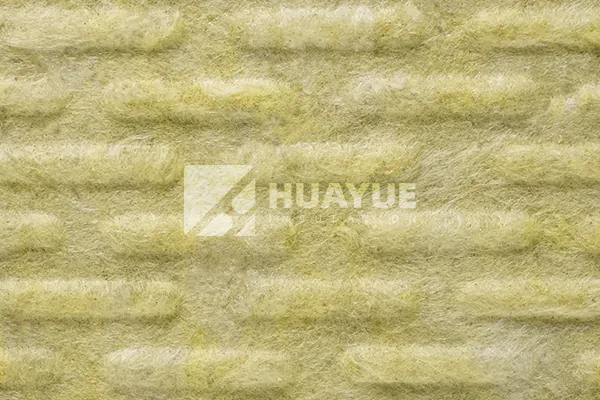
The practical choice is therefore not simply “mineral wool or no mineral wool.” It is choosing the right mineral-wool form and acoustic role for the noise path, then checking how the surrounding construction protects the result.
Does Acoustic Mineral Wool Work?
The answer depends on what “work” means: reducing echo in a room is a different task from stopping noise passing through a partition.
Acoustic mineral wool works mainly as a porous sound absorber. It slows and dissipates sound energy within its fibre structure, helping reduce reverberation and cavity transmission when installed as part of a suitable system.
Mineral wool is a family term that can include rock wool and glass mineral wool. “Acoustic” describes the intended use or tested performance; it does not identify one universal density, thickness, or product grade. A thermal insulation product and an acoustic panel may both be called mineral wool, while their forms, facings, mounting conditions, and test data differ.
Inside a wall, ceiling, floor, or equipment enclosure, the open fibrous structure interacts with moving air and reduces some of the sound energy travelling through the cavity. This can improve the performance of a partition compared with an empty cavity. In a room, an exposed or suitably faced mineral-wool absorber can reduce reflections and reverberation, which may improve speech clarity and listening comfort.
That is sound absorption. Sound isolation is broader. A wall that separates rooms also needs enough mass, a suitable cavity or decoupled frame, controlled junctions, and sealed perimeters and penetrations. Doors, glazing, electrical boxes, ducts, structural connections, and flanking paths can become the weak points. Filling one cavity with mineral wool cannot compensate for a large air leak or a rigid bridge around it.
For this reason, do not compare a material absorption value directly with a wall sound-transmission rating. A value such as NRC is useful when comparing absorbers under a defined test method, while a partition rating belongs to the complete tested wall or floor build-up. Ask for the metric that matches the decision: absorption data for room treatment, or assembly sound-insulation data for a separating construction.
What Are the Disadvantages of Mineral Wool?
Mineral wool can be effective, but its handling, space, moisture-control, and system limitations should be included in the design from the beginning.
The main disadvantages are that some products are heavier or costlier than alternatives, cutting can create dust or fibre irritation, and the material does not replace air, vapour, water, or structural control layers.
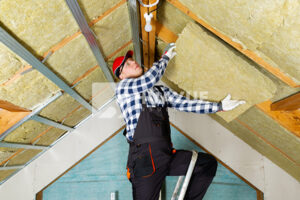
The first limitation is installation. Cutting and fitting mineral wool can disturb fibres, especially in enclosed or overhead work. Follow the selected product’s safety instructions and local workplace requirements. Protective clothing, gloves, eye protection, ventilation, and suitable dust control may be needed for the task. These precautions concern handling; they do not mean that every mineral-wool product has the same safety classification or should be treated as interchangeable.
The second limitation is weight and space. A rigid acoustic board, a cavity batt, a blanket, and a high-density industrial board are not the same installation problem. The selected form may affect support, cutting, transport inside the building, ceiling loading, edge detailing, and the amount of usable room space. A thicker absorber can improve low-frequency performance in some arrangements, but “thicker” or “denser” is not a universal guarantee of better acoustics.
The third limitation is moisture and enclosure design. Mineral wool should not be treated as the air-control, water-control, or vapour-control layer simply because it fills a cavity. The wall or roof still needs a project-appropriate control strategy, and exposed products need protection suited to the environment. If a cavity has a leak or condensation problem, adding insulation without correcting the moisture path can hide the cause rather than solve it.
Finally, mineral wool does not eliminate every noise source. Impact noise, structure-borne vibration, low-frequency equipment noise, and flanking transmission may require resilient mounts, isolated frames, floating floors, added mass, flexible connections, or a specialist enclosure. The material may be part of the answer, but it should not be sold as a complete promise of silence.
Is Rock Wool Worth It for Soundproofing?
Rock wool is often worth considering when the wall, floor, ceiling, or enclosure needs cavity absorption alongside other acoustic measures.
Rock wool is worth it when its tested acoustic performance, product form, fire or thermal role, handling requirements, and installed cost fit the complete assembly. It is not automatically better than every other mineral-wool product.
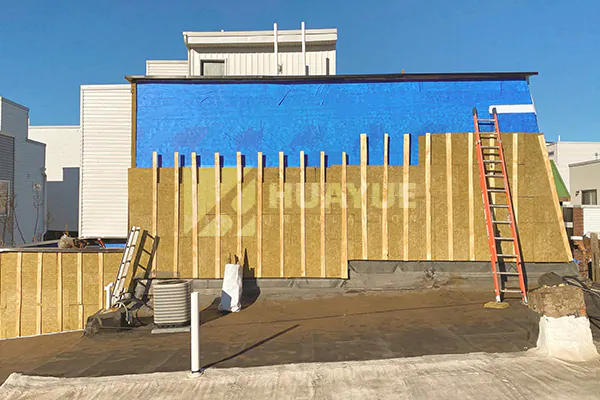
Rock wool is a type of mineral wool made from mineral or rock-based feedstock. The category relationship matters because product names can create false comparisons: “mineral wool” is broader than “rock wool,” and neither name alone proves a particular acoustic result. Fibre structure, airflow resistance, thickness, density, facing, mounting, and the surrounding construction all influence performance. In practice, a named product’s test data is more useful than a general statement that one material is “denser.”
Match the material to the noise path
| Noise-control task | What rock wool may contribute | What must still be designed or checked |
|---|---|---|
| Room echo and reverberation | Absorption in a wall panel, ceiling element, baffle, or other exposed treatment | Panel thickness, open acoustic face, coverage, placement, and frequency-dependent data |
| Voices or machinery through a partition | Absorption within the cavity and reduced cavity resonance | Mass, frame separation, boards, perimeter seals, penetrations, and flanking paths |
| Footfall or impact noise | Absorption in a floor void or part of a floor system | Resilient layers, structural isolation, floor build-up, and impact-sound test data |
| HVAC or equipment noise | Absorption in a purpose-designed enclosure, attenuator, or lining | Airflow, hygiene, fire, maintenance, vibration isolation, and system-specific testing |
This distinction helps answer the value question. If the project has an open cavity, a noisy internal partition, or a room with hard reflective surfaces, rock wool may provide useful acoustic control. If the main weakness is a hollow door, an unsealed service penetration, a rigid pipe connection, or a lightweight single-leaf wall, spending more on cavity insulation alone may produce a disappointing return.
For procurement, compare the same scope on every quotation: product form, thickness, declared density or other relevant property, facing, installation position, test method, frequency range, and whether the result belongs to the material or the complete assembly. Also compare waste, support, accessories, labour, and any enclosure or finish needed to keep fibres contained. This makes a higher material price easier to judge against the actual acoustic outcome.
Can Rock Wool Be Used for Acoustics?
Rock wool can be used for room acoustics, cavity treatment, equipment enclosures, and selected building systems when the product and finish are designed for that use.
Yes. Rock wool can be used in acoustic panels, bass-control assemblies, wall and ceiling cavities, floors, and industrial noise-control systems, but the exposed face, mounting, containment, and test evidence must match the application.
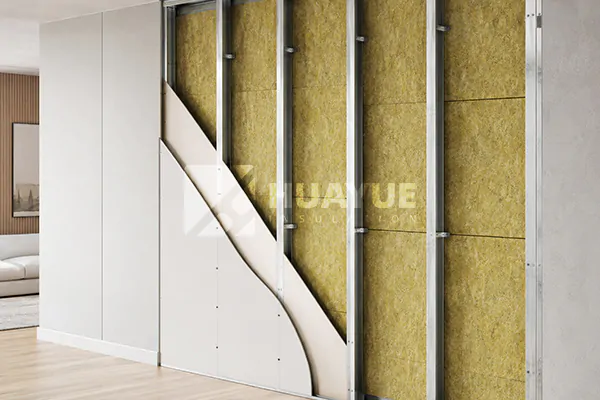
For room acoustics, the goal is usually to control reflections and reverberation rather than stop all sound leaving the room. Rock wool can be framed or supported as a panel, suspended as a ceiling element, or incorporated into a larger absorber. The visible covering should be acoustically compatible with the design and robust enough for the space. Fibre containment, cleanability, impact protection, fire requirements, and appearance may matter as much as the core material.
For building sound insulation, rock wool is commonly considered inside wall, ceiling, and floor assemblies. Here the surrounding layers do most of the blocking: boards or other mass, separation between leaves, resilient connections, and airtight detailing. Rock wool helps manage the cavity, but the rating must be attributed to the tested system, not transferred from a loose material value.
For industrial acoustics, the selection becomes more application-specific. An enclosure around machinery may need structural support, access panels, ventilation, vibration control, durable facings, and maintenance provisions. A duct or attenuator needs a product suitable for the airflow and operating environment. A general insulation board should not be assumed suitable for every exposed, high-velocity, wet, dirty, or mechanically demanding location.
When reviewing technical submittals, look for frequency-dependent absorption coefficients tested under a recognized method such as ISO 354 or ASTM C423 when the purpose is absorption. For a wall or floor, request sound-insulation data for the complete build-up under the project’s applicable test or rating method. This is the most reliable way to avoid choosing a product from a single headline number.
Conclusion
Rock wool and mineral wool work best when matched to the noise path and a tested, sealed assembly. Share the application and main noise source to begin a product discussion.