







Searching for a rock wool panel usually means you need a flat insulation product for a wall, roof, partition, or panelized building system.
A rock wool panel is a rigid insulation board or a metal-faced sandwich panel with a rock wool core. The correct choice depends on the application, panel construction, thickness, facing, and tested performance—not the name alone.
This guide answers the questions buyers ask before comparing panels: what the term means, where panels are used, how to interpret fire and acoustic claims, and which details belong in an RFQ.
What Is a Rock Wool Panel?
The phrase “rock wool panel” can describe more than one physical product, so the first step is to define the construction.
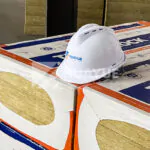
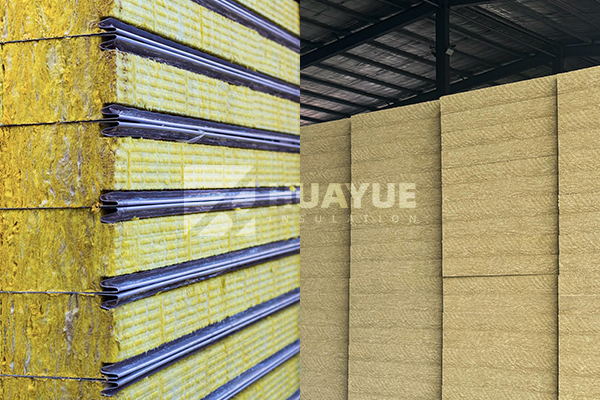
A rock wool panel may be an unfaced or faced rigid board, or a factory-made sandwich panel with a rock wool core between metal skins. Confirm which construction the quotation covers.
Rock wool is a mineral-fiber insulation made from mineral or rock-based raw materials. The fibers are formed into products such as boards, batts, blankets, and pipe sections. A panel or board is the flat form used when the project needs consistent coverage over a wall, roof, ceiling, floor, equipment surface, or framed cavity.
In a simple insulation board, the rock wool core is the main product and may be unfaced or covered with a facing. In a sandwich panel, the core is part of a complete factory-assembled element: the metal facings, adhesive or bonding method, edge profile, joints, and fasteners all form part of the system. These two products may share the phrase “rock wool panel,” but they are not interchangeable in a specification.
The term also needs a brand check. “Rock wool” and “stone wool” are generic material terms. <code>ROCKWOOL</code> is the trademark of an unaffiliated manufacturer, so it should not be used as a generic name or as evidence for another supplier’s product.
For a clear comparison, write the requested form in full: unfaced rock wool board, faced rock wool board, or rock wool-core sandwich panel. Then add the application, nominal dimensions, required thickness, facing, and performance documents. SinoInsulation’s rock wool panel product page can be used as a product-form route, while the final selection should follow the current technical document for the quoted model.
What Are Rock Wool Panels Used For?
Rock wool panels are selected for flat-surface insulation where thermal, acoustic, fire, or dimensional requirements need to be coordinated.
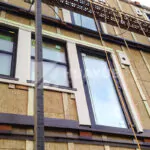
Typical uses include exterior and interior walls, roofs, ceilings, partitions, mechanical rooms, and factory-made envelope panels. The right use depends on the board construction, facing, support, joints, and tested assembly.
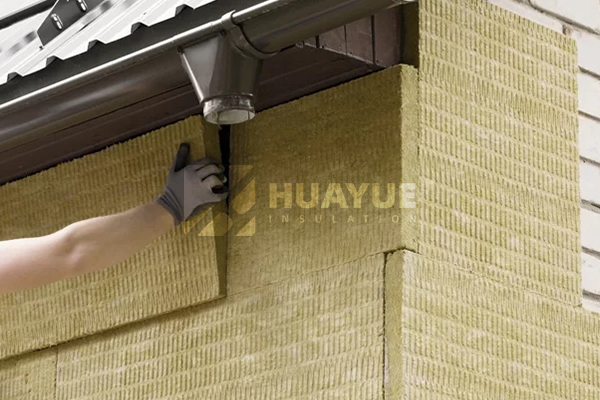
The same panel label does not make every application equivalent. A rigid board behind cladding is specified around the wall build-up and fixing method. A panel inside a framed partition must fit the cavity and work with the lining layers. A metal-faced sandwich panel must be selected as a complete envelope system, including joint design, support spacing, weather exposure, and structural requirements.
| Application | What the panel contributes | Details to confirm |
|---|---|---|
| Exterior or cavity wall | Continuous flat insulation within a wall build-up | Board form, thickness, fixing, cladding, moisture control, and tested assembly |
| Roof or ceiling | Coverage across a horizontal or sloped surface | Load path, retention, joints, facing, drainage, and access for installation |
| Interior partition | Cavity filling and possible sound absorption | Clear cavity size, lining layers, penetrations, and acoustic test scope |
| Mechanical or service room | Thermal and acoustic treatment around equipment spaces | Surface temperature, impact protection, facing, maintenance access, and local safety rules |
| Rock wool-core sandwich panel | A factory-assembled wall or roof element | Core identity, metal skins, joint profile, fasteners, weather exposure, and assembly test |
For flat insulation, panel edges and joints matter as much as nominal thickness. Gaps, compression, damaged facings, unsealed penetrations, or poorly coordinated fasteners can change the result of the complete construction. For this reason, an application description should say whether the material is inside a cavity, behind a cladding system, or supplied as a complete sandwich panel.
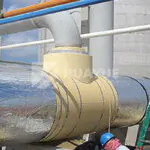
Do not use a board specification to answer a pipe-insulation request. Pipe sections have different geometry and fit requirements. For dimensions, compare the form-specific fields in SinoInsulation’s rock wool size guide before requesting a quotation.
Is a Rock Wool Panel Fire Resistant?
Fire wording is useful only when it identifies the exact product, test method, and construction boundary.
Rock wool fibers are generally noncombustible, but that fact alone does not give every rock wool panel a fire classification or a fire-resistance period. Verify the complete product or assembly before specifying it.
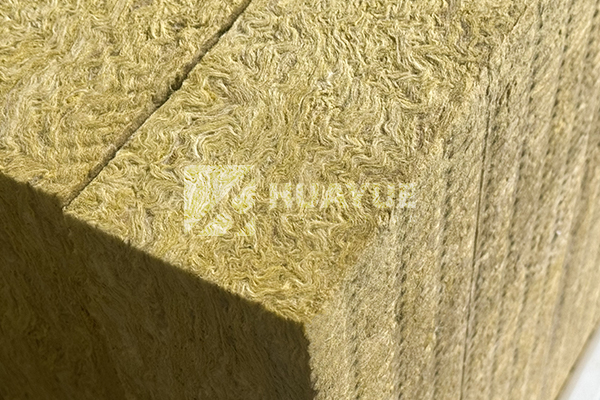
The NIOSH Pocket Guide describes mineral wool fibers, including rock wool and slag wool, and identifies the fibers as noncombustible. That material-level description is different from a construction claim such as a reaction-to-fire class or an EI-rated wall. The latter depends on the tested specimen and the way it was installed.
For a fire-sensitive project, separate three questions:
- What is the core? Confirm the product identity, density or construction, thickness, and whether a binder or facing changes the declared scope.
- What is the panel? Check the complete panel’s reaction-to-fire documentation, including the core, facings, joints, and edge treatment where relevant.
- What is the assembly? For a fire-resistance period, review the tested wall, roof, partition, or enclosure with its supports, fasteners, penetrations, and installation details.
“Fire resistant,” “noncombustible,” “A1,” “A2,” “EI 60,” and similar terms do not describe the same property. A product may have a material reaction classification while the complete wall or roof requires a separate fire-resistance test. The result can also change with panel thickness, joint design, metal skin, support spacing, and penetrations.
When comparing suppliers, request a current document that matches the offered model rather than accepting a generic certificate for “rock wool.” Record the standard, sample description, thickness, density or construction, test direction, and validity of the document. If the supplier cannot identify the exact tested product and assembly, treat the fire claim as unconfirmed.
Is Rock Wool Good for Sound Insulation?
Rock wool panels can support acoustic control, but sound absorption and sound isolation are different design tasks.
A rock wool panel can absorb reflected sound when it is used as part of an acoustic treatment or cavity. It does not guarantee soundproofing by itself; transmission depends on the complete wall, ceiling, floor, or enclosure.
The OSHA Technical Manual lists mineral wool among porous or fibrous materials used for sound absorption. Absorption reduces reflected sound and reverberation inside a space. Isolation or transmission loss is the reduction of sound passing from one space to another, which also depends on mass, separation, airtightness, structural connections, doors, glazing, services, and flanking paths.
That distinction changes the product question. For a room-treatment panel, ask for sound-absorption data and check the mounting condition, exposed surface, cover, thickness, air gap, and frequency range. For a partition or equipment enclosure, ask for the tested construction’s sound-transmission rating and review the complete build-up rather than using the panel’s absorption value as a substitute.
Density alone is not a reliable acoustic shortcut. A more useful comparison identifies the product form, thickness, density or airflow-resistance data where available, facing, mounting, cavity depth, and test method. Two panels with the same nominal thickness may perform differently when one is exposed behind an acoustically transparent finish and the other is tightly enclosed between rigid layers.
Installation quality also matters. Keep the insulation continuous, avoid unintended gaps and severe compression, coordinate penetrations, and seal the surrounding construction where the design depends on airtightness. If the main problem is reverberation, more absorber surface may matter. If the main problem is airborne transfer, the design may need additional mass, decoupling, and perimeter sealing. For a deeper acoustic comparison, use the existing rock wool sound insulation guide as a separate topic route.
How Do You Choose the Right Rock Wool Panel Thickness?
Thickness should be chosen from the assembly requirement, not from a generic panel name or a density label alone.
Start with the application and required thermal, acoustic, fire, and space conditions. Then match thickness, density, dimensions, facing, and test documents to the exact panel or board being quoted.
Use the following fields to turn a vague request for “rock wool panel” into a comparable specification:
| Field | Why it matters | What to request or confirm |
|---|---|---|
| Product construction | Board and sandwich panel have different boundaries | Unfaced board, faced board, or complete metal-faced panel |
| Application and orientation | Walls, roofs, partitions, and equipment spaces impose different constraints | Location, support method, exposure, and access conditions |
| Thickness | Controls the available insulation depth and affects thermal and acoustic results | Nominal thickness, tolerance, and whether compression is allowed |
| Density or mechanical grade | May relate to handling, support, compression, and application needs | Declared value for the exact model, not a generic range |
| Facing and edge profile | Affects handling, moisture or vapor-control design, joints, and finish compatibility | Facing material, joint detail, edge treatment, and repair method |
| Thermal data | Connects the product to the project’s heat-flow requirement | Declared thermal conductivity, R-value or RSI, test method, and conditions |
| Fire and acoustic data | Keeps material claims separate from assembly performance | Matching test report, classification, absorption or transmission data, and scope |
Before ordering, ask the supplier to confirm the model, form, dimensions, thickness, density, facing, packing, and documentation against the drawing or specification. Check whether the requested result applies to the insulation layer or to the complete assembly. Keep imperial R-value, metric RSI, thermal conductivity, sound absorption, and sound transmission ratings in their original units until the test basis is understood.
A concise RFQ can begin with two inputs: the application and the intended use of the panel. Add the approximate dimensions or target performance if already known. Drawings, quantity, destination, packaging, and certification requirements can follow after the correct product construction is identified.
Conclusion
Choose rock wool panels by construction, application, tested performance, and installation boundary. Share the intended use first; the right specification can follow.