








Rock wool insulation rolls are widely used by commercial builders and contractors for efficient thermal and acoustic insulation in general building projects.</p>
<strong>Rock wool insulation rolls provide easy-to-install, fire-resistant, and durable insulation for walls, roofs, and floors, offering high thermal and acoustic performance in a convenient roll format for commercial construction.</strong>
<h2>Does ROCK WOOL insulation come in rolls?</h2>
<p>Yes, rock wool insulation comes in rolls, also known as blankets. These rolls are manufactured by spinning molten rock into fine fibers, then forming them into flexible, semi-rigid mats. The roll format is especially popular for large, continuous surface coverage such as walls, ceilings, roofs, and partition systems in commercial and industrial buildings.</p>
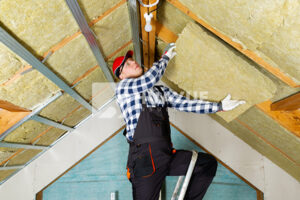
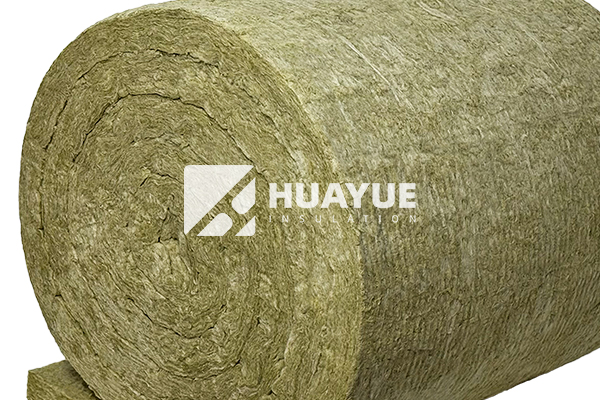
<figure><img src="https://sinoinsulation.com/wp-content/uploads/2026/06/rock-wool-insulation-rolls-for-building-projects.jpg" alt="rock wool insulation rolls product image" title="Rock wool insulation rolls for building projects" /><figcaption>Rock wool insulation rolls for building projects</figcaption></figure>
<strong>Key features of rock wool insulation rolls:</strong>
<ul><li><strong>Flexible and easy to cut:</strong> Fits around pipes, ducts, and irregular surfaces.</li><li><strong>Wide range of thicknesses and densities:</strong> Typically available from 30mm to 100mm thickness; densities from 40 to 120 kg/m³.</li><li><strong>Faced and unfaced options:</strong> Can include aluminum foil, glass cloth, or other vapor barriers for specific requirements.</li><li><strong>Thermal and acoustic performance:</strong> Low thermal conductivity (typically 0.033–0.040 W/m·K) and high sound absorption.</li><li><strong>Fire resistance:</strong> Non-combustible, withstanding temperatures above 1000°C.</li></ul>
<strong>Commercial supply considerations:</strong>
<ul><li><strong>Standard roll sizes:</strong> Common widths are 600mm or 1200mm, with lengths from 3m to 10m depending on thickness.</li><li><strong>Packaging:</strong> Rolls are compressed for efficient transport and storage.</li><li><strong>Certifications:</strong> Often supplied with compliance to EN, ASTM, or ISO standards as required by project specifications.</li><li><strong>Customization:</strong> Some suppliers offer custom dimensions, facings, and densities.</li></ul>
<h2>What are the downsides of ROCK WOOL insulation?</h2>
<p>While rock wool insulation rolls offer many advantages, there are some limitations and buyer concerns to consider:</p>
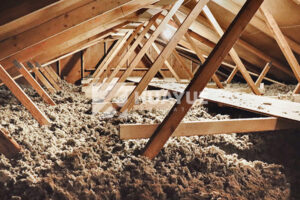
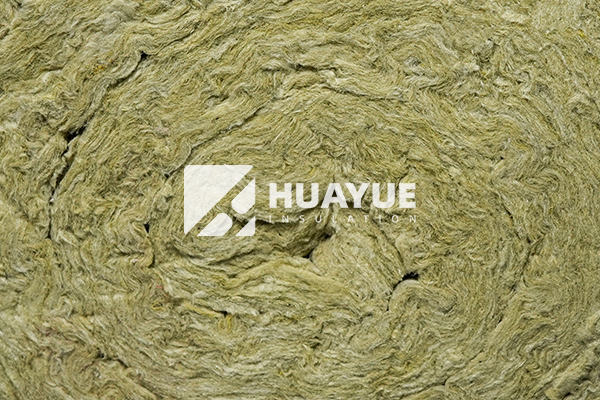
<figure><img src="https://sinoinsulation.com/wp-content/uploads/2026/06/rock-wool-insulation-rolls-product-detail-close-up.jpg" alt="rock wool insulation rolls detail image" title="Rock wool insulation rolls product detail close-up" /><figcaption>Rock wool insulation rolls product detail close-up</figcaption></figure>
<ul><li><strong>Handling irritation:</strong> The fibers can cause skin, eye, and respiratory irritation during installation. Proper PPE (gloves, masks, goggles) is recommended.</li><li><strong>Moisture sensitivity:</strong> Although rock wool is water-repellent, it should not be exposed to sustained moisture or waterlogging, which may affect performance and longevity.</li><li><strong>Weight:</strong> Rock wool rolls are denser and heavier than glass wool alternatives, which may impact handling and structural load calculations.</li><li><strong>Cost:</strong> The initial material cost is typically higher than fiberglass (glass wool) insulation, though lifecycle performance may justify the investment.</li><li><strong>Compression risk:</strong> Excessive compression during installation can reduce thermal and acoustic effectiveness.</li></ul>
<strong>Table: Rock wool insulation rolls – Key Pros and Cons</strong>
<table><tr><th>Aspect</th><th>Advantage</th><th>Limitation</th></tr><tr><td>Fire resistance</td><td>Non-combustible, high temp stability</td><td>None</td></tr><tr><td>Thermal performance</td><td>Very good (low conductivity)</td><td>Slightly less than some closed-cell foams</td></tr><tr><td>Acoustic performance</td><td>Excellent sound absorption</td><td>None</td></tr><tr><td>Handling</td><td>Flexible, easy to cut</td><td>Can irritate skin/respiratory system</td></tr><tr><td>Moisture resistance</td><td>Water-repellent, vapor barrier options</td><td>Not for direct water exposure</td></tr><tr><td>Weight</td><td>Robust, dense structure</td><td>Heavier than glass wool</td></tr><tr><td>Cost</td><td>Long-term value</td><td>Higher upfront cost</td></tr></table>
<h2>Do I need an air gap with ROCK WOOL insulation?</h2>
<p>Rock wool insulation rolls do not always require an air gap, but the decision depends on the application and building design.</p>
<strong>When an air gap is beneficial:</strong>
<ul><li><strong>External walls and roofs:</strong> An air gap between the insulation and the weather-facing layer can help manage moisture and prevent condensation, especially in metal or ventilated facades.</li><li><strong>Sound insulation:</strong> An air gap can enhance acoustic performance in partition systems.</li></ul>
<strong>When an air gap is not needed:</strong>
<ul><li><strong>Cavity walls:</strong> The roll can be installed directly between studs or joists, fully filling the cavity.</li><li><strong>Continuous insulation:</strong> For solid wall retrofits or overlay systems, direct installation is suitable if a vapor barrier is provided as needed.</li></ul>
<strong>Best practices:</strong>
<ul><li>Always follow local building codes and manufacturer installation guidelines.</li><li>For vapor control, consider using faced rolls or adding a separate vapor barrier if required by climate or building use.</li></ul>
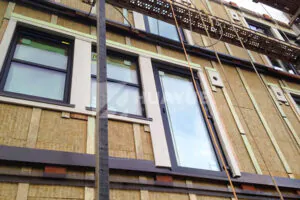
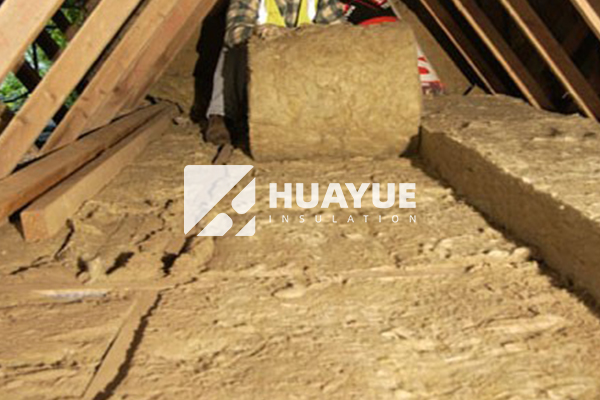
<figure><img src="https://sinoinsulation.com/wp-content/uploads/2026/06/rock-wool-insulation-rolls-installed-in-a-commercial-building-wall.jpg" alt="rock wool insulation rolls application image" title="Rock wool insulation rolls installed in a commercial building wall" /><figcaption>Rock wool insulation rolls installed in a commercial building wall</figcaption></figure>
<h2>Do mice chew through ROCK WOOL insulation?</h2>
<p>Rock wool insulation rolls are generally not attractive to mice or other rodents. The inorganic mineral fibers are not a food source and are unpleasant for rodents to nest in or chew through.</p>
<strong>Key points:</strong>
<ul><li><strong>Rodent resistance:</strong> The dense, fibrous structure discourages nesting and tunneling.</li><li><strong>No nutritional value:</strong> Unlike some organic insulations, rock wool does not support mold, insects, or rodents.</li><li><strong>Building envelope:</strong> Proper sealing of gaps and entry points is still essential to prevent rodent ingress.</li></ul>
In extensive commercial projects, it is good practice to coordinate with pest management to ensure the integrity of the entire insulation system.
<h2>What insulates better, ROCK WOOL or fiberglass?</h2>
<p>When comparing rock wool insulation rolls to fiberglass (glass wool) rolls, both materials provide effective thermal and acoustic insulation, but there are important differences:</p>
<strong>Thermal insulation (R-value):</strong>
<ul><li><strong>Rock wool:</strong> Typical R-value per inch is slightly higher than standard fiberglass, due to higher density and lower thermal conductivity.</li><li><strong>Fiberglass:</strong> Offers good insulation but may require greater thickness for the same performance.</li></ul>
<strong>Acoustic insulation:</strong>
<ul><li><strong>Rock wool:</strong> Superior sound absorption, especially at low frequencies, due to its dense, non-directional fiber structure.</li><li><strong>Fiberglass:</strong> Good for general sound reduction but less effective in demanding acoustic applications.</li></ul>
<strong>Fire resistance:</strong>
<ul><li><strong>Rock wool:</strong> Fully non-combustible, withstands very high temperatures.</li><li><strong>Fiberglass:</strong> Also non-combustible, but may melt at lower temperatures than rock wool.</li></ul>
<strong>Moisture and durability:</strong>
<ul><li><strong>Rock wool:</strong> Water-repellent, does not slump or degrade over time.</li><li><strong>Fiberglass:</strong> Can lose performance if exposed to moisture.</li></ul>
<strong>Table: Rock wool insulation rolls vs. Fiberglass (glass wool) rolls</strong>
<table><tr><th>Property</th><th>Rock wool insulation rolls</th><th>Fiberglass (glass wool) rolls</th></tr><tr><td>Thermal R-value</td><td>Slightly higher</td><td>Good</td></tr><tr><td>Acoustic control</td><td>Excellent</td><td>Moderate</td></tr><tr><td>Fire resistance</td><td>Up to 1000°C+</td><td>Up to ~500°C</td></tr><tr><td>Moisture handling</td><td>Water-repellent</td><td>Can absorb moisture</td></tr><tr><td>Weight</td><td>Heavier</td><td>Lighter</td></tr><tr><td>Handling</td><td>More dust, PPE needed</td><td>Softer, less irritation</td></tr><tr><td>Cost</td><td>Higher</td><td>Lower</td></tr></table>
<strong>Selection guidance:</strong> Choose rock wool insulation rolls for projects requiring top fire safety, acoustic control, or long-term durability. Fiberglass (glass wool) rolls are suitable for cost-sensitive applications with moderate performance needs.
<h2>FAQ</h2>
<strong>Q1: What building codes or standards apply to rock wool insulation rolls?</strong>
<p>A1: Common standards include EN 13162 (Europe), ASTM C665 (USA), and ISO 140 for acoustic performance. Always confirm project requirements with your supplier.</p>
<strong>Q2: Can rock wool insulation rolls be used in both walls and roofs?</strong>
<p>A2: Yes, they are suitable for a wide range of applications, including walls, roofs, floors, and HVAC ductwork, with appropriate facings and installation methods.</p>
<strong>Q3: Are there formaldehyde-free or low-emission options for rock wool insulation rolls?</strong>
<p>A3: Many manufacturers now offer low-emission or formaldehyde-free binders. Request documentation or certification from your supplier if this is a project requirement.</p>
<strong>Q4: How are rock wool insulation rolls packaged for shipment?</strong>
<p>A4: Rolls are typically compressed and wrapped in plastic film or bags, with clear labeling for product identification and handling instructions.</p>
<strong>Q5: What is the typical lead time for bulk orders of rock wool insulation rolls?</strong>
<p>A5: Lead time varies by supplier and order size, but standard products are often available within 2–4 weeks. Custom sizes or facings may require longer.</p>
<h2>Conclusion</h2>
<p>Rock wool insulation rolls deliver robust fire, thermal, and acoustic performance for commercial building projects, making them a reliable choice for contractors seeking premium insulation solutions.
Rock wool insulation rolls: Overview, Features, and Selection Guidance
You may also be interested in:
Ready to Get Started?
Get in touch with our experts for personalized solutions tailored to your needs.
Get Free QuoteLatest Articles
Let's Work Together
Ready to take your business to the next level? Get in touch with our team of experts and let's discuss how we can help you achieve your goals.
Get Free Solutions