







Rock wool faced insulation is a widely used solution for thermal, acoustic, and fire protection in commercial and industrial buildings. This article explains its forms, benefits, limitations, and what B2B buyers should consider when specifying these products.
Rock wool faced insulation is a type of mineral wool insulation that features a protective facing—such as foil, glass cloth, or other materials—bonded to the rock wool core, enhancing moisture resistance, handling, and installation for commercial and industrial applications.
Do they make faced ROCK WOOL insulation?
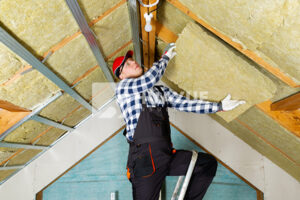
Yes, manufacturers produce rock wool faced insulation in several forms, including boards, blankets (rolls), and pipe sections. The “facing” refers to a layer—commonly aluminum foil, glass cloth, or even kraft paper—laminated to one or both sides of the rock wool. This facing improves mechanical strength, moisture resistance, and sometimes fire performance or aesthetics.
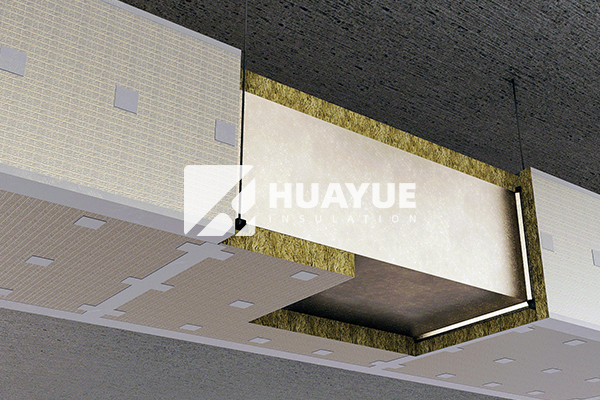
Faced rock wool insulation is selected based on project requirements. For example, aluminum foil facing acts as a vapor barrier, making it suitable for HVAC ducts, cold storage, or process piping where condensation control is critical. Glass cloth facings are often used in environments needing higher durability or fire resistance.
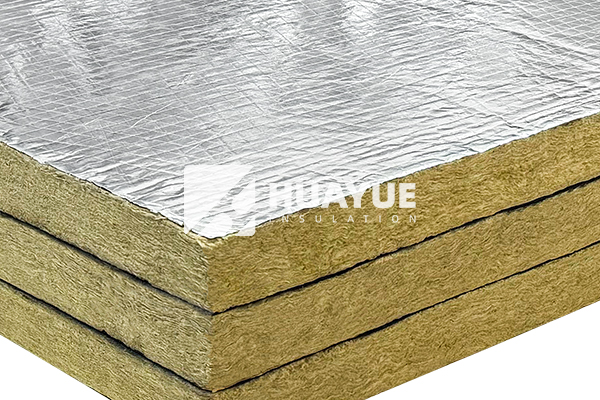
Common faced forms include:
What are the disadvantages of ROCK WOOL insulation?
While rock wool faced insulation offers many advantages, it also has some limitations that B2B buyers should be aware of:
- Water resistance is facing-dependent: The core rock wool is water-repellent but not waterproof. If the facing is damaged, moisture can penetrate and affect insulation performance.
- Handling and dust: Unfaced rock wool can release fibers and dust during installation. Faced products reduce this but do not eliminate it entirely.
- Mechanical strength: Compared to some rigid foam insulations, rock wool boards are less impact-resistant. Faced boards are stronger but may still need protection in high-traffic areas.
- Cost and weight: Rock wool is generally heavier and sometimes more expensive than glass wool or foam insulation for the same R-value.
- Compatibility with finishes: Some adhesives, paints, or coatings may not bond well to certain facings.
The table below compares key properties of faced rock wool insulation with other common faced insulation types:
| Property | Rock Wool Faced Insulation | Glass Wool Faced Insulation | Foam Glass Board |
|---|---|---|---|
| Fire Resistance | Excellent | Good | Excellent |
| Water Resistance | Good (if facing intact) | Moderate (facing-dependent) | Excellent |
| Acoustic Performance | Excellent | Good | Moderate |
| Mechanical Strength | Moderate | Low to Moderate | High |
| Weight | High | Low | High |
| Typical Cost | Moderate to High | Low to Moderate | High |
Do I need an air gap with ROCK WOOL insulation?
An air gap is not always required when installing rock wool faced insulation, but it can be beneficial depending on the application and facing type.
- With foil-faced insulation: An air gap between the foil surface and the building envelope can enhance thermal performance by reflecting radiant heat—especially in roofs or exterior walls.
- For vapor control: In cold pipelines or ducts, the facing acts as a vapor barrier. A tight fit is preferred to prevent condensation; an air gap is not usually needed.
- Acoustic applications: Air gaps can boost sound absorption but are not mandatory.
- Fire protection: Always follow local codes; sometimes, direct contact is required for fire-rated assemblies.
Summary: The need for an air gap depends on the insulation system design, local codes, and the specific facing used. Consult with your supplier or project engineer for best results.
What should B2B buyers know about rock wool faced insulation ?
B2B buyers should pay attention to the following when specifying or sourcing rock wool faced insulation:
- Facing Material and Properties: Select the facing (aluminum foil, glass cloth, kraft paper, etc.) based on moisture, fire, and mechanical requirements.
- Product Form and Dimensions: Boards, blankets, and pipe sections are available in a range of thicknesses, densities, and sizes. Confirm these match your project specifications.
- Thermal and Acoustic Ratings: Verify declared R-value (thermal resistance) and sound absorption coefficients. Ask for test data if needed.
- Packaging and Handling: Faced products are usually shrink-wrapped or carton-packed for protection. Confirm packaging suits your logistics and storage needs.
Table: Selection Guidance for Rock Wool Faced Insulation by Application
| Application | Recommended Form | Typical Facing | Key Considerations |
|---|---|---|---|
| HVAC Ducts | Board/Blanket | Aluminum Foil | Vapor barrier, fire rating |
| Industrial Piping | Pipe Section | Aluminum Foil | Moisture control, fit accuracy |
| Partition Walls | Board | Glass Cloth | Fire, acoustic, durability |
| Roofs & Ceilings | Blanket/Board | Foil/Kraft Paper | Radiant barrier, ease of install |
| Marine/Offshore | Board | Glass Cloth | Corrosion resistance, IMO cert. |
What should B2B buyers know about rock wool faced insulation ?
- Supplier Reliability: Choose suppliers with proven track records, consistent quality, and clear documentation. Request certifications relevant to your region (such as EN, ASTM, or ISO standards).
- Lead Time and Customization: Large projects may require custom sizes or facings. Confirm lead times, minimum order quantities, and after-sales support.
- Lifecycle Cost: Consider not just initial price, but long-term performance, maintenance, and energy savings.
- Quality Consistency: Ask for batch test reports, especially for critical projects.
- Sustainability: Rock wool is often made from recycled materials and is recyclable, which can help with green building certifications.
FAQ
Q1: What is the difference between faced and unfaced rock wool insulation?
Faced insulation has a protective layer bonded to the surface, enhancing moisture resistance, handling, and sometimes fire or vapor control. Unfaced insulation lacks this layer and is more exposed to environmental factors.
Q2: Can rock wool faced insulation be used outdoors?
Yes, but the facing must be weather-resistant, and additional cladding is often recommended for long-term durability.
Q3: How is rock wool faced insulation typically installed?
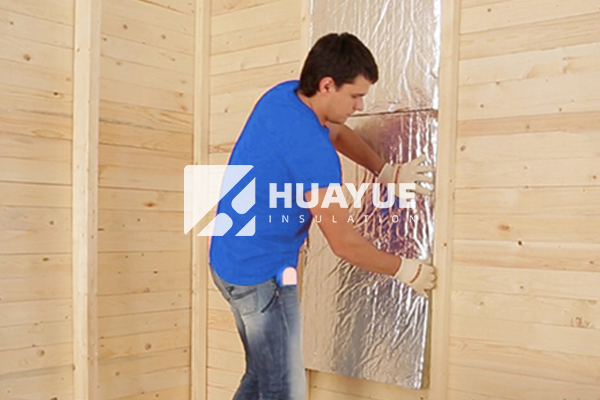
Boards and blankets are cut to size and fixed with mechanical fasteners or adhesives. Pipe sections are wrapped and sealed, often with tape at joints to maintain vapor barrier integrity.
Q4: Is rock wool faced insulation suitable for high-temperature applications?
Yes, rock wool can withstand high temperatures, but facing material selection is crucial—aluminum foil and glass cloth are common for high-heat environments.
Q5: What is the typical density range for rock wool faced insulation?
Densities vary by product and application but commonly range from 40 to 150 kg/m³ for boards and blankets.
Conclusion
Rock wool faced insulation combines fire, acoustic, and thermal performance with enhanced handling and protection—making it a versatile choice for B2B projects across many sectors.