







Rock wool flat roof insulation is a widely used solution for commercial roofing systems, offering robust fire resistance and thermal performance for flat roof applications.
Rock wool flat roof insulation provides effective thermal, acoustic, and fire-resistant properties for flat roof systems, making it a reliable choice for commercial roofing contractors and specifiers seeking durable and safe insulation solutions.
Can I use ROCK WOOL in a flat roof?
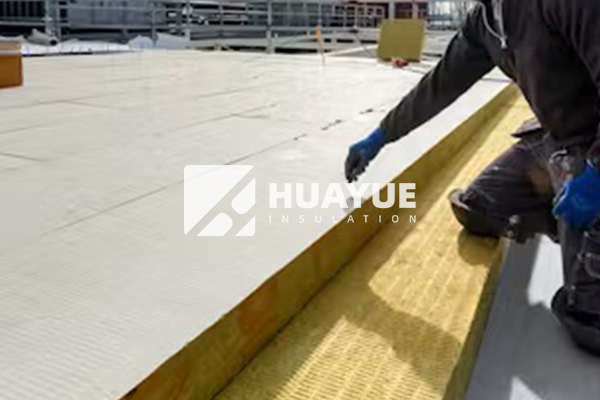
Yes, you can use rock wool in a flat roof. Rock wool flat roof insulation is specifically engineered for use in flat and low-slope roofing systems. It is typically supplied as rigid or semi-rigid boards that offer high compressive strength, dimensional stability, and low water absorption—key requirements for roof insulation exposed to mechanical loads and potential moisture.
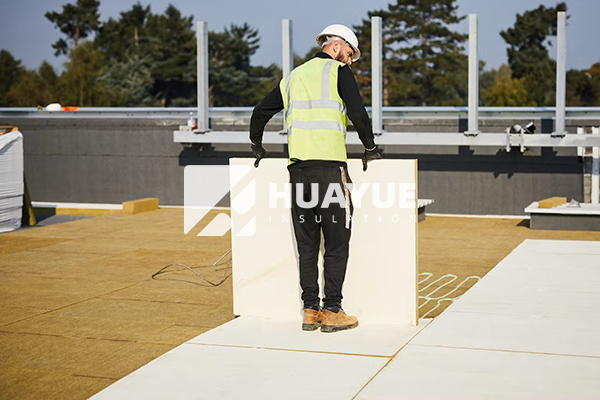
Rock wool boards are compatible with a variety of flat roof assemblies, including inverted, warm, and protected membrane roofs. They can be installed under single-ply, bituminous, or liquid-applied membranes. When specified correctly, rock wool ensures continuous thermal coverage and supports the roof structure.
Key considerations when using rock wool flat roof insulation:
What are the disadvantages of ROCK WOOL insulation?
While rock wool flat roof insulation offers many advantages, it also has some limitations:
- Weight: Rock wool boards are heavier than many foam-based alternatives, which may impact handling and require assessment of roof load capacity.
- Water absorption risk: Although rock wool is water-repellent, prolonged or severe exposure to standing water can reduce performance if not protected by a reliable waterproofing membrane.
- Cost: Upfront material cost can be higher than some alternatives, though lifecycle cost may be lower due to durability and fire resistance.
- Cutting and dust: Cutting rock wool boards can generate dust fibers; proper PPE is recommended during installation.
Comparison Table: Rock Wool vs. Other Flat Roof Insulation Materials
| Property | Rock Wool Board | Polyisocyanurate (PIR) | Expanded Polystyrene (EPS) |
|---|---|---|---|
| Fire Resistance | Excellent (non-combustible) | Moderate (may burn) | Poor (flammable) |
| Compressive Strength | High | High | Moderate |
| Water Absorption | Low (if protected) | Very low | Low |
| Weight | Higher | Low | Low |
| Acoustic Performance | Excellent | Moderate | Low |
| Cost | Medium to High | High | Low |
| Environmental Impact | Recyclable, mineral | Chemical-based | Chemical-based |
Is ROCK WOOL good for roof insulation?
Rock wool flat roof insulation is highly regarded for commercial roof insulation due to its unique combination of thermal, fire, and acoustic performance. Its non-combustible mineral composition makes it a preferred choice for buildings with strict fire safety requirements, such as hospitals, schools, and warehouses.
- Thermal performance: Rock wool boards achieve low thermal conductivity, helping maintain energy efficiency and occupant comfort.
- Fire safety: Classified as non-combustible (typically Euroclass A1 or A2), rock wool helps prevent fire spread and withstands high temperatures.
- Acoustic insulation: The open fiber structure provides excellent sound absorption, beneficial for reducing rain and impact noise on flat roofs.
- Durability: Resistant to most chemicals, vermin, and aging, with stable performance over decades.
For commercial roofing contractors and specifiers, rock wool flat roof insulation offers a reliable, code-compliant solution for high-performance roof assemblies.
Do I need an air gap with Rock wool insulation?
An air gap is generally not required with rock wool flat roof insulation when the system is properly designed and installed. Rock wool boards are vapor-permeable and do not trap moisture, allowing the roof assembly to breathe. However, the need for an air gap depends on the overall roof build-up:
- Warm roof systems: Rock wool is installed directly below the waterproofing membrane, with no air gap.
- Inverted roofs: Boards are placed above the membrane, protected by ballast; no air gap is needed.
- Cold roof systems: These are rare in commercial flat roofs but may require ventilation to prevent condensation.
Always follow local codes and manufacturer guidance regarding vapor barriers, ventilation, and moisture control.
Can mold grow on Rockwool insulation?
Rock wool flat roof insulation is highly resistant to mold and microbial growth. Its mineral composition does not provide nutrients for mold, and the material’s vapor permeability helps prevent moisture accumulation when installed correctly. However, chronic water ingress or poor roof detailing can promote mold growth on organic debris or adjacent materials, so maintaining membrane integrity and proper installation is essential.
FAQ
Q1: What thickness of rock wool flat roof insulation is recommended?
A: Typical thicknesses range from 50mm to 200mm, depending on required thermal performance and local energy codes.
Q2: Can rock wool flat roof insulation be used with photovoltaic (PV) roof systems?
A: Yes, its high compressive strength supports rooftop PV installations, but coordinate with both insulation and PV system suppliers.
Q3: How is rock wool flat roof insulation packaged for large projects?
A: Boards are typically shrink-wrapped or palletized for mechanical handling and weather protection during delivery.
Q4: Does rock wool flat roof insulation require a vapor barrier?
A: In most warm roof systems, a vapor barrier below the insulation is recommended to prevent condensation.
Q5: Can rock wool flat roof insulation be custom-cut for non-standard roof shapes?
A: Yes, many suppliers offer custom sizes and edge profiles to suit project-specific requirements.
Conclusion
Rock wool flat roof insulation delivers proven fire, thermal, and acoustic benefits for commercial roofing projects. By understanding its advantages and limitations, contractors and specifiers can ensure safe, efficient, and durable roof assemblies.