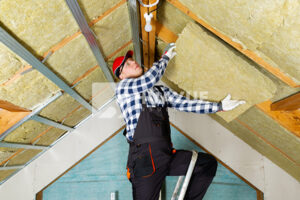








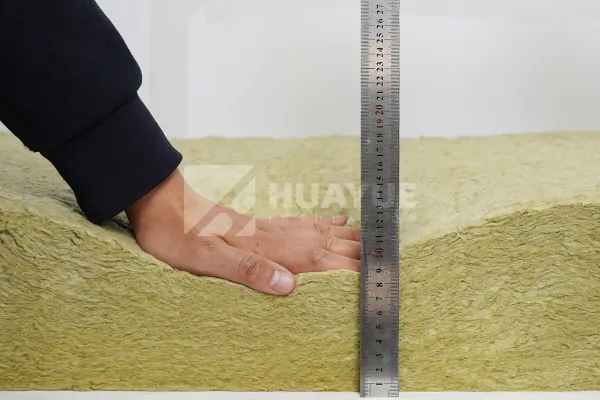
R30 mineral wool insulation is usually a batt about 7 to 7¼ inches thick, but the exact depth belongs to the named product and assembly.
A current North American ROCKWOOL product guide lists R30 batts at 7¼ inches (184 mm), while another mineral-wool batt data sheet lists about 7.1 inches. R30 is a thermal rating, not a universal thickness.
That distinction matters when you are planning an attic, comparing a supplier quotation, or deciding whether an air gap is required. The product label, framing depth, air sealing and roof ventilation all affect the final decision.
How Thick Is R30 Mineral Wool?
The familiar answer is about seven inches, but a product-specific label is more reliable than a generic per-inch estimate.
Named R30 mineral wool batts commonly fall near 7–7¼ inches, or roughly 180–184 mm. Use the exact thickness, width, density, test basis and installation scope shown for the product being quoted.
The ROCKWOOL North America product guide lists a Comfortbatt R30 product at 7¼ inches (184 mm) for both 16-inch and 24-inch on-centre wood-stud configurations. This is a useful named-product example, not a specification for every mineral wool batt. <code>ROCKWOOL</code> is a trademarked competitor brand; its product information should not be transferred to a SinoInsulation or HUAYUE product.
Why do different pages sometimes say 7 inches, 7.1 inches, 7¼ inches or even more? The answer can change with the product form, declared or tested R-value, thickness rounding, framing application, test method, temperature and whether the number refers to the insulation alone or a complete assembly. A batt marked R30 has already been evaluated under the manufacturer’s stated product and test conditions. Multiplying a generic “R-value per inch” by a guessed thickness can therefore produce a useful estimate, but it does not replace the product label.
For procurement, keep three fields together: the R-value, the physical thickness and the product form. A board, batt, blanket and loose-fill product may all be described as mineral wool, but they do not share the same fit, installation or documentation requirements. Also confirm whether the offered thickness is nominal, compressed, installed or tested. A quotation that says only “R30 mineral wool” is incomplete until the supplier identifies the model and supplied form.
R30 also does not mean that every attic should stop at R30. The required attic level depends on climate, local requirements, the project target and whether existing insulation is being supplemented. Treat 7–7¼ inches as a product-selection starting point, then check the actual installation depth and the complete thermal boundary.
Is an R30 Mineral Wool Batt Enough for an Attic?
R30 may satisfy a specified insulation layer, but an attic is not complete because a package says R30.
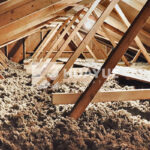
For an unconditioned, vented attic, an R30 batt can be a suitable ceiling-plane insulation layer when it meets the project target and is installed continuously. A finished or sloped attic needs a different rafter-and-roof-deck check.
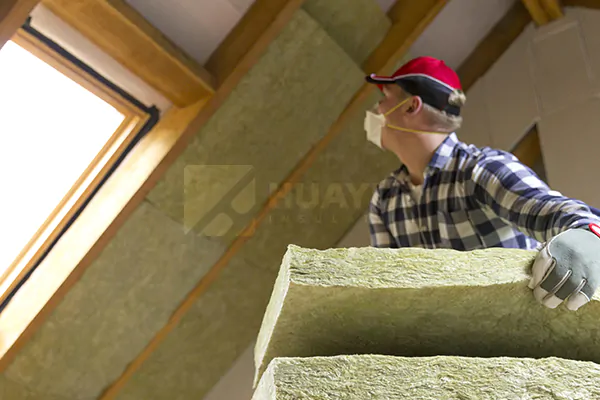
Start by identifying which surface separates the conditioned space from the attic.
| Attic condition | Where the insulation belongs | What must be checked |
|---|---|---|
| Unconditioned attic above a flat ceiling | Across the attic floor or ceiling plane | Air sealing below the insulation, even depth, full coverage, access hatch and clear soffit ventilation |
| Finished attic or cathedral ceiling | In the roof or rafter assembly | Rafter depth, roof-deck relationship, ventilation or unvented design, control layers and assembly evidence |
| Storage platform or raised attic floor | At the intended thermal boundary, not simply wherever there is space | Compression, service access, load support and continuity around the platform |
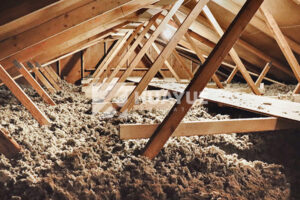
For an attic floor, the first job is air sealing. The U.S. Department of Energy’s Building Science Education guidance recommends sealing attic-floor penetrations and joints before adding insulation, because air movement can carry heat and moisture through openings. The insulation then needs to be installed to a consistent depth, with tight joints and no avoidable voids or compression. An R30 label cannot compensate for thin areas around eaves, hatches, penetrations or framing.
The second job is ventilation protection. In a vented attic, insulation should not cover soffit vents. ENERGY STAR attic guidance describes rafter vents as channels that allow outside air to move from soffits toward gable or ridge vents. If the project target requires a deeper insulation layer, the baffle must preserve the ventilation path while allowing insulation to extend to the intended perimeter.
The third job is checking the target itself. Some projects require more than R30, while others use R30 as one layer in a higher total value. Do not infer code compliance from a product label without checking the jurisdiction, climate zone and assembly. If the attic is conditioned or the insulation follows the sloped roof, ask whether the design is vented or unvented before selecting a batt. The same 7¼-inch product can be a reasonable attic-floor layer but a poor fit if the rafter cavity must also reserve space for a ventilation channel.
What Are the Disadvantages of Mineral Wool Insulation?
Mineral wool can be a strong option, but its limitations become visible when the project is tight on labor, space, weight, budget or installation control.
The main disadvantages are handling irritation, variable installed cost, greater handling or support demands for some products, difficult fitting in irregular spaces, and the fact that mineral wool does not replace air sealing or moisture-control design.
The first limitation is handling. The NIOSH Pocket Guide identifies skin, eye and respiratory irritation as possible exposure effects for mineral wool fibers. Cutting and moving batts should follow the product safety data sheet, the task assessment and appropriate workplace controls. This is a practical installation issue, not a reason to make unsupported claims about every product’s long-term health effect.
The second is installed cost. Mineral wool price comparisons can change after freight, pack coverage, cutting waste, labor, supports, protective equipment and required documents are included. A material-only price is not a reliable installed-system comparison. The U.S. Department of Energy’s home insulation guide shows that insulation costs vary by material and R-value, but it also cautions that broad figures are not a substitute for a local quotation. For a B2B purchase, compare the same area, R-value target, product form and delivery scope.
The third is space and handling. A denser or more rigid batt may be useful in a particular cavity, but it can also require more careful cutting, carrying and support than a lighter alternative. Do not rank materials by density alone. Confirm the actual mass per pack, thickness tolerance, width, fixing or retention method and maximum unsupported span where relevant.
The fourth is fit. Mineral wool can perform poorly when it is left short of the cavity, cut around services without care, compressed into a space that is too small, or installed with open joints. Irregular cavities may need more pieces, more cutting or a different product form. The opposite problem also matters: forcing a batt into a shallow cavity can change the installed condition and may invalidate the product’s labeled value.
The fifth is control-layer design. Mineral wool is insulation; it is not automatically an air barrier, vapor retarder or weatherproof roof. The need for facings, membranes, drainage, drying paths and roof protection depends on the assembly, climate and local requirements. A supplier should therefore review the complete build-up instead of promising that an unfaced or faced product solves every moisture condition.
Do You Need an Air Gap with Rock Wool?
“Air gap” can mean an unwanted installation void, a designed ventilation channel or a separate air/vapor-control layer.
You normally do not leave an intentional gap inside a fitted mineral-wool cavity. However, a vented roof or attic may require a separate air channel above the insulation, maintained by a baffle and connected to the ventilation path.
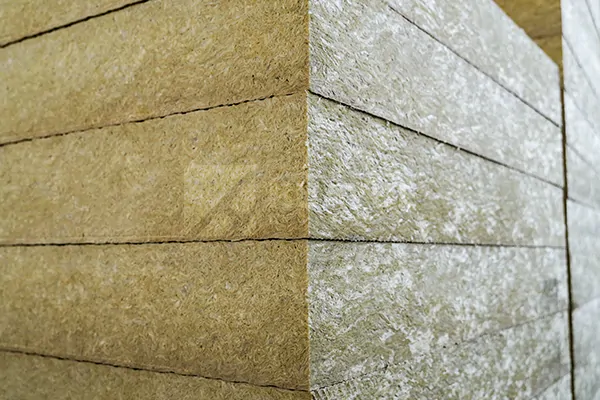
These three conditions should not be confused:
- An installation void is an unintended space between the batt and the framing or air barrier. It can reduce continuity and create a weak spot. DOE guidance for floors over unconditioned spaces calls for batts to fit tightly with no gaps, compression or voids. Fit the insulation to the cavity without unnecessary gaps or displaced sections.
- A ventilation channel is deliberately built into some vented roof assemblies. The Department of Energy’s baffle guidance describes baffles as chutes that maintain a 2-inch air gap between the roof deck and insulation and guide air from soffit vents toward a ridge vent. The exact dimension and detail remain subject to the project design and local requirements.
- An air or vapor-control layer is a membrane, sealed ceiling plane, facing or other assembly component. It is not the same thing as an open cavity behind the insulation. Its position and continuity depend on climate, interior conditions and the roof or wall design.
For an attic-floor installation under a vented roof, the usual logic is: seal the ceiling plane, install baffles where soffit ventilation must remain open, then place the insulation so it reaches the intended perimeter without blocking airflow. The baffle preserves ventilation above the insulation; it does not mean the batt should float away from the ceiling plane.
For insulation between rafters, first establish whether the roof is designed as vented or unvented. A vented sloped roof may need a continuous channel between the roof deck and insulation. An unvented assembly follows a different control-layer and code path. Do not add a random air space because a generic article says mineral wool needs one, and do not remove a designed channel because the batt appears to fill the cavity.
The practical check is continuity: continuous insulation where it should be, continuous air control where it is required, and continuous ventilation where the roof design calls for it. If a quotation does not show which boundary the air gap belongs to, ask for the section detail before ordering.
How Should Buyers Specify R30 Mineral Wool?
The most useful R30 inquiry identifies the installation boundary before it asks for a price.
Send the application, target R-value, available depth and whether the insulation is for an attic floor or a sloped roof. Then compare the named product, thickness, fit, ventilation detail and supporting documents.
Use this short sequence for a like-for-like specification:
- Define the boundary. State attic floor, ceiling, rafter cavity, roof deck or another assembly. Say whether R30 is the insulation-layer target or a whole-assembly target.
- Name the product form. Request batt, board, blanket or loose fill explicitly. Do not accept “mineral wool” as the complete product description.
- Confirm the physical depth. Record the exact thickness in inches and millimetres, the width, the framing spacing and the required tolerance. For a named R30 batt, expect the supplier document to explain why its physical depth is around 7–7¼ inches or another value.
- Check the thermal basis. Keep the declared R-value or thermal conductivity, test method, temperature and thickness together. A generic R-per-inch estimate is useful for screening, not for replacing the product document.
- Review the attic detail. Confirm air sealing, baffles at soffits, access hatches, penetrations, heat-source clearances and whether the roof is vented or unvented.
- Review limitations and documents. Request the current product data sheet, SDS, installation instructions and any project-specific fire, acoustic, moisture or assembly evidence that the specification requires. Do not treat a material-level statement as proof of a complete rated assembly.
SinoInsulation’s rock wool insulation product family can serve as a starting route by product form. Exact R30 availability, dimensions, density, facing, packaging and technical documents must be confirmed for the current quoted product; this article does not make a universal HUAYUE R30 supply claim.
For a first inquiry, the application and target R-value are usually enough to begin the discussion. Once the product form is clear, add the available cavity depth, approximate area, destination and document requirements so the quotation can be compared on an installed basis.
Conclusion
R30 mineral wool is commonly about 7–7¼ inches thick; choose it by named-product data, attic boundary, air sealing and designed ventilation—not thickness alone.
Share the application and target R-value with SinoInsulation to start a product-and-document comparison.