







Choosing mineral wool for a 2×6 wall involves more than finding the highest R-value on a label: cavity fit, installation, moisture, and pest control also matter.
For a nominal 2×6 cavity filled with 5.5-inch mineral wool batt insulation, a DOE Building America guide lists an illustrative cavity value of R-20 at about R-4.0 per inch. Other named products may list different values, so verify the current data sheet.
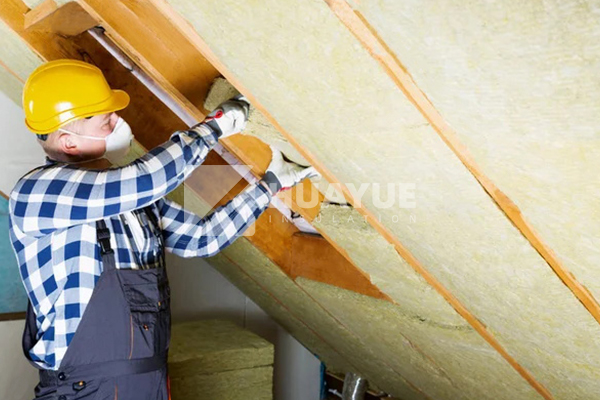
This guide answers the R-value, downside, and mouse-resistance questions together so buyers can compare a 2×6 insulation product with the complete wall design.
What Is the R-Value of 2×6 Mineral Wool Insulation?
The answer depends on the product, thickness, test basis, and whether you mean the insulation layer or the completed wall.
A practical generic reference is about R-20 for a 5.5-inch mineral wool batt in a 2×6 cavity, based on a U.S. Department of Energy Building America guide. A named product may be labeled differently; the current product document controls.
In North American framing language, “2×6” describes the nominal stud size. The insulation cavity in the DOE guide is 5.5 inches thick, not a full six inches. That distinction matters because compressing a batt designed for a deeper cavity, leaving part of the cavity empty, or selecting a product for the wrong stud spacing can change the result.
The DOE guide’s table of common 2×6 cavity options lists mineral wool batts at a total cavity R-value of 20 and an approximate R-value per inch of 4.0. It also states that the listed options are discussed for 2×6 wall construction in Climate Zones 3–5 and that batt installation quality matters. This is useful orientation evidence, not a universal rating for every mineral wool product or every country.
| What you are checking | What the number means | What still needs confirmation |
|---|---|---|
| Mineral wool batt R-value | The declared resistance of the named insulation product at its stated thickness and test basis | Current data sheet, market, test method, and product identity |
| 2×6 cavity value | The insulation layer fitted into an approximately 5.5-inch cavity | Framing type, stud spacing, gaps, compression, and installation quality |
| Whole-wall R-value | The calculated thermal performance of the wall assembly | Framing, sheathing, finishes, thermal bridges, air leakage, and junctions |
This is why “R-23” or “R-24” should not be copied from one brand or model into another supplier’s quotation. A competitor’s named product document can show how that product is labeled, but it does not prove the performance of a different mineral wool batt. For a project submittal, request the current document for the exact product, thickness, and application.
How Should 2×6 Mineral Wool Be Installed in a Wall?
A 2×6 batt delivers its intended thermal value only when it fills the cavity properly and the surrounding wall controls air and moisture.
Fit the batt to the actual cavity, keep its intended thickness, avoid substantial gaps and flattening, and coordinate air sealing, water control, and any vapor-retarder requirement with the wall design.
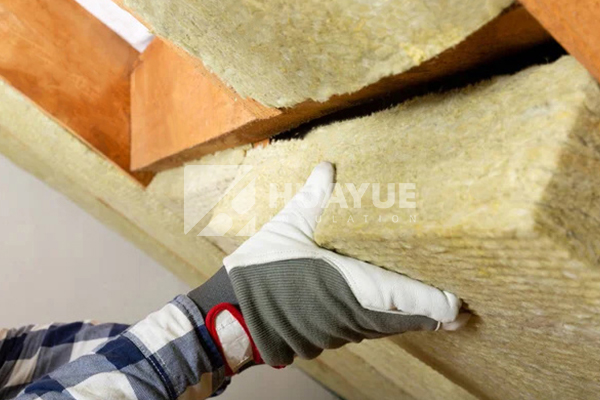
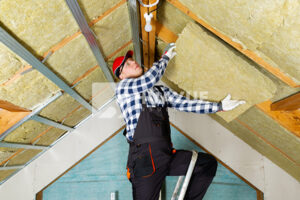
The DOE 2×6 wall guide describes a high-quality batt installation as one that fills the cavity from side to side and top to bottom, with no substantial gaps or voids around wiring, blocking, or other services. It also links wall performance to air sealing. Air movement through the enclosure can carry moisture into the cavity and can reduce the effectiveness of air-permeable insulation.
For a buyer or installer, the practical checks are:
- Measure the real cavity depth and width rather than ordering from the nominal framing name alone.
- Match the batt to the framing type and stud spacing shown on the drawings.
- Cut neatly around pipes, cables, boxes, and blocking so the insulation remains continuous.
- Do not force a 5.5-inch batt into a shallower cavity or flatten it to make room for services.
- Seal penetrations and wall transitions according to the air-barrier design before the finish conceals them.
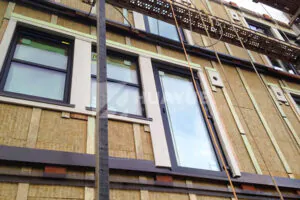
- Confirm how the assembly manages bulk water and vapor; mineral wool is not a substitute for flashing, a weather-resistive barrier, or a project-specific moisture strategy.
Installation is also a handling issue. NIOSH identifies mineral wool fiber exposure routes as inhalation and skin or eye contact, with possible irritation to the eyes, skin, and respiratory system. Cutting and fitting should therefore follow the product’s safety data sheet and the site’s protective-equipment rules. A good thermal label does not remove the need for safe handling or quality control.
For detailed cutting, support, and cavity-fitting questions, use the dedicated rock wool installation guide. This article keeps the installation discussion focused on how fit affects the 2×6 R-value decision.
What Are the Disadvantages or Downside of Mineral Wool Insulation?
Mineral wool is not a universal solution; its main disadvantages appear when the project underestimates handling, moisture detailing, weight, cost, or the difference between material and assembly performance.
The common trade-offs are higher handling effort than lighter insulation forms, fiber irritation during cutting, vapor permeability rather than bulk-water protection, and performance loss when batts are poorly fitted or compressed.
The first downside is installation discipline. A semi-rigid batt can be useful because it can be cut to fit, but it still requires accurate measurement and careful work around obstructions. Gaps create bypasses; compression changes the installed thickness; and an insulation layer is not automatically an air barrier. The result can be a lower-performing wall even when the product label is correct.
The second is moisture management. Mineral wool is commonly described as moisture resistant or vapor permeable, but those terms do not mean that a wall can ignore leaks, drainage, flashing, or condensation control. The DOE contractor guide lists mineral wool batts as vapor permeable and notes that they can absorb water. Any 2×6 wall should be designed so bulk water is kept out and incidental moisture has a safe drying path.
The third is worker and site handling. Mineral wool fibers can irritate exposed skin, eyes, and the respiratory system during dusty operations. Gloves, eye protection, suitable clothing, ventilation, and the manufacturer’s safety instructions are practical controls. On large projects, the product’s mass, packaging, cutting method, and access conditions also affect labor planning. Cost and availability vary by market, so they should be confirmed in the RFQ rather than assumed from a generic online comparison.
Finally, mineral wool’s noncombustible material description does not establish an hourly fire-resistance rating for a complete wall. Likewise, a batt that helps absorb sound does not by itself guarantee a wall’s sound-transmission result. Fire, acoustic, moisture, and thermal claims must match the tested product or assembly and its installation conditions.
Do Mice Chew Through Rock Wool Insulation?
Rock wool may be less attractive to rodents than some softer nesting materials, but it should never be specified as a guaranteed mouse-proof barrier.
Yes, mice can damage or pass through mineral or rock wool under some conditions. A study recorded by the U.S. EPA found significant damage to every insulation material tested, including rockwool, so rodent exclusion must be designed separately.
The useful distinction is between “less appealing” and “immune to damage.” Dense, scratchy mineral fibers may discourage routine nesting, but a mouse can enter through a gap around a pipe, sill, vent, cladding joint, or foundation transition and then move within or disturb the insulation. If the cavity is already accessible, the insulation material alone does not close the entry route.
The EPA’s prevention guidance prioritizes sealing holes and openings, removing food and water sources, and eliminating sheltered nesting conditions. For a 2×6 wall, that means checking service penetrations, bottom and top plates, window and door interfaces, rim areas, vents, and transitions to roofs or foundations. Use a durable exclusion detail appropriate to the substrate and local pest-control practice; do not rely on a batt as the only barrier.
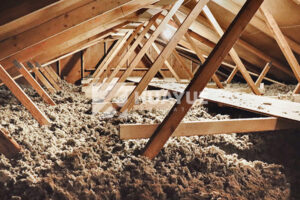
This also matters for performance. A rodent tunnel, displaced batt, damaged facing, or contaminated cavity can create a local thermal weakness even if the original insulation had a satisfactory declared R-value. During inspection, look for droppings, gnaw marks, nesting material, odors, and disturbed insulation. Repair the entry condition and assess whether affected material should be removed or replaced under the site’s safety procedure.
For product selection, ask whether the proposed 2×6 batt is intended for the actual wall cavity and whether the wall detail provides a continuous, inspectable exclusion strategy. That question is more reliable than asking any supplier to promise that “mice will not chew through rock wool.”
Conclusion
For 2×6 mineral wool insulation, verify the batt’s R-value, cavity fit, moisture design, handling, and rodent-exclusion details before ordering. Share the application and location for review.