







A basement wall needs a moisture strategy before it needs a faced insulation product.
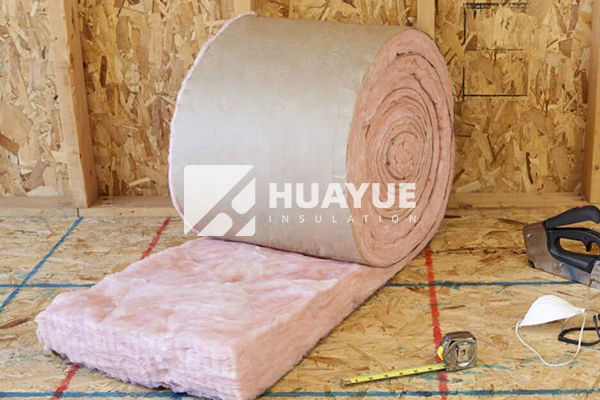
Faced insulation has a surface layer attached to an insulation core. Kraft facing can slow water-vapor diffusion, but it does not waterproof a basement. Use it only when the climate, wall layers, local code, and required drying direction support that choice.
The practical question is not simply whether the paper faces in or out. It is whether the complete wall can control water, air, heat, and vapor without trapping moisture.
What Is Faced Insulation, and What Does Kraft Facing Do?
“Faced insulation” describes a product configuration, not one insulation material.
The product combines an insulation core with an attached facing. A kraft facing usually serves as a vapor retarder and may provide fastening flanges, but the exact function depends on the tested product and how it is installed.
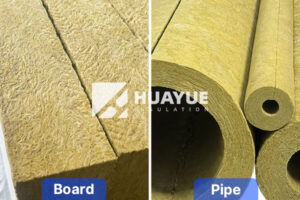
The core may be glass wool, rock wool, or another insulation material. The facing may be kraft paper, foil, foil-scrim-kraft, glass tissue, or another laminate. Each combination has different vapor, fire, handling, durability, and exposure characteristics. For that reason, “faced” does not automatically mean “waterproof,” “airtight,” “fire-rated,” or suitable for an exposed surface.
Kraft-faced fiberglass batts commonly use asphalt-backed paper. Manufacturer guidance describes that paper layer as a vapor retarder, not a substitute for foundation waterproofing or an air-control layer. Gaps at framing, torn paper, electrical boxes, and unsealed edges can still allow air movement. Bulk water can also enter through cracks, poor drainage, plumbing leaks, or capillary movement through concrete.
Unfaced insulation has no factory-applied surface layer. It may be the better choice when the wall already has a designated vapor-control layer, when the assembly must dry inward, or when a facing would create an unwanted second low-permeance layer. The decision therefore starts with the wall design, not the material name.
Kraft facing also changes fire and finish requirements. Paper-faced insulation generally should not be left exposed unless the exact product and local rules permit it. The insulation core’s fire characteristics do not automatically apply to the facing. Confirm the product label, surface-burning data, required protective finish, and any restrictions near heat-producing equipment.
Can You Use Kraft-Faced Insulation in a Basement?
Some basement walls can use it, but a dry room alone does not prove the assembly is suitable.
Consider kraft-faced insulation only after bulk water is controlled and the wall’s vapor strategy is defined. Do not place a fibrous batt directly against a wet foundation or add kraft facing where another vapor retarder already limits drying.
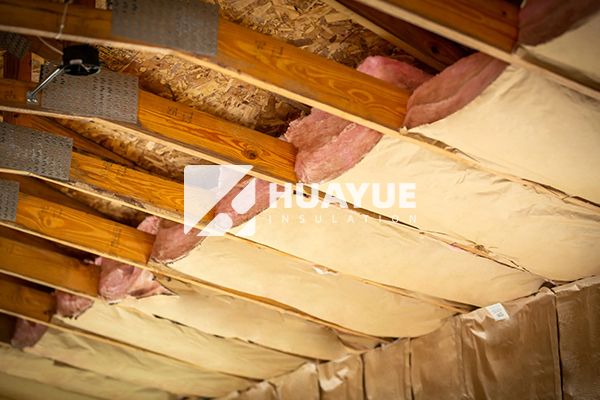
Basements receive moisture differently from above-grade walls. Concrete and masonry can transmit ground moisture, stay cool enough for condensation, and dry slowly after a leak. An interior finish can hide these conditions until framing or insulation is already damaged. Before insulating, check exterior drainage, grading, gutters, foundation cracks, plumbing, efflorescence, stains, odors, and measured moisture conditions.
The U.S. Department of Energy’s Building Science Education guidance for basement vapor retarders emphasizes that the retarder class and location must match the climate and wall, and that the assembly must still be able to dry. The guidance warns against placing very low-permeance Class I layers on the interior side of fibrous basement insulation. It identifies Class II or Class III approaches, including kraft-faced fiberglass or vapor-retarding paint, as possible options for some below-grade walls—not as universal prescriptions.
Use a simple project gate:
| Basement condition | Kraft-faced batt decision | Why |
|---|---|---|
| Active leak, damp masonry, or unresolved drainage | Do not close the wall | Insulation and facing do not correct bulk-water entry |
| Dry framed wall with an approved Class II or III interior strategy | May be suitable | The facing can serve the specified vapor-control role |
| Continuous foam or another low-permeance layer already present | Review before adding | A second retarder may reduce the intended drying path |
| Interior partition within conditioned space | Usually unnecessary for vapor control | Both sides may share similar temperature and humidity |
| Unknown wall layers or renovation history | Investigate first | Hidden coatings, membranes, or foam can change the answer |
This table is a screening tool, not a wall specification. A local designer or code official must still confirm the climate-specific assembly.
Which Way Should Kraft Facing Point in a Basement?
The familiar “face the warm side” rule is only a starting point.
In many heating-dominated framed walls, approved kraft facing is placed toward the conditioned interior. Basement walls are more complex, so orientation must follow the designed vapor profile, existing layers, product instructions, and local code—not a universal in-or-out rule.
The old shortcut assumes winter vapor drive from a warm interior toward a colder exterior. That can describe some above-grade walls in cold climates, but a below-grade foundation also interacts with damp soil, cool masonry, seasonal humidity, interior air conditioning, exterior waterproofing, and any continuous insulation already installed. The correct arrangement must address all of those conditions.
Map the wall from soil to room before choosing the facing direction:
- Foundation drainage, dampproofing or waterproofing, and exterior insulation.
- Concrete or masonry wall and its current moisture condition.
- Any drainage mat, capillary break, coating, membrane, or continuous foam.
- Framing position, air gap if designed, and cavity insulation.
- Interior vapor retarder, air barrier, service cavity, and protective finish.
Then identify which layer controls bulk water, capillary water, air leakage, vapor diffusion, heat flow, and fire protection. One material rarely performs every function. Kraft facing may slow vapor diffusion, but it will not seal foundation cracks, stop humid air at discontinuities, or make a damp wall safe to enclose.
If an approved design calls for kraft-faced insulation, follow the named product’s instructions for orientation, fastening, tabs, joints, penetrations, and covering. Do not improvise by reversing the batt to compensate for moisture, peeling off a facing without manufacturer approval, or sandwiching insulation between kraft paper and polyethylene. When the wall already includes a suitable vapor-control layer, an unfaced batt may preserve the intended drying path more effectively.
What About Kraft-Faced Rock Wool Insulation?
Rock wool describes the insulation core; kraft describes the attached surface layer.
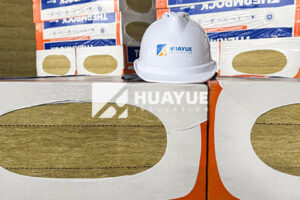
Kraft-faced rock wool insulation can be specified as a faced mineral-wool product, but buyers must verify the exact factory-made construction. Do not assume an unfaced rock wool batt, a kraft-faced fiberglass batt, and a site-added paper layer have equivalent vapor, fire, or installation properties.
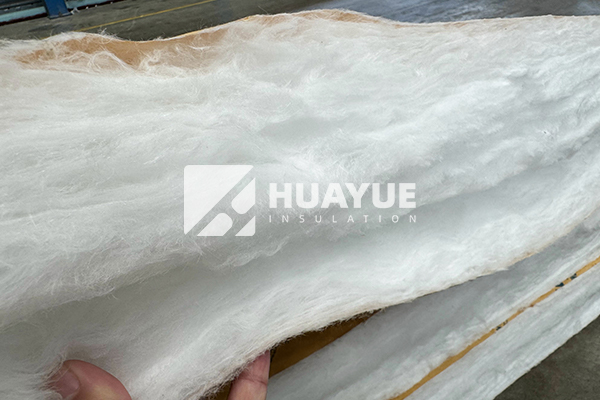
The same wall-design rules apply whether the fibrous core is glass wool or rock wool. The facing’s tested permeance, continuity, adhesion, seams, exposure classification, and compatibility with finishes determine what it contributes to the assembly. The core’s thermal or fire data cannot be transferred to the facing, and the facing’s vapor rating cannot be assumed from the word “kraft.”
For a kraft-faced rock wool product, request a current manufacturer datasheet and confirm:
- Product name, core material, batt or blanket form, dimensions, and declared thermal value.
- Facing construction, including whether it is plain kraft, asphalt-coated kraft, foil-scrim-kraft, or another laminate.
- Water-vapor permeance, test method, and whether the declared result applies to the complete faced product.
- Surface-burning or reaction-to-fire information for the faced product, plus any requirement for a protective finish.
- Factory lamination, fastening method, seam treatment, compatible tape or adhesive, and repair procedure for damaged facing.
- Intended application, exposure limitations, storage conditions, and installation instructions.
Use “rock wool” as the generic material term. ROCKWOOL® is a separate manufacturer brand and should appear only when referring to that company or one of its named products. Generic search wording should not be treated as proof that every rock wool supplier offers the same kraft-facing option.
For a basement, product availability is still secondary to assembly suitability. A correctly documented faced rock wool batt can be the wrong choice if the foundation is wet or the wall already has a restrictive layer. Conversely, an unfaced product can be appropriate when vapor control is provided elsewhere in a designed system.
How Should You Choose Faced or Unfaced Insulation for the Wall?
Separate the wall decision from the product decision.
First approve the basement’s water, air, thermal, vapor, and fire-control layers. Then choose a faced or unfaced product whose documented properties fill the remaining role without duplicating another layer or blocking the required drying path.
A useful submittal starts with a section drawing rather than a product photo. Mark which part of the wall is above grade, which is below grade, where the thermal boundary sits, and whether the basement is conditioned. Add the climate zone, interior humidity target, foundation condition, existing exterior treatment, and every interior finish. This gives the reviewer enough context to judge condensation risk and drying direction.
Next, compare products on matched fields. Ask for the core type and form, thickness, declared thermal resistance, facing material, vapor data, fire and exposure limitations, installation method, and applicable product standard. Do not compare only R-value or assume that a denser or heavier batt automatically solves moisture control. The vapor-control role belongs to the complete assembly and the tested facing, not to the generic core name.
Before the wall is closed:
- Repair water entry and document acceptable substrate conditions.
- Seal the designated air-control layer at edges, penetrations, rim joists, and transitions.
- Fit batts without unintended gaps, voids, or compression.
- Keep the specified facing continuous or repair it by the approved method.
- Confirm fire blocking, electrical clearances, and the required interior covering.
- Photograph concealed work and complete the required inspection.
For sourcing support, provide the climate or project location and the proposed wall build-up first. Product dimensions, quantity, packing, destination, and document needs can follow after the assembly and facing type are confirmed.
Conclusion
Kraft-faced insulation is a conditional basement option: control water first, preserve the wall’s drying path, and verify the complete faced product rather than relying on orientation shortcuts.
If you are comparing glass wool and rock wool, share the project location and wall build-up to start a useful product review.