







Fiberglass insulation works best when its installed thickness, fit, and supporting details match the product instructions and the assembly design.
Yes. Compressing a fiberglass batt can reduce its total installed R-value and can create gaps or uneven coverage. Match the product to the available space; do not assume a universal remaining R-value after compression.

This guide explains how fiberglass insulation works, why compression changes the decision, and which details to confirm before specifying or purchasing a particular product.
How Does Fiberglass Insulation Work?
Fiberglass insulation is a fibrous material used to slow heat flow in building and equipment assemblies.
Its fine glass fibers create a structure that holds relatively still air, helping slow conductive and convective heat transfer. Performance depends on the installed product and the complete assembly, not the material name alone.
The terms fiberglass insulation, fibreglass insulation, fibre glass insulation, and glass wool are often used for this family of fibrous insulation. They should not be confused with glass-fiber reinforcement used in composite products. For insulation, the fiber web creates many small air spaces. The U.S. Department of Energy describes fiberglass among the bulky fiber insulation materials and notes that common insulation materials work by slowing conductive and convective heat flow.
That mechanism also explains why installation quality matters. A batt that is folded, bowed, pinched around a service, or left short of the intended area may not perform like a continuous, correctly fitted layer. The practical target is not simply to make a cavity look full. It is to provide the designed coverage at the installed thickness while preserving the surrounding assembly details.
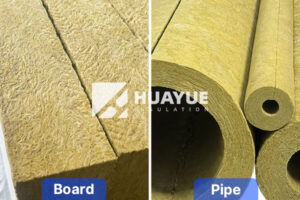
For an inquiry, distinguish the material family from the proposed product. Ask for the product form, intended application, installed thickness, facing if any, and the current technical documentation for the exact item. Those details determine whether a quoted product is a reasonable fit for a wall, roof, duct, pipe, or other assembly.
Why Does Compression Matter for Fiberglass Insulation?
Compression changes thickness and fiber arrangement, so it can change the insulation result.
A compressed batt is not automatically useless, but its installed thermal value must not be inferred from a rule of thumb. Use the manufacturer’s data for the exact product and installed thickness, or choose a product designed for the space.

Compression can be uniform across a batt, but field conditions are often less tidy. A narrow cavity may buckle an oversized batt. Electrical boxes, pipes, wires, clips, and framing intersections can create local pinch points. Another layer, a duct, a walkway, or later trade work can press insulation down after it is installed. Each condition should be checked separately because a product chart for one uniform compressed thickness may not describe a folded edge, a void behind a wire, or an open corner.
The DOE’s building-science guidance stresses that insulation performance is highly dependent on installation quality. That makes gaps, voids, and uneven coverage as important as nominal thickness. Do not average a crushed spot and an empty spot into a reassuring “overall” condition. Correct the fit where possible, then inspect the full location before it is enclosed.
When available depth is limited, the decision is usually one of product selection or assembly design, not whether a thicker batt can be forced into place. Confirm the required installed thermal performance, cavity or equipment geometry, other layers, moisture-control design, service penetrations, and any project-specific code or approval requirements. Do not transfer an R-value, fire result, moisture claim, or compression allowance from a different product, test sample, or assembly.
How Is Fiberglass Insulation Made, and What Should Buyers Confirm?
Fiberglass insulation is made by turning glass-forming materials into fine fibers and forming them into an insulating web.
At a general level, glass ingredients are melted, fiberized, collected, bonded, cured, and converted into finished forms. The exact ingredients, binder, facing, dimensions, and performance data vary by manufacturer and product.

The U.S. National Institute of Standards and Technology describes fiberglass insulation as using a blend that can include sand, limestone, soda ash, and recycled glass cullet. In a general production sequence, molten glass is made into fine fibers; the fibers are collected into a wool-like mat, then bonded and processed into a specified form. This fiber-and-air structure is why thickness and fit are relevant to the installed result.
That manufacturing overview is useful for terminology, but it is not a substitute for product documentation. A buyer should not assume that every fiberglass insulation product has the same recycled-content level, binder system, facing, density, thickness, R-value, fire classification, acoustic result, temperature limit, or chemical suitability. Each of those is a product- and condition-specific claim that needs its own current evidence.
Before requesting a quotation, provide the application and approximate available space first. Then ask the supplier to identify the suitable product form and to supply current documentation for the offered item. If compression is intentional or unavoidable, request the manufacturer’s published installed-thickness guidance and confirm who is responsible for approving the complete assembly. This keeps the conversation focused on a verifiable installation outcome rather than an assumed material property.
Conclusion
Choose fiberglass insulation that fits the available space, verify the exact product’s installed data, and correct folds, voids, or unplanned compression before enclosure.