







When a plant compares fiberglass vs foam pipe insulation, the deciding factor is not the material name but temperature, moisture, fire and maintenance exposure.
Fiberglass often suits hotter pipework when its core, jacket and fittings are documented for the service. Closed-cell foam often suits cold or condensation-sensitive lines. Neither is universally better, and every temperature rating is product-specific.
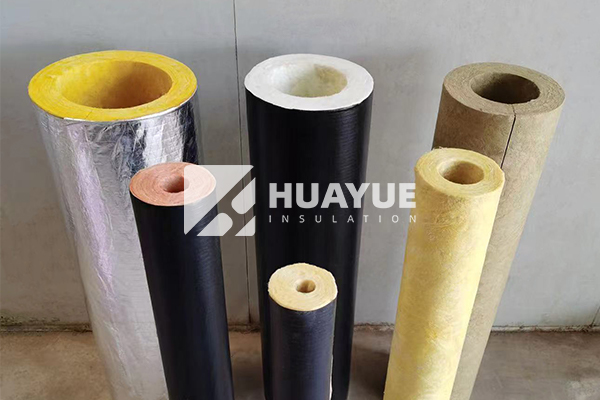
The comparison below separates fiberglass, elastomeric foam and other foam categories, then shows how to read temperature ratings without turning one product’s data into a rule for every pipe.
Fiberglass Pipe Insulation vs Foam: What Is the Difference?
The phrase “foam pipe insulation” can describe different materials, so a fair comparison starts by defining what is actually being specified.
Fiberglass is a fibrous insulation family, while “foam” may mean elastomeric rubber, polyethylene, polyurethane, phenolic or another closed-cell product. The right comparison is between named pipe-insulation systems, not two vague material labels.
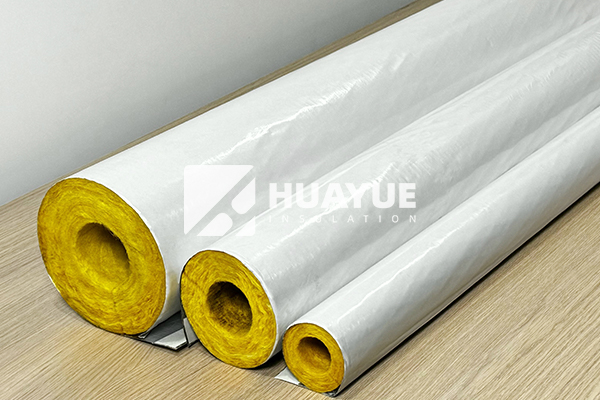
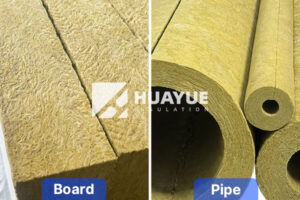
Preformed fiberglass pipe insulation is made from glass fibers shaped into pipe sections and commonly supplied with a facing or jacket. It is often considered for hot water, steam, process and mechanical piping when the product’s service range and outer protection match the project. The fiber core and the facing are separate parts of the system: a jacket can have a lower temperature limit than the insulation itself, and a facing can change the fire performance of the installed assembly.
Foam is not one product. Closed-cell elastomeric foam is commonly used on chilled-water, refrigeration and other below-ambient piping because its structure and vapor resistance can help control condensation when seams, joints and penetrations are installed correctly. Polyethylene and other thermoplastic foams have their own service limits. Rigid foams such as phenolic, polyurethane or polyisocyanurate may be relevant to other systems, but they should not be grouped with a flexible pipe sleeve without checking the intended application.
| Comparison point | Fiberglass pipe insulation | Closed-cell foam pipe insulation |
|---|---|---|
| Common selection driver | Hot service, fire-related constraints, and a documented jacketed system | Cold service, condensation control, flexibility and vapor resistance |
| Temperature decision | Confirm the core, facing, jacket and fittings separately | Confirm formulation, wall thickness, adhesive and continuous service range |
| Moisture boundary | The fiber must be protected from water entry and damaged jacketing | Closed cells help, but seams and penetrations still need a continuous vapor-control detail |
| Geometry and handling | Preformed sections suit straight runs; fittings and rigid parts need planned treatment | Flexible tubes or sheets can simplify bends, but compression and joint quality still matter |
| Fire decision | Fiber and facing must be assessed as the specified system | Flame-spread and smoke performance depend on the named foam and its use conditions |
This is why “foam vs fiberglass pipe insulation” does not have one winner. Fiberglass may be the better starting point for a hot line near a heat source, but a wet outdoor location still needs a suitable jacket and sealed details. Foam may be the better starting point for a cold line that sweats, but a product intended for HVAC or plumbing cannot automatically be moved to a high-temperature process line.
The same rule applies to cost and service life. A lightweight, flexible tube may reduce installation effort on accessible straight runs, while a jacketed fiberglass section may better match a hot-service specification. The installed result depends on thickness, joints, supports, fittings, weather exposure, maintenance access and protection from impact. Compare those system details before comparing unit price.
How Do Fiberglass and Foam Temperature Ratings Compare?
A published rating only helps when its temperature, test method, product form and jacket are all read together.
There is no universal fiberglass pipe insulation temperature rating or foam pipe insulation temperature rating. Check the named product’s continuous service range, intermittent limits, facing or jacket limit, and system conditions.
Searches for “foam pipe insulation temperature rating” and “fiberglass pipe insulation temperature rating” often return conflicting numbers because they mix different formulations, wall thicknesses, test methods and components. A temperature rating is not the same as a promise that every part of an installed system can remain unchanged at that temperature.
Published manufacturer examples make the distinction clear. Owens Corning’s Metric Fiberglas pipe-insulation data lists an operating temperature range of 0°F to 1,000°F (-18°C to 538°C) for that named product, while its listed jacket temperature limitation is -20°F to 150°F (-29°C to 66°C). The two values cannot be collapsed into one generic fiberglass range: the insulation core and the jacket have different boundaries.
For foam, Armacell’s AP/ArmaFlex technical specifications show service ranges that vary by formulation and wall thickness. The listed NBR/PVC product range is -183°C to 105°C (-297°F to 220°F), while the listed EPDM formulation for 1-1/2-inch and 2-inch walls reaches 149°C (300°F). The same page separately notes a higher temperature capability under an ASTM C411 hot-surface test. That is useful evidence, but it is still evidence for a named product and configuration, not for “foam” as a whole.
When reviewing a submittal, separate these questions:
- Is the stated value a continuous service temperature, a short-term exposure limit, or a laboratory test condition?
- Does it apply to the insulation core, the facing, the adhesive, the self-seal lap, or the complete assembly?
- Is the value based on the pipe temperature, mean temperature, surface temperature or another test basis?
- Does the product cover the normal, maximum and upset conditions, not only the expected operating point?
- Are the fittings, supports, valves and removable covers made from compatible components?
Do not infer low-temperature suitability from high-temperature data, or high-temperature suitability from a low thermal-conductivity value. Cold lines need a vapor-control strategy and careful joint treatment; hot lines need a product and outer system that remain suitable at the actual surface and ambient conditions. Outdoor lines add rain, UV, wind and impact to the temperature question.
For a project comparison, place the proposed product data sheets in one table and record the exact product name, form, thickness, continuous service range, test method, facing, adhesive and installation limitations. If a supplier provides only a broad “-50°C to +120°C” or “up to 400°C” statement without product identity and conditions, treat it as a lead for verification rather than a design value.
Which Material Should You Choose for Industrial Pipework?
After the temperature screen, the choice depends on what can damage the insulation after installation.
Choose fiberglass when the documented temperature and fire requirements dominate; choose closed-cell foam when moisture-vapor control, flexibility and cold-service installation dominate. Choose neither by category name alone for severe process duty.
Start with the service condition, then screen the system against the following decision points:
| Buyer question | Fiberglass may fit when… | Foam may fit when… | What to confirm before ordering |
|---|---|---|---|
| Is the line hot? | The named pipe section, facing and fittings cover the continuous and maximum conditions | The named foam formulation and wall thickness are explicitly rated for the duty | Normal, maximum and upset temperatures; test basis; jacket and adhesive limits |
| Is the line below ambient? | A complete jacketed system can keep the fiber dry and control vapor entry | A closed-cell system can provide the required vapor resistance and sealed joints | Surface temperature, ambient humidity, vapor retarder, seams, penetrations and supports |
| Is fire performance critical? | The fiber, facing and assembly have the required fire documentation | The exact foam product has the required flame and smoke data for the installation | Applicable code, test method, facing, thickness and assembly scope |
| Are there bends and frequent maintenance points? | Preformed sections and fittings can be protected without leaving gaps | Flexible tubes or sheets can simplify shaping and removal | Elbows, tees, valves, flanges, access panels and replacement method |
| Is the line outdoors or exposed to impact? | A weatherproof jacket and mechanical protection are designed as part of the system | The foam and its protective covering are suitable for UV, water and impact exposure | Cladding, weather seals, end closures, supports and inspection access |
For chilled water and refrigeration, the first failure mode is often moisture entry rather than a lack of nominal thermal resistance. A foam system can be attractive because the closed-cell material and vapor-control detail are integrated into the product approach, but the benefit is lost if seams are open, the insulation is compressed, or fittings are left unsealed. The same applies to fiberglass: a facing or jacket can help protect the fiber, but damaged or poorly sealed sections can still admit water.
For hot process or steam service, the first screen is temperature. A general-purpose foam sleeve may be convenient, but convenience does not establish suitability. Fiberglass may be appropriate for a documented hot-service system, while a higher-temperature process, heavy mechanical load, wet exposure or corrosion-under-insulation concern may point to rock wool, cellular glass, calcium silicate or another system. That is a project decision, not a universal material ranking.
The most useful RFQ starts with two facts: the application and the approximate operating temperature. Add pipe size, insulation thickness, indoor or outdoor location, fire requirements and document needs when available. A supplier can then route the request to glass wool insulation, rubber foam insulation, or another material family without treating every pipe as the same problem. For broader industrial selection, see the industrial insulation overview.
Conclusion
Choose by documented service conditions, not material name. Share the application and approximate operating temperature to compare a suitable pipe-insulation system.