






Choosing insulation by reputation alone can create a costly gap between a material claim and the performance of the finished project.
Rockwool insulation can support thermal, acoustic, fire-related, and application-fit goals in buildings and industrial systems. Its benefits become useful only when the selected product, thickness, tested construction, moisture strategy, installation, and total delivered cost match the project.
This guide explains the terminology, benefits, applications, limitations, and evidence buyers should compare before requesting a product or quotation.
What Is Rockwool Insulation?
Search results often use rockwool, rock wool, stone wool, mineral wool, and ROCKWOOL as though they were interchangeable.
Rock wool is a fibrous mineral insulation material. Mineral wool is the broader category, while ROCKWOOL is also a company and brand; buyers should compare named products rather than assume that every use of these terms describes the same product.
The U.S. Occupational Safety and Health Administration classifies mineral wool as a group that includes rock wool and slag wool. “Stone wool” is another commonly used material term. By contrast, ROCKWOOL identifies a particular company and its products. This distinction matters because composition, dimensions, facing, density, thermal data, fire classification, acoustic results, mechanical properties, and installation requirements belong to a named product—not to a search spelling.
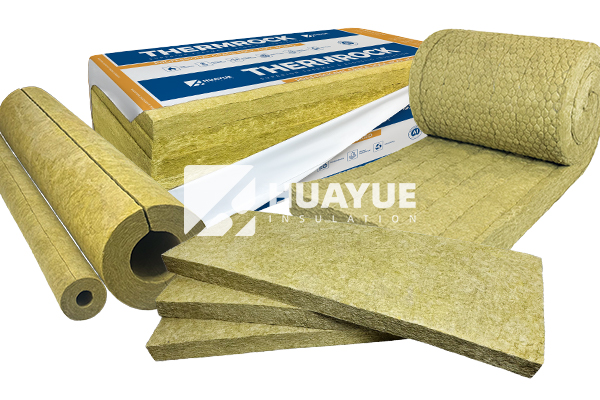
Rock wool is formed into products suited to different geometries. Batts may fit framed cavities; boards can form cavity or continuous layers; blankets can follow larger or curved surfaces; pipe sections fit cylindrical services; and other configurations serve specialist applications. The available form must still be confirmed from the current supplier document rather than assumed from the material name.
The U.S. Department of Energy’s building-science guidance explains that common insulation materials work by slowing conductive and convective heat flow. The trapped air and fibrous structure are part of that function, but the actual result also depends on thickness, continuity, air movement, adjacent layers, and workmanship. Rock wool is therefore not automatically an air barrier, vapor-control layer, waterproofing system, structural layer, or complete sound-isolation solution.
Understanding the category first prevents two common procurement errors: comparing a generic material description with a detailed branded datasheet, or treating one product’s test result as a universal property of all rock wool insulation.
What Are the Main Benefits of Rockwool Insulation?
Rock wool is often shortlisted because one suitable product may contribute to several project requirements instead of addressing only one.
The main potential benefits are thermal resistance, sound absorption, fire-related material options, multiple product forms, and compatibility with designed moisture-control systems. Every benefit requires product- or assembly-level evidence and has limits that must be checked.
Use this matrix to turn a headline benefit into a purchasing question:
| Potential benefit | What it may help achieve | Evidence to compare | Important limitation |
|---|---|---|---|
| Thermal resistance | Reduce conductive heat flow through a wall, roof, ceiling, pipe, tank, duct, or item of equipment | Declared conductivity or resistance, thickness, test conditions, operating temperature where relevant, and system calculation | A nominal value does not include gaps, thermal bridges, air leakage, or the rest of the construction |
| Sound absorption | Reduce reflected sound or contribute to an acoustic wall, floor, ceiling, panel, or enclosure | Frequency-dependent test data, thickness, facing, mounting condition, and complete assembly data | Absorption inside a cavity is not the same as soundproofing between spaces |
| Fire-related performance | Provide a documented reaction-to-fire or noncombustibility option, or form part of a tested fire-resisting construction | Product classification, test scope, listing, and the exact assembly details required by the project | A material classification does not give every wall, floor, roof, duct, or penetration a time rating |
| Product-form versatility | Fit framed, flat, curved, cylindrical, or equipment-specific geometry | Current form, dimensions, tolerances, facing, support system, and installation guide | The right material in the wrong form or thickness may be impractical to install |
| Moisture-compatible selection | Work within an assembly designed to manage condensation, drainage, weather exposure, and drying | Water-related product data, facing or jacket, vapor-control design, seams, penetrations, drainage, and service conditions | Water repellency is not the same as waterproofing or continuous vapor control |
The strongest benefit is not necessarily the property with the most impressive headline. It is the combination that addresses the project’s dominant requirements with acceptable thickness, weight, installation complexity, evidence, availability, and cost. A product that supports both thermal and acoustic objectives may simplify one project, while another project may be governed by condensation control, compressive load, limited space, or an existing tested system.
Benefits must also be separated by evidence level. A product datasheet can describe the insulation itself. A laboratory report covers the tested sample and conditions. A wall, roof, floor, duct, or industrial system needs assembly evidence, calculations, or project review. Keeping those levels separate prevents a material characteristic from becoming an unsupported building, safety, energy-saving, or service-life guarantee.
Where Is Rock Wool Used in Homes and Industrial Systems?
Rock wool appears in both building and industrial insulation, but the selection criteria change substantially between those environments.
It can be considered for framed cavities, continuous building layers, acoustic constructions, and insulated services or equipment when the product form and evidence fit. Moisture-sensitive, load-bearing, chemically exposed, or space-constrained systems may require another material or a more specialized design.
| Application group | Where rock wool may fit | What must be coordinated |
|---|---|---|
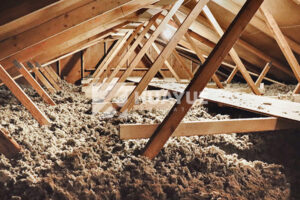
| Framed walls, roofs, ceilings, and floors | Batts or boards selected for thermal or acoustic requirements | Cavity depth, fit, continuity, air barrier, thermal bridges, vapor strategy, local requirements, support, and finishes |
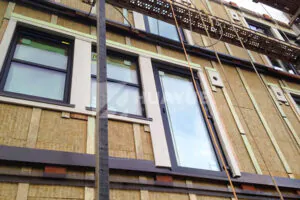
| Exterior and continuous building insulation | Boards used as one layer of a wall or roof system | Wind and mechanical loads, fasteners, joints, drainage, weather layer, membrane or cladding compatibility, and tested construction |
| Interior acoustic construction | Products placed in partitions, floors, ceilings, panels, or equipment enclosures | Absorption versus sound isolation, frequency range, board mass, framing, resilient connections, seals, doors, glazing, and flanking paths |
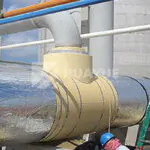
| Hot pipes, ducts, tanks, vessels, and equipment | Product forms selected to reduce heat flow or support another specified requirement | Operating and ambient conditions, geometry, thickness calculation, joints, supports, jacket, weather exposure, access, and inspection |
| Below-ambient or moisture-sensitive industrial systems | Possible only when the complete vapor and weather-control design is suitable | Condensation, vapor-control continuity, water ingress, corrosion-under-insulation strategy, penetrations, sealing, maintenance, and alternatives |
In a home or commercial building, insulation works as part of the envelope. DOE heat-flow guidance notes that voids, gaps, compression, and air movement can change actual performance. A batt cannot compensate for an unsealed air-control layer, a major thermal bridge, or a cavity that does not accommodate the intended thickness.
Fire performance also belongs to a defined evidence scope. The U.S. National Institute of Standards and Technology describes fire resistance in terms of structural members and assemblies established through testing, calculations, or prescriptive requirements. Product classification can be important, but it cannot be converted into a universal assembly rating.
Moisture must be managed across the system. U.S. EPA guidance addresses drainage, walls, roofs, ceilings, plumbing, and HVAC because water can enter and move through buildings in different ways. Depending on the governing task, buyers may also compare glass wool insulation for suitable lightweight cavity applications, rubber foam insulation for certain condensation-control uses, or cellular glass insulation for industrial moisture, vapor, or load requirements. None is an automatic substitute; the complete specification decides.
How Should Buyers Compare Specifications, Installation, and Price?
Once rock wool is on the shortlist, the next task is to convert broad benefits into comparable product submissions and quotations.
Compare offers only after normalizing application, product form, dimensions, performance basis, test scope, accessories, installation responsibility, quantity, delivery, and documents. A lower unit price is not a better offer when the technical or commercial scope is different.
Use this five-step process:
- Define the service and dominant requirement. State whether the work involves a wall, roof, ceiling, floor, acoustic partition, pipe, tank, duct, vessel, or another system. Record indoor and outdoor conditions, operating temperature where relevant, weather exposure, condensation risk, required performance, available space, and governing code or specification.
- Select the product form before comparing values. Decide whether the geometry requires a batt, board, blanket, pipe section, loose fill, faced product, or another configuration. Confirm dimensions and tolerances instead of assuming a universal standard size. The rock wool insulation category can help identify the initial form, but the current named-product document must control final selection.
- Build an evidence-based specification. A practical rock wool insulation specification may include dimensions, thermal data, relevant density or mechanical data, facing, fire or acoustic evidence, water-related properties, installation requirements, and submittal documents. Review the product identity, sample, test method, conditions, report date, issuing body, and limitations. A long document list is not useful if the documents do not cover the offered product.
- Plan installation before ordering. For a ceiling cavity, confirm the joist-bay dimensions, intended insulation depth, penetrations, air-control layer, cutting and fitting method, and any required support. Avoid gaps and unintended compression. Vapor-control direction depends on climate and construction rather than a universal “warm-side” rule. Use the detailed guide on how to install rock wool insulation for the installation task instead of expanding this benefits page into a duplicate manual.
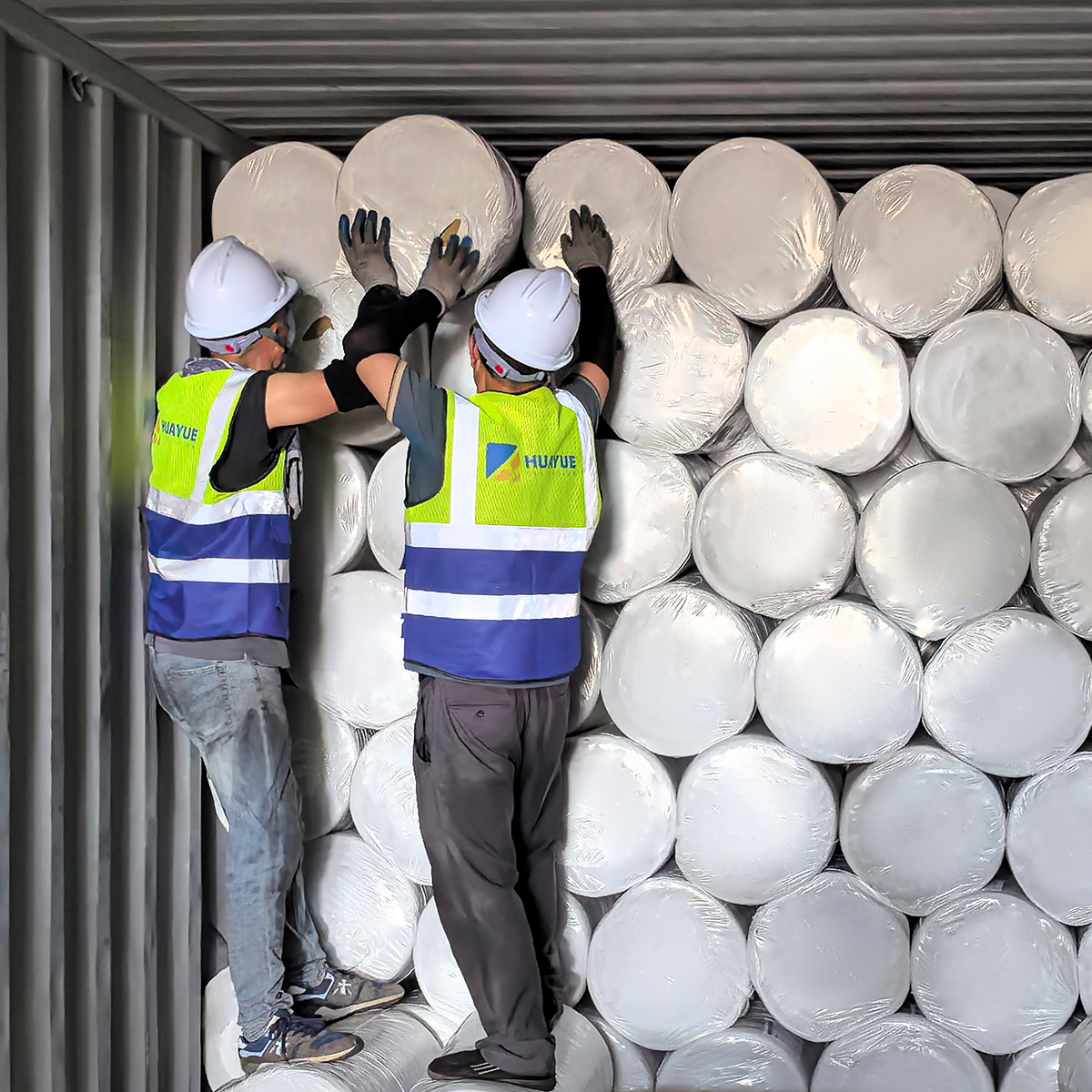
- Compare total delivered and installed scope. Rockwool insulation price can vary with product form, thickness, density where relevant, facing, coverage, order quantity, packaging, destination, freight, accessories, waste, labor, and local availability. Normalize those fields before comparing cost per area or system. The separate rock wool insulation price guide explains the cost-comparison method without relying on a retail figure that may be stale or local.
Terminology should be normalized as well. If one offer says mineral wool, another says stone wool, and another uses a brand name, ask each supplier to identify the exact product and provide the same required evidence. The rock wool and mineral wool comparison provides the deeper category explanation.
For an initial product review or quotation, send the application, drawings or dimensions, service conditions, required performance, preferred form and facing, quantity, destination, packing needs, and required documents. SinoInsulation can then identify a candidate for technical review; the final decision remains subject to the project specification, local requirements, designer review, and approved evidence.
Conclusion
Choose rock wool by verified product and assembly evidence, then compare application fit, installation, alternatives, documents, and total delivered cost on equivalent scope.