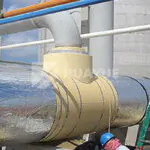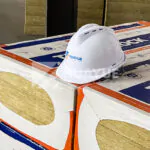







Rock wool insulation should be specified as a complete product-and-application package, not by thickness or density alone.
The key specifications are product form, dimensions, density, declared thermal conductivity and its test conditions, thickness or thermal resistance, facing, applicable fire or moisture test results, and the intended application. A valid selection also confirms the exact product data sheet and the project’s assembly requirement.
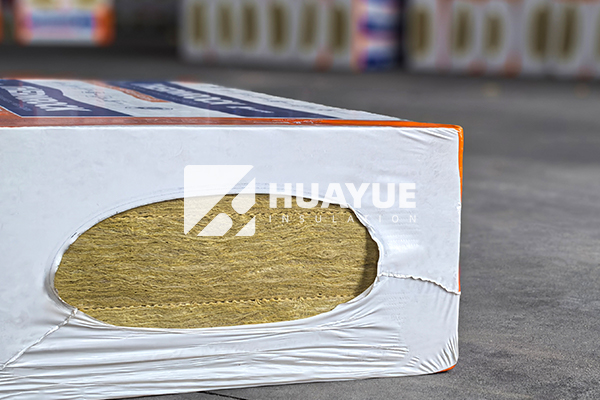
This guide explains what each field means, how to read a thermal claim, and which details to confirm before selecting material for a ceiling, wall, roof, duct, pipe, or industrial surface.
What Should a Complete Rock Wool Insulation Specification Include?
A useful specification identifies the product, the condition in which it is tested, and the job it is intended to serve.
Start with the product form, dimensions, declared thermal value, test conditions, facing, and intended application. Density is an important identification and handling field, but it is not a substitute for the product’s declared thermal or mechanical data.
A material name alone is not enough for a purchase order or technical submittal. Rock wool can be supplied as boards, batts, blankets, pipe sections, lamella products, or other fabricated forms. The right form depends on the surface geometry, fixing method, load exposure, and whether the project is primarily controlling heat transfer, sound, fire exposure, or a combination of these requirements.
Use the following as a practical review list for a named product:
| Specification field | What to confirm | Why it matters |
|---|---|---|
| Product identity and form | Exact product name; board, batt, blanket, pipe section, or another form | Avoids comparing unlike products. |
| Dimensions and tolerances | Length, width, thickness, pipe inside diameter where relevant | Determines coverage, fit, joints, and installation method. |
| Density | Declared density and permitted tolerance, if supplied | Helps identify the selected product; do not infer performance from density alone. |
| Thermal data | Declared lambda/k-value or R-value, test method, mean temperature, and units | Lets the designer calculate the required insulation layer on a like-for-like basis. |
| Facing and finish | Unfaced or named facing; compatibility with the system | Affects the assembly and must be matched to the application. |
| Other required properties | Only the tested fire, moisture, compression, acoustic, corrosion, or temperature data relevant to the job | Prevents a generic data sheet from being used as proof for a different condition. |
ASTM’s mineral-fiber blanket specification illustrates why the specification must be application-led: it distinguishes classification, dimensions, apparent thermal conductivity, moisture-related behavior, surface burning characteristics, and maximum-use-temperature criteria for its covered product scope. That is a useful checklist, not a universal approval for every rock wool form or installation. ASTM C553
How Should Thermal Performance Be Stated?
Thermal performance is meaningful only when the value, unit, test condition, and selected thickness are stated together.
Ask for the declared thermal conductivity (lambda or k-value) or the declared thermal resistance of the named product, plus the test method and mean temperature. Then calculate or verify the resistance of the specified thickness; do not copy an R-value from a different product form or test condition.
For a uniform insulation layer, thermal resistance is commonly expressed as thickness divided by thermal conductivity in SI units. That relationship is useful for checking a design calculation, but it does not turn a material-layer value into a wall, roof, ceiling, pipe-system, or building-energy claim. Joints, fasteners, air movement, moisture, adjacent materials, and installation quality can all affect the assembly outcome.
The reported conductivity also has conditions. ASHRAE explains that apparent thermal conductivity for insulation can vary with temperature, moisture content, density, structure, and—in some cases—age. The tested value therefore applies to the stated test conditions, rather than automatically to every service condition. ASHRAE Handbook, Chapter 26
When reviewing quotations, keep the comparison disciplined:
- Compare the same thickness, units, test method, and stated mean temperature.
- Confirm whether the requirement calls for a material-layer value or an assembly calculation.
- Do not assume that a lower lambda on one data sheet makes another product unsuitable; first check the product form and applicable condition.
- Ask the project designer to confirm local code, energy, and fire-system requirements.
This approach is more reliable than using a universal “R per inch” figure. Rock wool insulation price and coverage also depend on the actual form, thickness, facing, quantity, packing, destination, and required documentation, so a comparable quote begins with the same specification fields.
How Do Form, Density, and Facing Affect the Intended Application?
Form, density, and facing should be selected for the installation and performance requirement—not treated as a single performance ranking.
Boards, batts, blankets, and pipe sections solve different fitting and support problems. Density can influence handling and product design, but the correct choice is the named product whose declared properties match the application and fixing method.
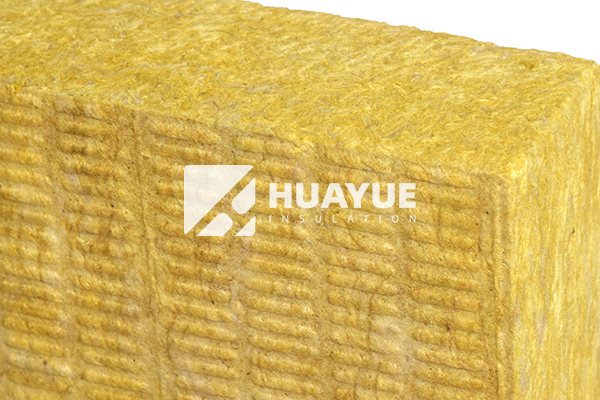
For example, a board may be selected where a more defined shape or a particular fixing arrangement is needed; a blanket may be considered for broad surfaces or irregular geometry; and a pipe section is made to suit the pipe diameter and insulation thickness. These are product-form decisions. A project should still verify the relevant tested properties instead of assuming that any board is interchangeable with any blanket, or that a denser product always produces a better thermal result.
Facings need the same discipline. A facing can affect how a product is installed and how it fits within a larger system, but it is not a blanket solution for vapor control, weather exposure, or mechanical protection. Confirm the complete assembly design, compatibility with adhesives or fasteners, and any local requirements before naming a faced product.
The product form also helps separate this page from a material comparison. “Mineral wool” is often used as an umbrella term for fibrous mineral insulation, while rock wool or stone wool may identify a material subtype. ROCKWOOL in capitals is also the name of an unrelated manufacturer brand; it is not a generic technical specification. A buyer comparing “mineral wool vs ROCKWOOL insulation” should compare the named product data, intended use, and applicable test evidence—not a general category with a brand name. Terminology explanation
How Should Rock Wool Be Installed in a Ceiling?
Ceiling insulation must fit the specified cavity or system continuously, without compression, gaps, or uncoordinated conflicts with building services.
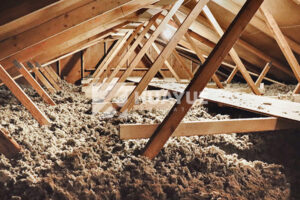
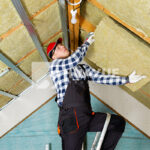
Measure the available space, select the specified product and thickness, fit pieces closely between supports, keep insulation dry and uncompressed, and coordinate lighting, wiring, ventilation, fire protection, and the ceiling finish with the approved project details.
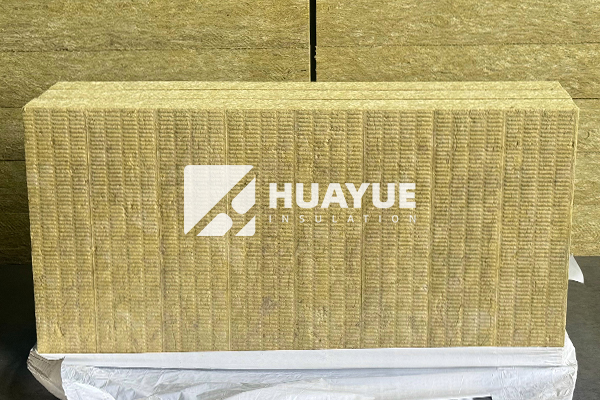
Installation is not a generic promise of thermal, acoustic, or fire performance. Ceiling construction varies: a suspended ceiling below a concrete slab, a framed cavity, and an attic-floor arrangement each have different support, access, and fire-detail requirements. Start with the manufacturer’s installation instructions for the exact product, then follow the project drawings and applicable local regulations.
For a typical framed ceiling or open cavity, the sequence is straightforward but still needs care. Check that the selected thickness fits without crushing the material. Measure each bay and cut cleanly around permitted obstructions. Fit the pieces tightly at edges and joints; do not leave voids. Complete the insulation before closing the ceiling finish where the construction allows it, so the work can be inspected. Keep the material clean and dry during handling and installation.
The same practical points appear in a named ROCKWOOL ceiling-installation guide: install the specified thickness, fit boards closely and butt-jointed, avoid compression and gaps, protect electrical work, and use appropriate PPE. Those instructions apply to that brand’s named product and local context; they should not be substituted for the instructions of the product actually purchased. Ceiling installation guide
Frequently Asked Questions
These short answers address related searches while keeping the page focused on reading a rock wool specification correctly.
For price, brand comparison, or installation questions, use the named product and application as the starting point. Generic ranges are not a safe basis for specifying or buying insulation.
Is rock wool the same as mineral wool?
Not always in terminology. Mineral wool can be used as a broader category, while rock wool or stone wool can refer to a subtype. Confirm the manufacturer’s product definition and data sheet before comparing products.
What determines rock wool insulation price?
Ask for a quotation against an exact product form, dimensions, thickness, facing, density where specified, quantity, packing, destination, and required documents. A retail price, a board price, a blanket price, and a pipe-section price are not directly comparable.
Can any rock wool product be used in a ceiling?
No. Confirm the ceiling construction, available depth, support or fixing method, fire and acoustic requirements, local regulations, and the manufacturer’s instructions for the exact product.
Which document should be checked before an order is placed?
Use the current data sheet for the exact named product first. Match its form, dimensions, thermal value and test conditions to the approved project requirement. If the project requires a specific fire, moisture, acoustic, compression, corrosion, or temperature statement, ask for the matching product evidence rather than relying on a catalog description.
Does a thicker product always mean the correct specification?
More thickness can increase the thermal resistance of a given material layer, but it does not answer every selection question. The available cavity depth, the calculated assembly, the product’s tested conditions, support method, moisture control, and required system detail still determine whether that option is appropriate. Do not compress a product to force it into a shallow space.
Conclusion
Specify rock wool by named product, tested conditions, dimensions, and application. For a project discussion, share the application and required thickness; other details can follow once the system is defined.