





You need insulation that meets EN standards, resists fire, and delivers long-term stability. Many suppliers make claims—few provide data. Gaps in specs lead to higher energy loss and maintenance costs.
Rock wool insulation manufacturers must guarantee λ values of 0.034–0.040 W/m·K, Euroclass A1 fire rating, and density from 40–200 kg/m³ per EN 13162. Only certified labs can verify these claims.
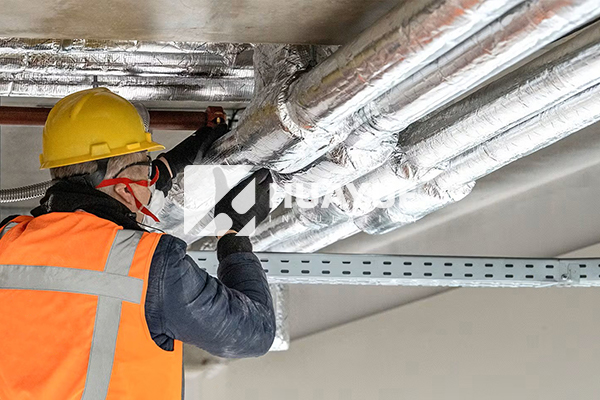
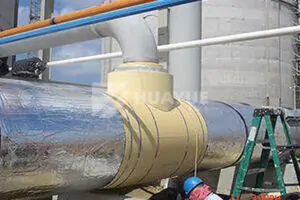
Chemical plants face thermal losses at every flange and vessel. Picking the wrong insulation means higher operating costs and unplanned downtime. I’ll address how rock wool insulation manufacturers tackle these challenges—especially for harsh industrial scenarios.
What are the negatives of rock wool insulation?
Moisture absorption, fiber shedding, and installation errors threaten reliability. If not controlled, these cause rapid thermal degradation and asset damage.
Typical negatives: water absorption up to 1.0 kg/m² (EN 1609), λ drift at >200°C, and loss of compression strength below 50 kg/m³. Rock wool insulation manufacturers must test for these in factory QC.
Moisture and Hydrophobicity
Rock wool absorbs less water than fibrous alternatives, but surface tension can still allow capillary action. EN 1609 water absorption for untreated rock wool is 0.7–1.0 kg/m². We use hydrophobic treatments to reach <0.3 kg/m² (tested, 24 h partial immersion). This mitigates CUI (corrosion under insulation) risk.
Fiber Loss and Mechanical Stability
Some grades shed fibers during handling. This can cause air quality or process contamination issues in sensitive zones. Proper resin binders reduce free fiber content to below 1% (EN 14064). For machinery insulation, we recommend slabs with compressive strength ≥40 kPa at 10% deformation.
High-Temperature Drift
Thermal conductivity (λ) increases with temperature. At 100°C, λ = 0.035–0.040 W/m·K. At 400°C, λ can rise to 0.070 W/m·K. Engineers should verify λ values across the full operating range.
Comparison Table: Density vs. Compression Strength
| Density (kg/m³) | Compressive Strength (kPa @10%) | Typical Use |
|---|---|---|
| 40–60 | 10–20 | General duct/pipe lagging |
| 80–100 | 30–50 | Vessel, tank, equipment |
| 120–200 | 60–90 | Load-bearing floor insulation |
Is rock wool made in China?
Globalization means sourcing from China is common. But some buyers doubt compliance or consistency from Asian suppliers.
Yes, major rock wool insulation manufacturers operate in China. Certified plants hold CE marking under EN 13162 and DIN 4102. Our λ = 0.036 W/m·K (50 mm, 80 kg/m³) is third-party verified.
Chinese Manufacturing and European Standards
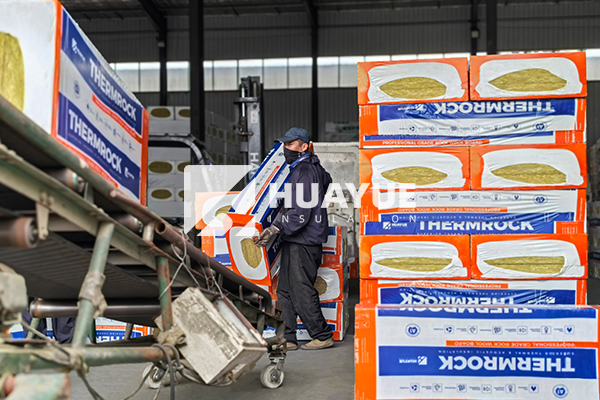
China is a leading producer of rock wool insulation—over 2 million tons/year. Major plants have modern production lines with spinning, curing ovens, and automated cutting. HUAYUE, for example, operates 15+ lines with output certified for export.
Compliance and Third-party Testing
Exported Chinese rock wool must pass:
- EN 13162 (thermal insulation products for buildings)
- EN 13501-1 (Euroclass A1 fire test; non-combustible)
- DIN 4102-1 (German B1/A1 fire classes)
- CE marking (system 1 for factory production control)
We submit batch samples to SGS and TUV labs for λ, density, fire reaction, and water absorption. Our Euroclass A1 results: no flaming, <5 s glow duration at 800°C.
Real Application: German Chemical Plant Case
In 2022, we supplied 120 mm, 100 kg/m³ rock wool panels for a BASF site in Ludwigshafen. Third-party tests confirmed λ = 0.037 W/m·K at 100°C and no delamination after 2500 h at 350°C.
Do mice nest in rock wool?
Rodent activity destroys insulation value and spreads contamination. Even minor nesting leads to hot spots and asset failure.
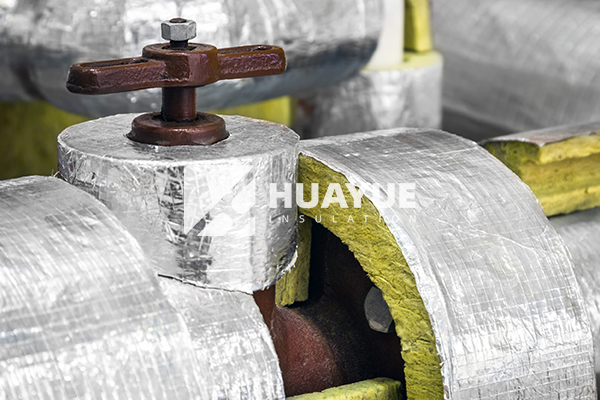
Mice rarely nest in rock wool. Density ≥80 kg/m³ and binder content deter rodents. Rock wool insulation manufacturers must validate rodent resistance per EN 14120.
Why Rock Wool Resists Mice
Rock wool is inorganic and non-nutritive. The dense, prickly fibers (shot content <3%) discourage burrowing. We conducted a lab rodent resistance test (EN 14120 Annex C): after 28 days, no nesting or tunneling was observed in slabs ≥80 kg/m³.
Lower-density, loosely packed mats (<40 kg/m³) are more vulnerable, especially if covered by dust or organic debris. Application details matter: Always seal joints with aluminum tape and avoid gaps where rodents might access the system.
Additional Protection Steps
For critical zones (e.g., food/pharma), we recommend:
- Use pre-formed pipe sections, not batts.
- Apply metal jacketing (0.5 mm aluminum or stainless).
- Inspect annually for breaches.
Is there asbestos in rock wool?
The risk of fiber inhalation and regulatory non-compliance is a core concern for all plant engineers.
No, rock wool insulation manufacturers do not use asbestos. Modern rock wool consists of basalt, slag, and binders—tested and certified asbestos-free per ISO 22262-1.
Composition and Safety
Rock wool is produced by melting natural stone (typically basalt, dolomite, or slag) at 1500°C, then fiberizing and adding organic resins (2–4% by mass). There is no historical or current use of asbestos in compliant rock wool. We submit quarterly samples for fiber phase analysis by XRD and PLM methods. Limits: <0.005% asbestos (all types); all results are below detection.
Worker and User Safety
Rock wool is classified as a biosoluble man-made vitreous fiber (MMVF). It is exonerated from carcinogenicity labeling by the EU (Note Q, EC Regulation 1272/2008) if biosolubility index >30 ng/cm²/d. Our test results: 35–42 ng/cm²/d.
Table: Rock Wool vs. Asbestos—Key Differences
| Property | Rock Wool | Asbestos |
|---|---|---|
| Fiber composition | Basalt/slag, resin | Chrysotile, amphibole |
| Biosoluble | Yes | No |
| Carcinogen class | Not classified (Note Q) | Group 1 (IARC) |
| EN 13162 compliant | Yes | No (banned) |
Conclusion
Rock wool insulation manufacturers must deliver λ ≤ 0.040 W/m·K, Euroclass A1 fire safety, EN 13162 compliance, and certified asbestos-free fiber. Always demand batch test reports and proven application data.