






Choosing mineral wool by thickness alone can produce the wrong thermal result, poor fit, or a specification that suppliers cannot compare consistently.
There is no single correct mineral wool insulation thickness. Start with the required thermal, acoustic, fire, or process result; select the product form and complete assembly; then confirm thickness from a named product document or project calculation.
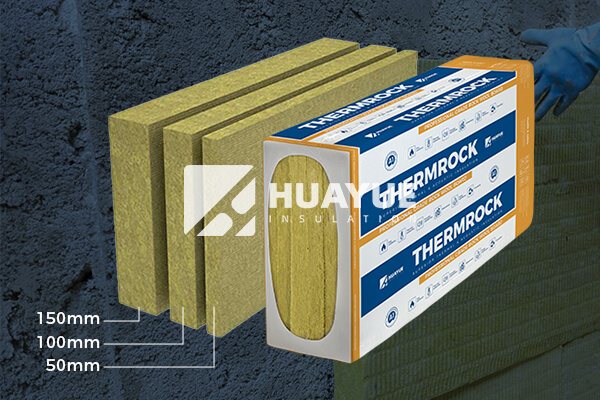
This guide explains how mineral wool thicknesses and sizes differ, what the numbers mean, and how to turn a performance requirement into a clear order.
What Mineral Wool Thickness Should You Choose?
The right thickness is the smallest verified build-up that meets the project requirement without creating fit, moisture, structural, or installation conflicts.
Choose the target before the millimetres: define the required R-value or U-value, acoustic assembly result, fire-tested system, or industrial heat-loss and surface-temperature limit. Then match a named product and thickness to that evidence.
A universal range is misleading because “mineral wool” covers different fibre products, densities, forms, and applications. Even within one product family, manufacturers may offer different thicknesses for wood framing, steel framing, exterior boards, curtain walls, roofs, or mechanical systems.
Published product documents show how wide that variation can be. An ACERMI certificate for the named IBR NU glass-mineral-wool product lists certified thicknesses from 45 to 300 mm, with a corresponding thermal resistance for each thickness. A Johns Manville mineral-wool comparison chart lists different named products with thicknesses ranging from 1 to 7.25 inches. These are market examples, not universal mineral wool sizes and not evidence of SinoInsulation availability.
For thermal work, begin with the whole assembly requirement. The U.S. Department of Energy explains that R-value depends on both insulation type and thickness, while applicable targets vary by climate zone and building component. A wall target cannot simply be copied to an attic, roof, or floor.
For acoustic or fire work, do not convert millimetres into a promised system rating. A 50 mm layer may appear in a tested wall or absorber, but the result also belongs to the linings, framing, cavity, joints, seals, mounting, and test arrangement. Use the thickness stated for the approved construction rather than a generic thickness chart.
For pipes and industrial equipment, thickness may be calculated from operating temperature, ambient conditions, pipe diameter, heat-loss limit, surface-temperature target, cladding, and economics. A building batt table is not an industrial pipe-thickness table.
What Do Mineral Wool Insulation Sizes Mean by Product Form?
“Size” is not one measurement. The fields change with the physical form, so a useful quotation must identify more than thickness.
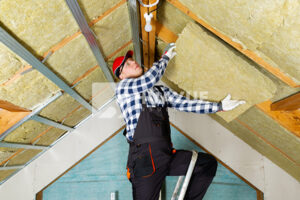
Boards use thickness × width × length; batts must also fit the framing; rolls add total length or coverage; pipe sections require insulation thickness, pipe outside diameter or section inside diameter, and section length.
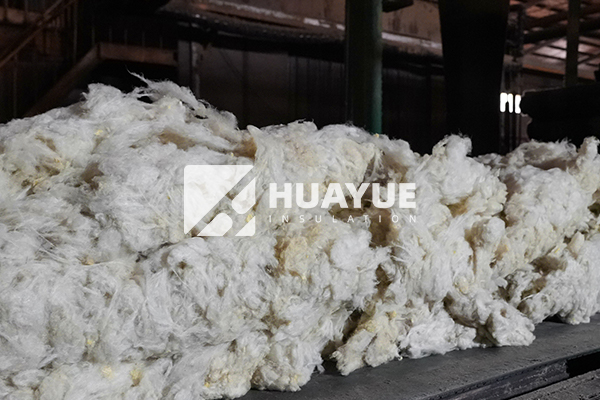
Use the following comparison to prevent a familiar ordering problem: two offers can show the same thickness but describe products that will not fit the same application.
| Product form | Dimensions to state | What the buyer must verify |
|---|---|---|
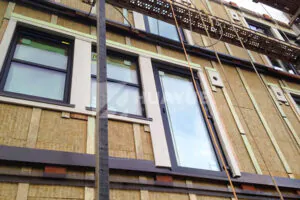
| Board or slab | Thickness × width × length | Required performance, substrate, fixing method, joint layout, density or strength grade, and facing |
| Batt | Thickness × width × length | Clear cavity depth, framing spacing, friction-fit allowance, and whether cutting is permitted |
| Blanket or roll | Thickness × width × roll length | Coverage per roll, support method, facing, overlaps, compression, and curved-surface fit |
| Pipe section | Insulation thickness × inside diameter × section length | Actual pipe outside diameter, number of layers, joints, fittings, operating conditions, and cladding |
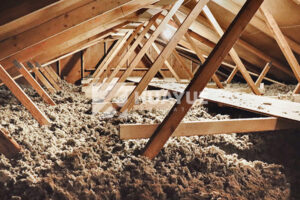
| Loose-fill mineral wool | Installed depth and coverage | Required installed density, settlement allowance, containment, and application method |
Thickness is therefore only one part of mineral wool insulation sizes. Width affects framing fit and the number of joints. Length affects cutting, handling, coverage, and packing. Pipe diameter controls whether a preformed section closes correctly. Density or grade may change mechanical behaviour, but it should not be used as a shortcut for thermal, acoustic, or fire performance.
Keep terminology equally precise. Mineral wool is a category name. Depending on the market and document, it may include rock or stone wool, slag wool, and glass mineral wool. These products can have different declared conductivity, density, facings, dimensions, and test scopes. Ask for the full product identity instead of assuming that two items called “mineral wool” are interchangeable.
If the project is specifically comparing rock wool boards, batts, blankets, or pipe sections, use the rock wool insulation sizes guide for form-specific order fields. Keep the final quotation tied to the current named-product sheet.
How Does Thickness Affect Thermal, Acoustic, and Fire Performance?
More thickness can change performance, but it does not create the same benefit—or prove compliance—in every application.
For a homogeneous insulation layer, thermal resistance relates to thickness divided by thermal conductivity. Acoustic and fire results, however, usually depend on the tested assembly or system, so thickness alone cannot predict the rating.
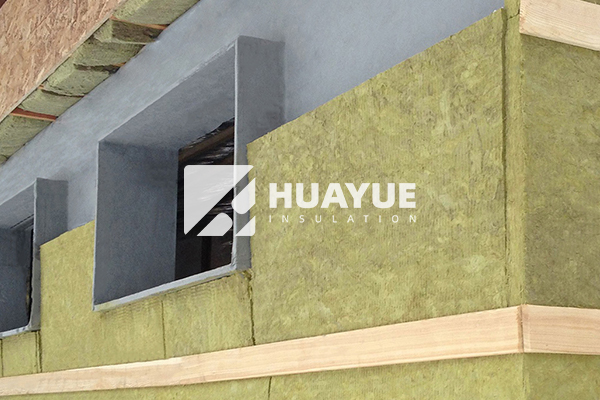
The thermal relationship is a useful starting point. The National Institute of Standards and Technology describes thermal resistance as thickness divided by thermal conductivity for a homogeneous material under the stated conditions. That means a thicker layer of the same product generally provides more material thermal resistance. It does not mean every “100 mm mineral wool” has the same R-value: conductivity, mean temperature, density range, moisture condition, test method, and product construction may differ.
The completed wall, roof, or floor also includes framing, fasteners, air spaces, linings, and thermal bridges. Approved Document L treats insulation continuity and control of thermal bridging as part of the building-envelope result. Adding thickness while leaving gaps or strong thermal bridges unresolved can deliver less improvement than a simple material calculation suggests.
Acoustic selection needs a different evidence path. Thickness can influence sound absorption, especially with mounting depth and air space, but sound transmission through a partition depends on the full construction. Use material absorption data for room or cavity treatment and assembly test data for wall, floor, or ceiling sound insulation. The rock wool acoustic-thickness guide explains why 50 mm can be a candidate in some constructions without being a universal soundproofing guarantee.
Fire selection is also system-specific. A material classification does not automatically establish the fire-resistance period of a wall, penetration seal, façade, roof, or joint. Use the product thickness and every other component named in the relevant tested or assessed system. Substituting thickness, density, facing, fixings, or joint details can move the construction outside its evidence scope.
The practical rule is simple: use material data to compare materials, assembly data to compare assemblies, and project calculations to size industrial insulation. Do not let a single thickness number cross those evidence boundaries.
How Should Buyers Specify Mineral Wool Insulation Thickness?
A comparable specification starts with the application and result, then records the geometry, product identity, evidence, and supply format.
Give suppliers one common data set: application, target performance, available depth, product form, dimensions, operating conditions, facing, quantity, destination, and required documents. Ask each offer to identify the exact product and evidence used.
Use this sequence before releasing an RFQ or purchase order:
- Define the application. State whether the insulation is for a wall, roof, floor, partition, acoustic treatment, duct, tank, pipe, or other equipment.
- Set the controlling result. Provide the required R-value, U-value, assembly acoustic rating, fire-tested system, heat-loss limit, surface-temperature limit, or another measurable project target.
- Record the available geometry. Include cavity depth, overall build-up limit, framing spacing, substrate, clearances, pipe outside diameter, bends, valves, and access constraints as applicable.
- Select the product form. Board, batt, blanket, pipe section, or loose fill changes the size fields, support method, joints, packaging, and installation plan.
- Request traceable evidence. Ask for the current datasheet and the report, certificate, assessment, or calculation that supports the proposed thickness. Check the named product, test conditions, specimen, date, and permitted substitutions.
- Compare like with like. Normalize thickness, width, length, pieces per pack, coverage, density or grade, facing, number of layers, waste allowance, and documents before comparing price.
- Close installation risks. Confirm joint staggering, compression limits, fasteners, support, vapor or weather control, cladding, penetrations, and interfaces with other layers.
For SinoInsulation selection, start with the application and target performance. Approximate dimensions, quantity, destination, and document requirements can follow once the product family and evidence route are clear. If a supplier proposes a different thickness, ask what calculation or tested construction supports the change rather than accepting “standard size” as the reason.
This method also keeps an approved alternative honest. A substitute should match the governing performance and system conditions, not merely the nominal millimetres. Where local codes or the design professional require a specific construction, their requirements take priority over a general article or supplier comparison.
Frequently Asked Questions
These short answers address the most common thickness questions, but the named product and complete construction remain the final reference.
Common dimensions are useful for shortlisting, not design approval. A 50 mm product, a two-layer build-up, or a thicker alternative is acceptable only when its product and system evidence match the application.
What are common mineral wool insulation thicknesses?
There is no universal list across all mineral wool products. Named building products commonly publish multiple thicknesses in millimetres or inches, while pipe sections and industrial systems use different ranges and calculations. For example, the cited ACERMI certificate covers 45–300 mm for one named glass-mineral-wool product, and the cited Johns Manville chart shows different thickness ranges by named product. Treat those as examples, then check the current product offered for your project.
Is 50 mm mineral wool insulation thick enough?
It can be, but “enough” needs a target. A 50 mm layer may fit an interior acoustic construction, a thermal build-up with other layers, or a specific industrial calculation. It may be insufficient for a roof or wall target in another climate, and it cannot prove an acoustic or fire rating by itself. Check the required result, product data, full assembly, and installation space.
Can two mineral wool layers replace one thicker layer?
Multiple layers can be useful when an approved design permits them. Staggered joints may improve continuity, and thinner pieces can sometimes simplify handling. However, the total nominal thickness does not automatically make the build-up equivalent. Confirm layer orientation, compression, support, fasteners, facings, joints, vapor and weather control, and whether the performance evidence allows the proposed arrangement.
Conclusion
Choose mineral wool thickness from the required result, complete assembly, and named-product evidence. Share the application and target performance to begin a defensible comparison.