







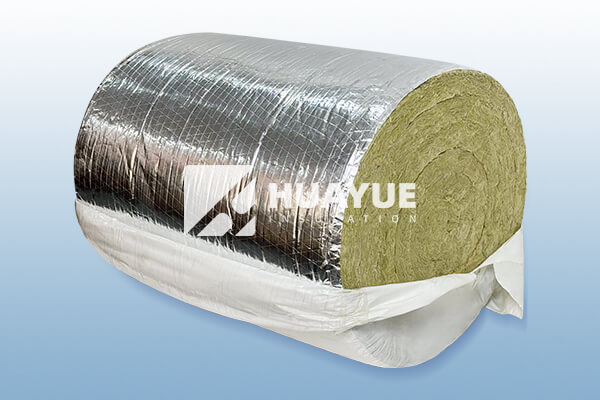
Faced rock wool is rock wool insulation with a surface layer added to one or both sides of the insulation core.
Yes, some rock wool products come faced, often with foil, glass tissue, cloth, or another purpose-built layer. But not every rock wool product is offered faced, and the facing does not by itself define the complete insulation or moisture-control system.
The useful question is not simply whether a product is faced. It is what the facing is intended to do, whether it is compatible with the core and assembly, and what the product documentation says about its limits.
Does Rock Wool Come Faced?
Rock wool can be supplied with a facing, but availability depends on the product form, application, and manufacturer’s construction.
A faced product combines the insulation core with a surface layer; an unfaced product leaves the core exposed for the next layer of the assembly. Neither version is automatically the better choice without knowing the application.
“Faced” describes a construction, not a universal grade of rock wool. A facing may be laminated in production, applied by a fabricator, or specified as part of a jacketed system. The product name must therefore identify both the core and the surface construction. A request for “rockwool faced insulation” alone can be too broad to quote or approve accurately.
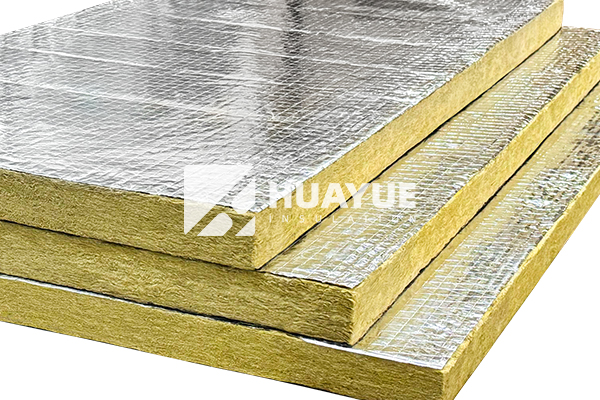
Foil is a common example, but it is not the only one. A surface may use foil, reinforced foil, glass tissue, glass cloth, or another layer selected for a defined function. The layer may help protect the surface, support handling, provide a finished appearance, or support a specified assembly detail. Its actual behavior depends on details such as reinforcement, adhesive, thickness, seams, exposure, and the product it is bonded to.
Some well-known stone-wool manufacturers list both faced and unfaced versions within named product families, while other products are sold only unfaced. That confirms the right general answer—yes, faced rock wool exists—but it is not evidence that every board, blanket, batt, or pipe section is available with every facing. Before a buyer treats a facing as available, request the current datasheet or submittal for the exact form.
For a project inquiry, describe the product as a complete construction: rock wool form, thickness or required fit, facing material, side faced, intended exposure, and any joint treatment. That language avoids the common mistake of comparing an unfaced core with a faced product as if only the price had changed.
What Can a Facing Change—and What Can It Not Prove?
A facing can add a useful surface function, but its name alone cannot prove system performance.
A foil, tissue, or cloth facing may change handling, surface protection, appearance, or vapor behavior. It does not automatically make the insulation waterproof, airtight, noncombustible as a complete assembly, or suitable for every temperature and exposure condition.
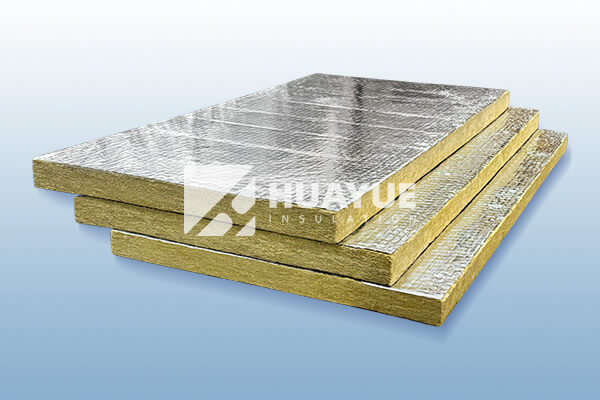
This distinction matters because insulation is normally installed with other layers. The insulation core, facing, laps, tapes, fasteners, penetrations, external jacket, substrate, and finish may all affect the result. A foil face with unsealed joints, for example, is not the same thing as a continuous vapor-control layer. Likewise, a facing that looks durable in a sample may not be appropriate for sunlight, cleaning, mechanical contact, or an exposed interior finish unless the named product documents that use.
Fire and temperature questions require the same discipline. Do not infer a faced product’s fire classification, smoke behavior, or service-temperature limit from the unfaced core or from a different facing. Adhesives, reinforcement, coatings, and the assembly itself can matter. Ask for the applicable product document and, where required, the tested assembly or system listing.
The facing can also change how the product should be installed. One current named cladding-roll guide, for example, gives different application and orientation instructions for its plain-faced and foil-faced versions. That does not create a universal installation rule, but it is a useful reminder: follow the exact product guide rather than turning a generic “foil side” rule into a site instruction.
The practical takeaway is simple. Treat “faced” as the start of a specification conversation, not the end of one. When the function is moisture control, finish protection, acoustics, or fire-related work, the documents must connect that function to the exact product and assembly.
Foil-Faced Rock Wool vs. Unfaced Rock Wool
Choose between faced and unfaced rock wool by the assembly function the surface layer must provide.
Foil-faced rock wool may be appropriate when a documented foil-facing function is needed. Unfaced rock wool may be preferable when another membrane, jacket, finish, or open surface is designed to perform that role.
| Decision point | Foil-faced rock wool | Unfaced rock wool |
|---|---|---|
| Surface layer | Includes a foil-based facing as part of the named product construction. | Leaves the rock-wool surface available for the next assembly layer. |
| Specification question | What does this exact foil construction do, and how are joints and edges treated? | Which separate layer, if any, provides surface protection or vapor control? |
| Installation review | Check facing orientation, overlaps, tapes, fasteners, damage repair, and exposure limits. | Check compatibility with the membrane, jacket, cladding, finish, or support added later. |
| Evidence needed | Datasheet and installation guidance for the faced product and assembly. | Datasheet for the core plus documents for the separate layers. |
The table is a selection tool, not a performance ranking. A foil-facing label does not automatically mean that one construction manages moisture better than another; the answer depends on the whole assembly, service conditions, and continuity at joints and penetrations. In many projects, a separate membrane or jacket is intentional because it can be detailed continuously across several components. In others, a factory-applied facing is chosen to meet a specific product or handling requirement.
Foil-facing is also not interchangeable with kraft-facing, tissue-facing, or cloth-facing. These terms describe different materials and constructions. Their suitability can change with exposure, mechanical protection, finish requirements, local code, and operating conditions. If the application is on equipment, ducts, piping, walls, ceilings, or an acoustic surface, describe that application before choosing the facing—not after.
Readers searching “foil faced rockwool insulation” should therefore avoid two shortcuts: assuming all foil-faced products have the same vapor or fire behavior, and assuming an unfaced product is incomplete. The correct choice is the one whose documented core, facing, installation detail, and assembly role match the requirement.
How to Specify Faced Rock Wool Without Guesswork
Specify the core, the facing, and the assembly details together before requesting a quotation or approving a substitution.
The most reliable request names the rock wool form and intended use first, then states the facing material, its required function, exposure conditions, and the documents needed to verify the complete construction.
Use this short review sequence:
- State the application: wall, roof, duct, equipment, pipe, ceiling, acoustic lining, or another defined use.
- Identify the core: board, blanket, batt, pipe section, or another product form required by the assembly.
- Name the facing precisely: foil, reinforced foil, tissue, cloth, or another documented construction; include the faced side if it matters.
- Define what the surface must do: protect the product, support a finish, meet a system detail, or satisfy another documented requirement.
- Check the conditions: indoor or outdoor exposure, operating range, humidity, mechanical contact, cleaning, UV exposure, and adjacent materials.
- Request the evidence: current datasheet, installation guide, relevant test or assembly documentation, sample if appearance or surface quality matters, and written confirmation of any substitution.
This approach keeps the conversation practical. It does not assume that all rock wool has a foil option, and it does not force a generic performance claim onto a product that has not been identified. It also helps prevent a late change from replacing a specified facing with a visually similar material whose seams, adhesive, exposure limit, or system role has not been checked.
If you need help after this definition-level review, use the rock wool faced insulation guide for deeper form and selection questions. For category routing, see rock wool insulation. An inquiry can start with only the intended application and whether the facing will be exposed; further dimensions and document requirements can follow once the product form is clear.
Conclusion
Faced rock wool is a product-specific core-and-surface construction. Confirm the intended function, exact facing, assembly details, and supporting documents before selecting it.