







Rock wool pipe sections are widely used for thermal and acoustic insulation in HVAC and plumbing systems due to their fire resistance and durability.
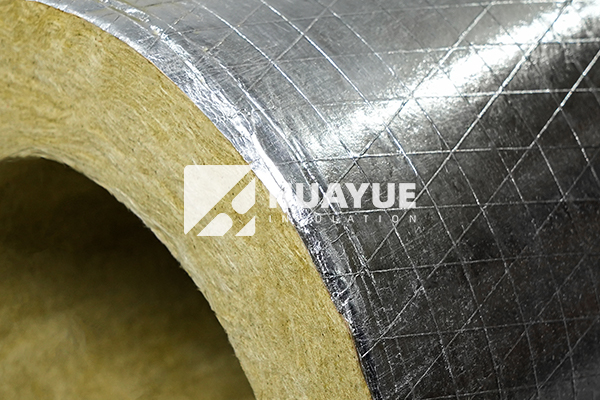
Rock wool pipe sections are pre-formed cylindrical insulation products designed to fit around pipes, providing excellent thermal and fire protection in mechanical systems such as HVAC and plumbing.
What size are ROCK WOOL H&V pipe sections?
Rock wool H&V (Heating & Ventilation) pipe sections are manufactured in a range of standard sizes to fit common pipe diameters and insulation thickness requirements. Typical inner diameters range from 21 mm up to 610 mm, with insulation thicknesses between 25 mm and 100 mm. Custom sizing is also available for specific project needs.
For mechanical engineers and contractors, selecting the correct size is crucial for ensuring a snug fit and optimal thermal performance. The inner diameter should match the pipe’s outer diameter, while the insulation thickness is chosen based on energy-saving requirements and local building codes. Most suppliers, including HUAYUE Group, offer a specification chart to help with selection.
| Pipe Outer Diameter (mm) | Common Insulation Thickness (mm) | Typical Length per Section (mm) |
|---|---|---|
| 21–48 | 25, 30, 40, 50 | 1000 |
| 60–114 | 30, 40, 50, 60 | 1000 |
| 133–219 | 40, 50, 60, 75 | 1000 |
| 273–610 | 50, 60, 75, 100 | 1000 |
Larger and non-standard sizes can be produced on request, but require longer lead times and minimum order quantities. Always verify the pipe material and temperature range to select suitable rock wool density and facing (e.g., aluminum foil).
Can you put ROCK WOOL around pipes?
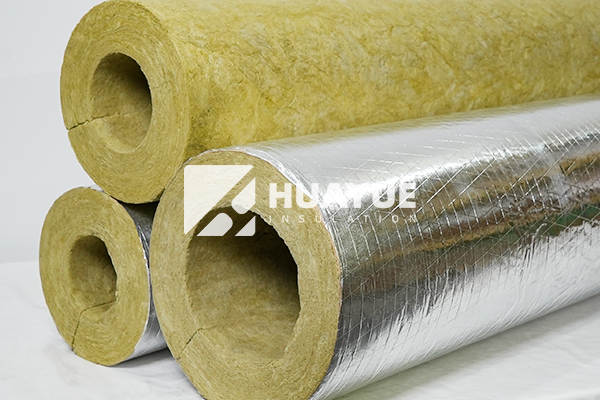
Yes, rock wool can be installed around pipes, and it is specifically engineered for this application. Rock wool pipe sections are pre-formed to fit tightly around various pipe sizes, ensuring continuous insulation coverage and minimizing thermal bridges.
When installing rock wool around pipes, follow these best practices:
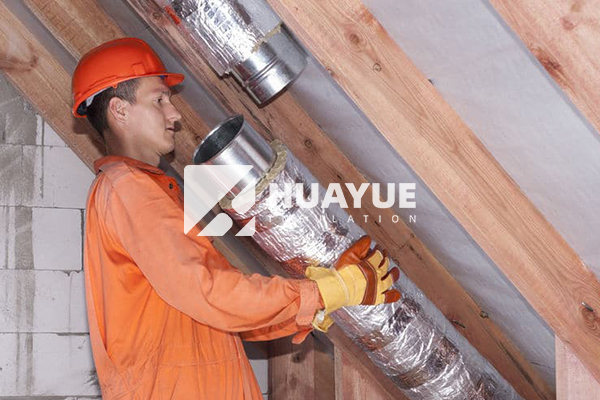
– Clean the Pipe Surface: Ensure the pipe is free of oil, dust, or moisture before installation. – Section Alignment: Align the pipe sections so that the longitudinal joints are tightly butted and offset if installing multiple layers. – Securing: Use wire, tape, or metal bands to secure the insulation in place. For vertical pipes, additional supports may be needed. – Sealing Joints: For improved vapor resistance or weather protection, seal the joints with compatible tape or mastic, especially when using a foil-faced product. – Elbows and Fittings: Use pre-formed segments or cut sections to insulate bends, tees, and flanges.
Rock wool pipe insulation is suitable for both hot and cold service pipes, offering benefits such as high fire resistance, water repellency, and resistance to compression or vibration.
Do you need an air gap with ROCK WOOL?
No, an air gap is not required when installing rock wool pipe sections. In fact, direct contact between the insulation and the pipe surface is essential for optimal thermal performance. Air gaps can create thermal bridges, reducing insulation efficiency and increasing energy loss.
Rock wool’s structure is inherently porous, trapping air within its fibers to provide insulation. Adding an external air gap does not improve, and may actually compromise, the system’s performance. For best results:
– Ensure that the pipe section fits snugly around the pipe. – Avoid compressing the insulation excessively, as this can reduce its thermal resistance. – Properly butt and seal all joints to prevent unwanted air infiltration.
In summary, install rock wool pipe sections in direct contact with the pipe, without leaving intentional air gaps.
Do I need a vapor barrier when using ROCK WOOL?
A vapor barrier is recommended when using rock wool pipe sections on cold service pipes or in environments with high humidity. Rock wool itself is hydrophobic and resists water absorption, but it is vapor permeable. Without a vapor barrier, condensation can form on cold pipes, potentially leading to moisture accumulation and corrosion under insulation.
Common vapor barrier solutions include:
– Aluminum Foil Facing: Many rock wool pipe sections come with a factory-applied foil facing that acts as a vapor barrier. – Self-Adhesive Foil Tape: Use tape to seal all longitudinal and circumferential joints. – Mastic or Coating: For complex shapes or outdoor applications, a vapor-retardant mastic may be applied.
For hot service pipes (e.g., steam or hot water), a vapor barrier is generally not required, but a weatherproof cladding may be necessary for outdoor installations.
Can ROCK WOOL insulation touch hot water pipes?
Yes, rock wool insulation is designed to be in direct contact with hot water pipes. It can withstand continuous service temperatures typically up to 650°C (1200°F), far above the temperature of standard hot water or steam pipes. Direct contact ensures maximum heat retention and fire safety.
When using rock wool on hot pipes:
– Confirm the maximum service temperature of the specific product. – Choose the correct density and thickness for the application. – For very high-temperature pipes, consult the manufacturer for product suitability.
Rock wool’s non-combustible nature makes it a preferred choice for fire-critical applications, such as boiler rooms and plant piping.
FAQ
Q1: What is the density range for rock wool pipe sections?
A1: Typical densities range from 80 to 150 kg/m³, depending on the application and required mechanical strength.
Q2: Are rock wool pipe sections suitable for outdoor use?
A2: Yes, provided they are protected with appropriate weatherproof cladding or jacketing.
Q3: How are rock wool pipe sections packaged for shipment?
A3: They are usually packed in cartons or wrapped bundles, with optional palletization for bulk orders.
Q4: Can rock wool pipe insulation be painted?
A4: Yes, but only if the paint is compatible with mineral wool and does not compromise fire or vapor barrier properties.
Q5: What certifications should B2B buyers look for?
A5: Look for compliance with EN, ASTM, or local fire and thermal performance standards, as well as ISO quality management certification.
Conclusion
Rock wool pipe sections offer reliable thermal and fire insulation for HVAC and plumbing systems. Selecting the right size, using vapor barriers when needed, and correct installation are key to system efficiency and longevity.