




Choosing a rock wool blanket starts with the surface, operating condition, and moisture path—not the keyword alone.
A rock wool blanket is a flexible mineral-fiber insulation roll used to reduce heat transfer and sound transmission, while exact fire, thermal, moisture, and temperature performance depends on the named product and tested assembly.
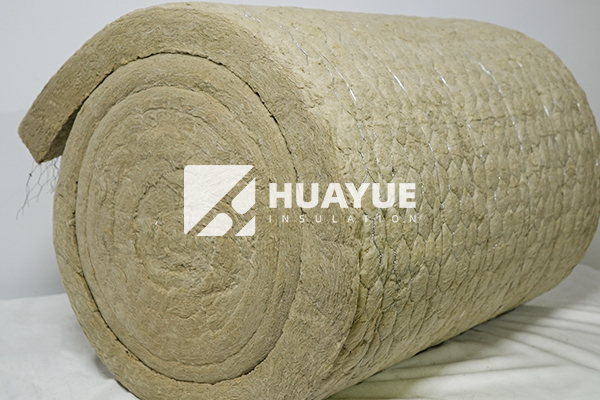
This guide answers four common People Also Ask questions and turns them into practical checks for building, HVAC, and industrial insulation decisions.
What Is the Use of a Rock Wool Blanket?
Rock wool blankets are selected when insulation must follow a broad, curved, or irregular surface.
Their main use is flexible thermal insulation around pipes, tanks, vessels, ducts, equipment, and selected wall or roof assemblies where a roll format fits the design.
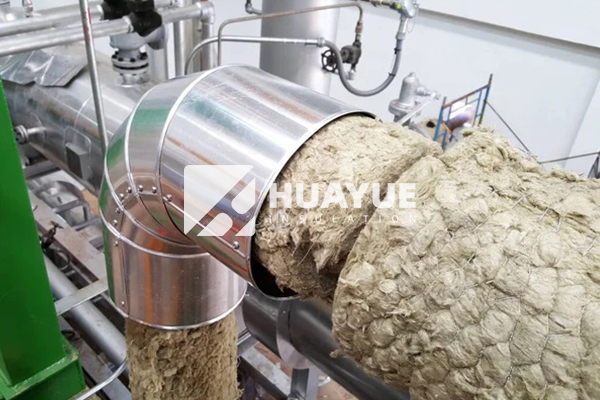
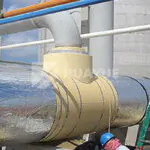
The Insulation Institute’s industrial insulation guidance describes rock wool blanket insulation as a flexible form that can be wrapped around pipes, tanks, vessels, ducts, groups of parallel pipes, fittings, and process equipment. The practical advantage is conformity: a roll can follow a changing radius or pass around a large surface with fewer rigid-piece joints.
Blanket, roll, batt, and mat are sometimes used loosely in supplier conversations, but they do not always describe the same physical format. A blanket or roll is usually continuous and flexible. A batt is normally cut into a more defined piece for a framed cavity. A board or slab is more rigid and may be chosen where shape, support, or compressive behavior matters. Always ask the supplier to state the exact form in the quotation.
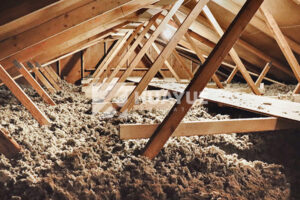
For building work, a blanket may be considered for roofs, attics, ceilings, framed cavities, or large unloaded areas when the assembly permits a flexible layer. For industrial work, the geometry and support method matter more: a large-diameter vessel, a straight duct, and a vibrating pipe run may need different facings, retaining methods, joints, or outer protection. The blanket itself is only one layer in that system.
Do not treat the roll format as a fire barrier, acoustic assembly, or waterproof jacket by itself. Those outcomes depend on the product, thickness, facing, supports, enclosure, and tested construction. If the installation involves a building cavity, see the rock wool installation guide for fitting, support, and gap-control considerations.
What Happens If a Rock Wool Blanket Gets Wet?
Wet insulation needs an inspection and drying decision before the assembly is closed.
If a rock wool blanket becomes wet, stop the water source, check for contamination or physical damage, allow the material and surrounding assembly to dry, and replace it when its condition or product instructions require replacement.
Some stone wool products are designed to resist liquid-water uptake while remaining vapor permeable, but that behavior should not be generalized from one product to every rock wool blanket. The surrounding system can still be damaged by leaks, trapped water, freeze–thaw exposure, or corrosion of metal beneath the insulation. Water resistance is not the same as a waterproof system.
The first question is where the water came from. Rain entering an unfinished roof, a leaking jacket, condensation on a cold pipe, wash-down water, and a flood create different risks. Remove or open the affected outer layer only as the project method allows, inspect the blanket for dirt, oil, compression, tearing, or loss of shape, and check the substrate for corrosion. Do not seal a visibly wet assembly simply because the insulation is mineral-based.
Drying also depends on the assembly. A vapor-tight facing, closed cladding, or low-permeance layer can slow drying even when the fiber itself is vapor permeable. Building Science guidance on moisture durability emphasizes that assemblies need a deliberate path to control, drain, and dry moisture; the correct solution is not a universal promise that insulation will recover after every wetting event.
For procurement, ask for the named product’s water-resistance, vapor-permeance, storage, and wetting guidance. Confirm whether the requested facing is intended for rain exposure, condensation control, or only surface protection. If a supplier cannot identify the product and conditions behind a “waterproof” or “mold-proof” statement, treat that statement as incomplete.
Do You Need a Vapor Barrier With Rock Wool Blanket Insulation?
Vapor control is an assembly decision governed by temperature, humidity, climate, and the direction of vapor drive.
Not always. A vapor control layer may be needed when condensation is possible, especially in cold-service or humid assemblies, but its location and permeance must match the full design and the selected blanket facing.
“Vapor barrier,” “vapor retarder,” jacket, foil facing, and weather protection are related terms, not automatic synonyms. A foil-faced blanket may contribute to vapor control, but it does not make every joint, penetration, seam, or outer cover airtight. Likewise, an unfaced blanket may be correct in a dry, ventilated assembly and unsuitable where vapor must be limited.
For cold pipes, tanks, ducts, or equipment, warm humid air can reach a cold surface and condense inside the insulation system. The design may therefore need a continuous vapor-control layer on the correct side, sealed laps, protected penetrations, and a compatible outer jacket. The blanket’s water-repellent behavior does not remove the need to control vapor or protect the underlying metal from corrosion under insulation.
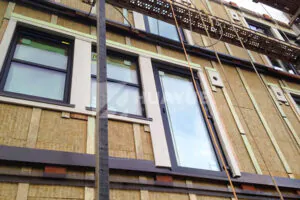
For building envelopes, the answer depends on climate zone, interior humidity, wall or roof layers, air leakage, ventilation, and local code. Building Science research shows that vapor-permeable insulation can support drying in some assemblies, while the position of vapor control layers still changes moisture behavior. That is why a supplier should not select a facing from the product name alone.
Before ordering, confirm four items: the warm and cold side of the assembly, the expected operating temperature, the required vapor-control strategy, and the treatment of joints and penetrations. Then match the facing or jacket to that design. If the project specification names a foil, mesh, cloth, or other facing, request the current product document and installation instructions for that exact construction.
What Is the Purpose of a Rock Wool Insulation Blanket?
The purpose is not simply to wrap a surface; it is to provide a defined insulation layer within a complete building or equipment system.
A rock wool insulation blanket is used to manage heat flow and, where the selected product and assembly support it, contribute to acoustic and fire-related performance around the insulated building element or equipment.
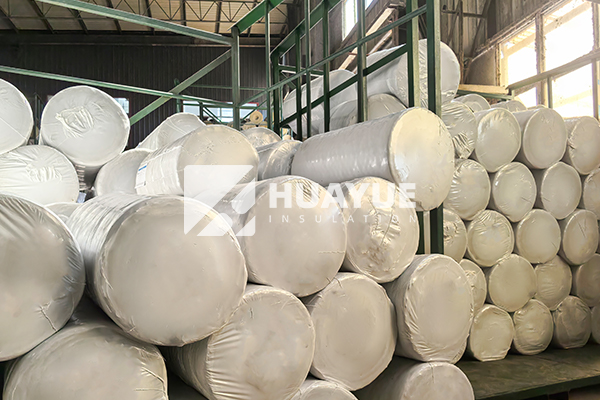
Start with the result the project needs. A blanket for thermal control may be judged by conductivity, thickness, temperature conditions, and continuity. A blanket near noisy equipment may need acoustic data for the full enclosure rather than a material claim alone. A fire-related requirement may depend on a tested assembly, fire classification, facing, support, and local code. A condensation-control requirement may depend more on the vapor-control and jacket system than on the fiber alone.
Use this short selection route before comparing supplier quotations:
| Buyer question | What it helps define | What still needs confirmation |
|---|---|---|
| What is being insulated? | Wall, roof, duct, pipe, tank, vessel, or equipment form | Geometry, access, supports, and enclosure |
| Is the surface hot, cold, or near ambient? | Thermal and condensation-control route | Operating range, cycling, and ambient humidity |
| Is the blanket exposed to weather, wash-down, or vibration? | Facing, jacket, retaining, and protection needs | Water, vapor, mechanical, and corrosion-control details |
| Is a fire or acoustic result required? | Product and assembly evidence needed | Tested construction, code, and project approval |
| What must the supplier quote? | Form, thickness, dimensions, quantity, and documents | Current datasheet, SDS, test reports, and packaging |
The word “rock wool” is also easy to misuse in procurement. As explained in the rock wool and mineral wool terminology guide, rock wool is a material term within the broader mineral-wool family, while <code>ROCKWOOL</code> is a brand name. A quotation should state whether the requirement is generic rock wool, a particular brand, or an approved equivalent.
Product-specific dimensions, densities, temperature limits, facings, certifications, capacity, and delivery terms should come from current approved documents for the named product rather than from the material category. For a project inquiry, share the application and approximate operating condition through the SinoInsulation contact page; dimensions, quantity, destination, facing, and document requirements can be confirmed progressively.
Conclusion
Choose rock wool blanket by application, geometry, operating conditions, moisture design, and verified product data. Share the application and approximate condition to begin a review.