








Rock Wool Board
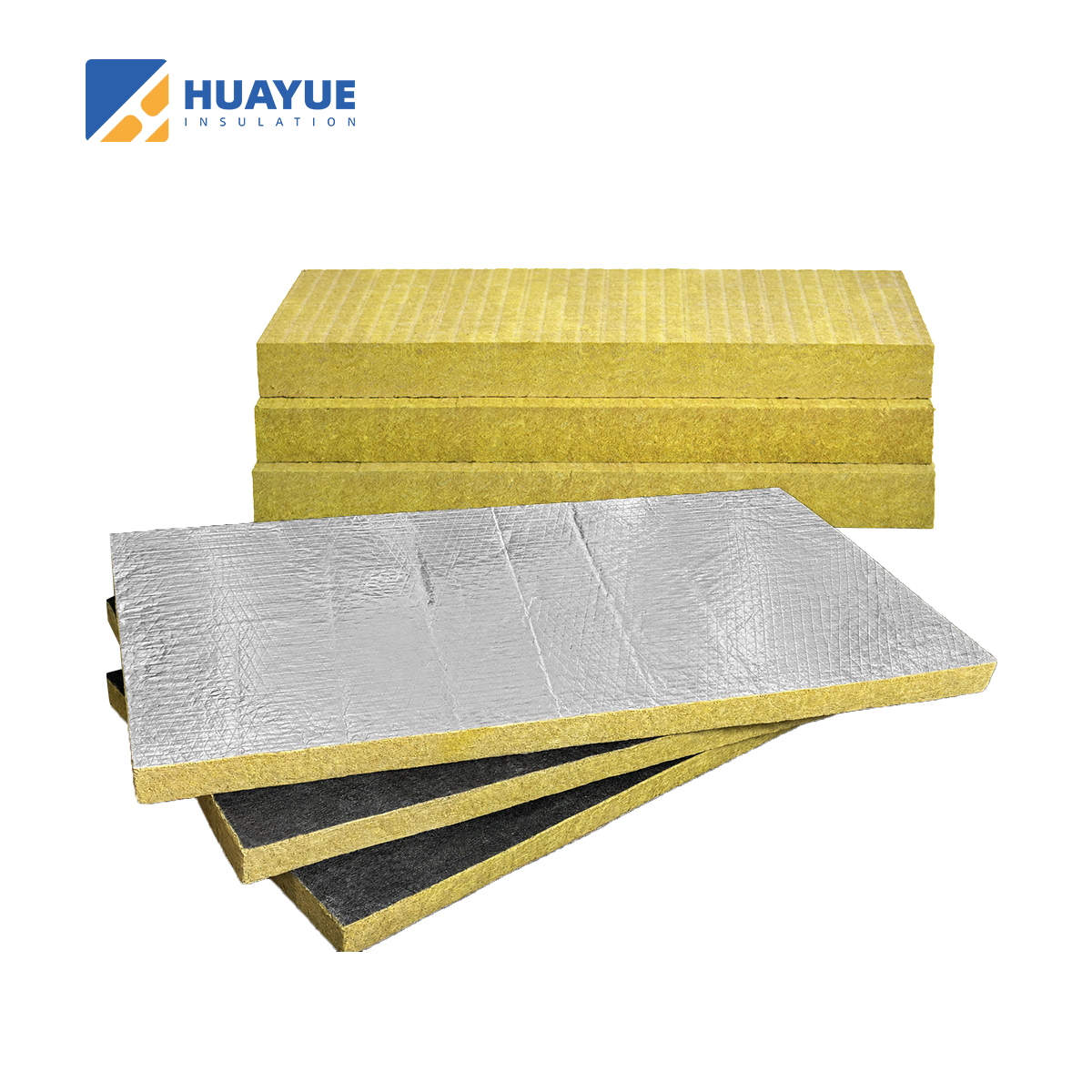
Rock wool board insulation provides dense, non-combustible mineral wool in rigid panel form for facades, ceilings, acoustic panels, and industrial equipment. Density from 40 to 200 kg/m³, thicknesses from 20 mm to 200 mm, fire classification up to Euroclass A1, with thermal conductivity from 0.033 to 0.042 W/m·K — confirm exact grade and documentation by inquiry. Supplied from our own and partner factories — combined capacity up to 450,000 t/yr, with a one-container MOQ and LCL support.
- Dense, non-combustible mineral wool provides compressive strength for facades, roofs, and equipment surfaces where glass wool boards compress and deform.
- Better low-frequency acoustic absorption than lightweight boards — the standard for acoustic partitions, studios, and equipment enclosures.
- Dimensionally stable under cladding loads, fastener pull, and roof traffic that crush lighter insulation materials.
Quick Answer
Key questions buyers ask before sourcing this product.
What is it?
Rigid or semi-rigid rock wool insulation board for building, industrial, acoustic, and fire-review applications.
Best for?
Walls, roofs, facades, acoustic panels, equipment insulation, and projects needing higher density mineral wool board.
Key advantage?
Board format combines mineral wool rigidity, density options, and broad application fit.
Options?
board size, thickness, density, facing or coating, wrapping option.
Next step?
Share application, board size, thickness, density, facing or coating, quantity, and document needs.
Problems This Product Solves
Common pain points this product is built to address.
Facade panels warp or sag when the insulation board cannot hold its shape under cladding.
External wall insulation systems (ETICS, ventilated facades) need rigid panels that resist wind suction, gravity, and temperature cycling without deforming. Rock wool board provides the dimensional stability that blankets and batts cannot.
Acoustic ceiling grids need boards with precise, consistent edges — not flexible cavity fill.
Lay-in ceiling tiles and clip-mounted acoustic panels require boards cut to exact dimensions with clean edges. Rock wool board is manufactured in rigid panel format that drops into grid systems.
Industrial equipment panels must resist compression under metal cladding without crushing.
Metal jacketing applies point loads at fastener locations. Rock wool board at suitable density withstands cladding compression while maintaining thermal performance — a requirement that low-density batts cannot meet.
Fire-review requirements demand non-combustible rigid panels with documented classification.
Fire-rated wall and ceiling assemblies require insulation with tested fire classification (Euroclass A1). Rock wool board provides non-combustible rigid panels with fire documentation for system approvals.
Engineered for Consistent Performance
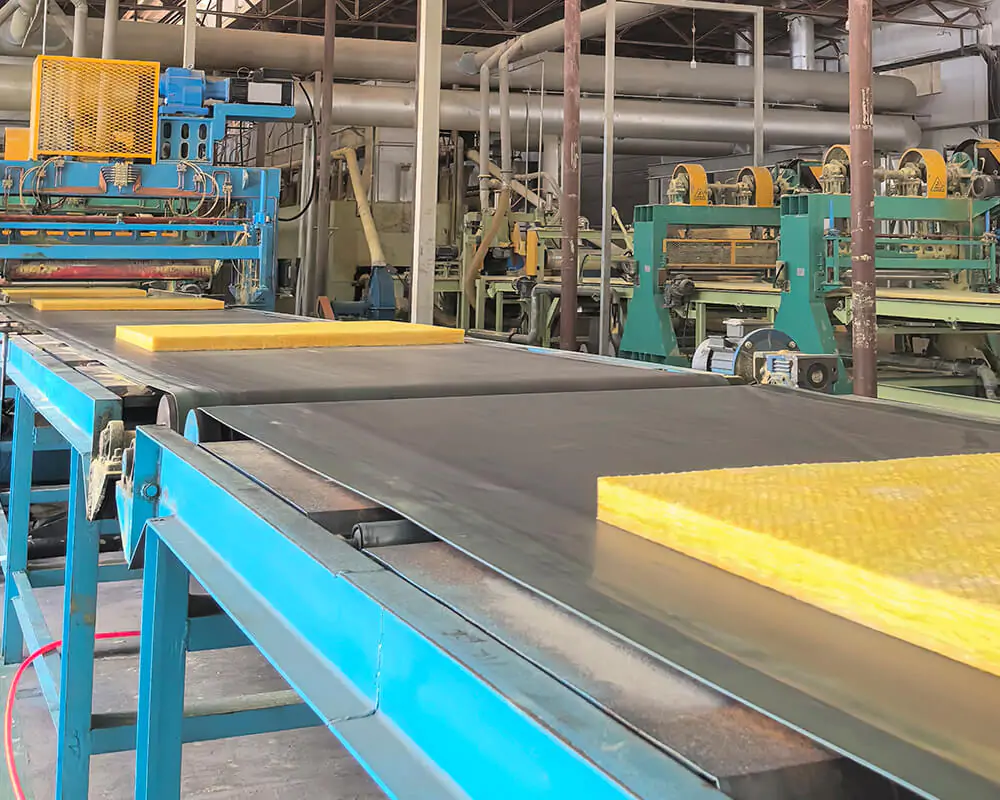
Every batch is produced under controlled conditions and verified against international standards, so what you specify is what you receive — project after project.
Product Benefits
What sets this product apart in real projects.
Dimensional stability under wind and thermal cycling
Facade and cladding systems stay aligned over time without insulation movement causing panel gaps.
Compressive strength at density
Supports under-cladding installation, traffic floors, and equipment panels without crushing at attachment points.
Non-combustible mineral fiber
Meets non-combustible classification for fire-review documentation routes in commercial and industrial projects.
Precision-cut edges for facade and ceiling systems
Reduces on-site trimming and provides clean board-to-board joints in visible or system-critical installations.
Higher temperature service range than glass wool
Suitable for equipment panels and industrial applications where operating temperatures exceed glass wool limits.
Acoustic absorption at density
Provides sound absorption performance for ceiling panels, partition systems, and acoustic wall assemblies.
Best-Fit Applications
Rock wool board is most commonly used where a rigid mineral wool panel is needed for thermal, acoustic, fire-review, or compressive-load conditions.
External wall facade systems (ETICS / ventilated)
Dimensional stability and non-combustible classification suit facade insulation under cladding or render.
Flat roof insulation
Compressive strength at density supports roof traffic and mechanical loads above the insulation layer.
Acoustic ceiling panels
Precision-cut edges and acoustic absorption fit lay-in ceiling grid systems.
Industrial equipment panels
Higher temperature range and compression resistance suit panels under metal cladding on tanks, ducts, and process equipment.
Fire-rated wall assemblies
Non-combustible mineral fiber supports fire-review documentation for commercial partition and wall systems.
Floor insulation under screed
Board rigidity and compressive strength handle screed load without long-term deformation.
Options & Variants
Choose the form that fits your application.
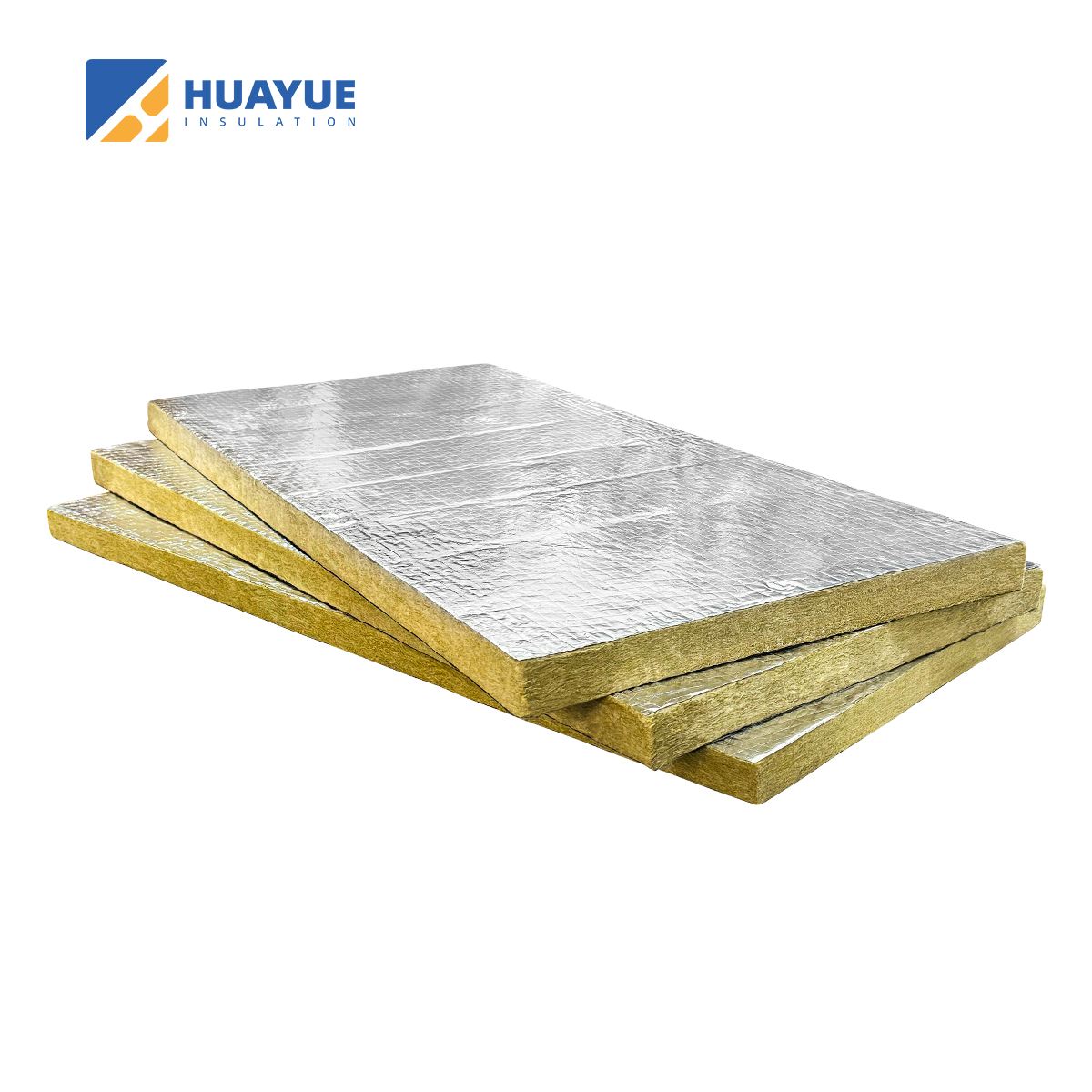
Foil Faced Board
Foil facing — vapor barrier and thermal reflection on the surface.
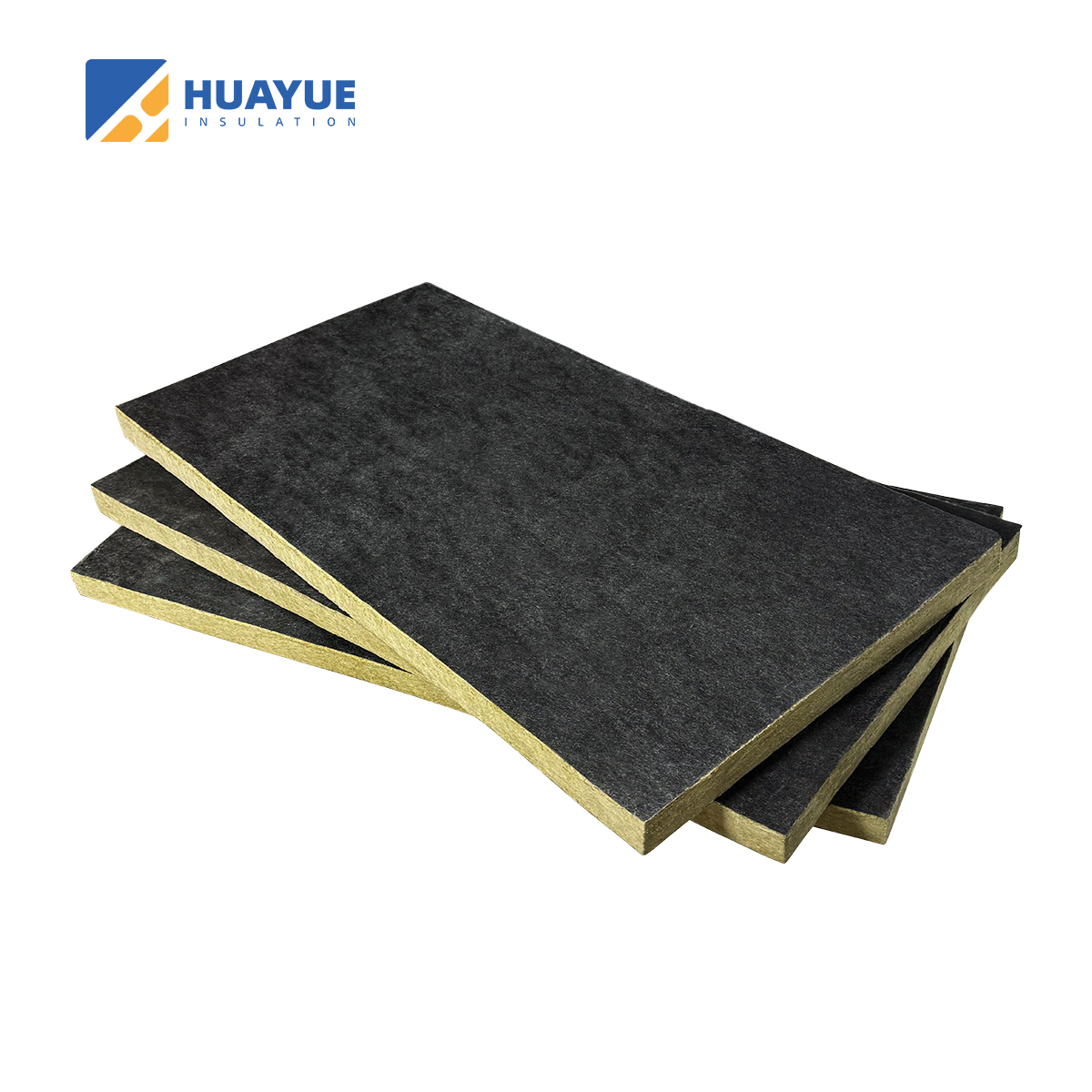
Black Tissue Faced Board
Black tissue facing — finished dark face for lay-in ceilings.
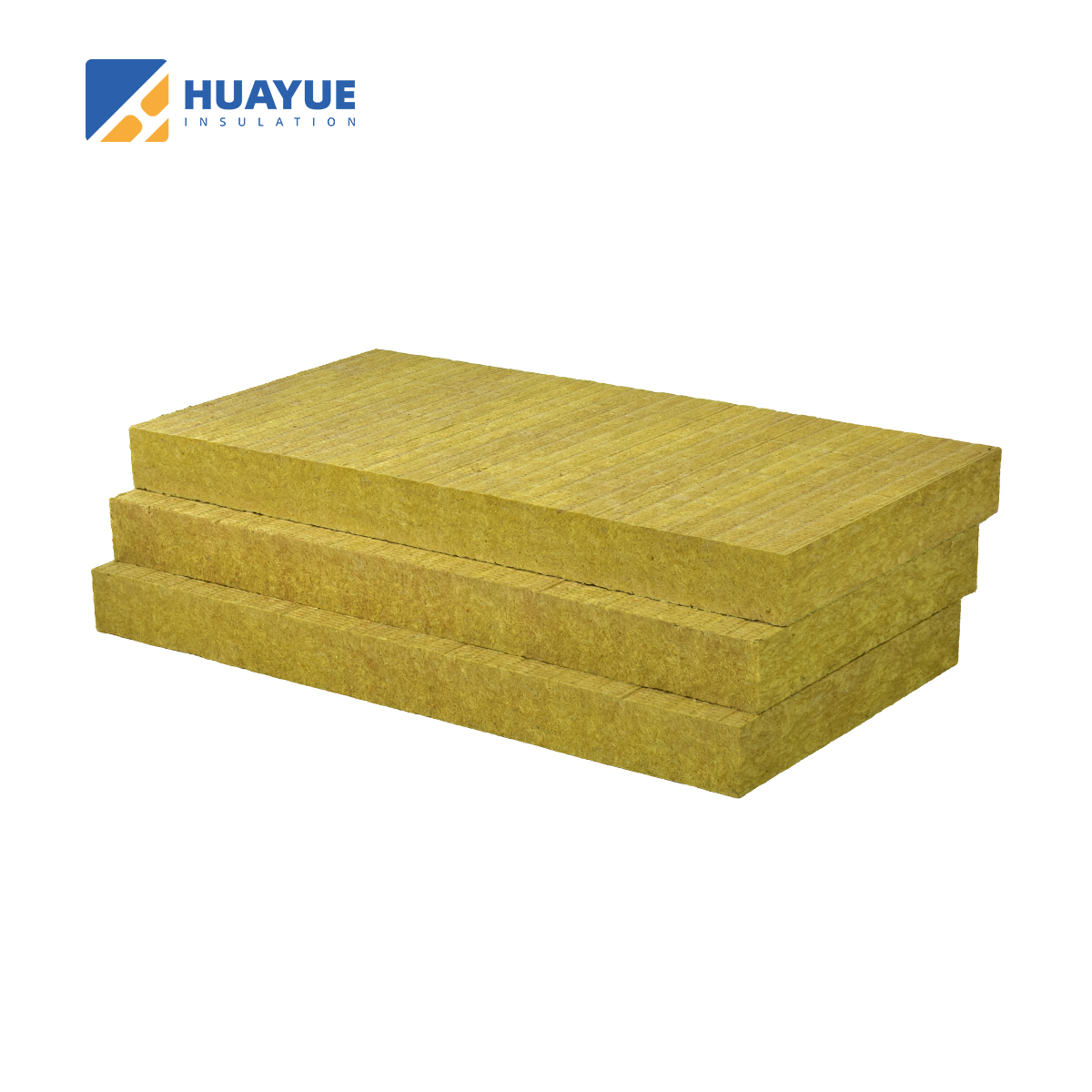
Unfaced Board
Bare board — to be covered by a jacket or building system.
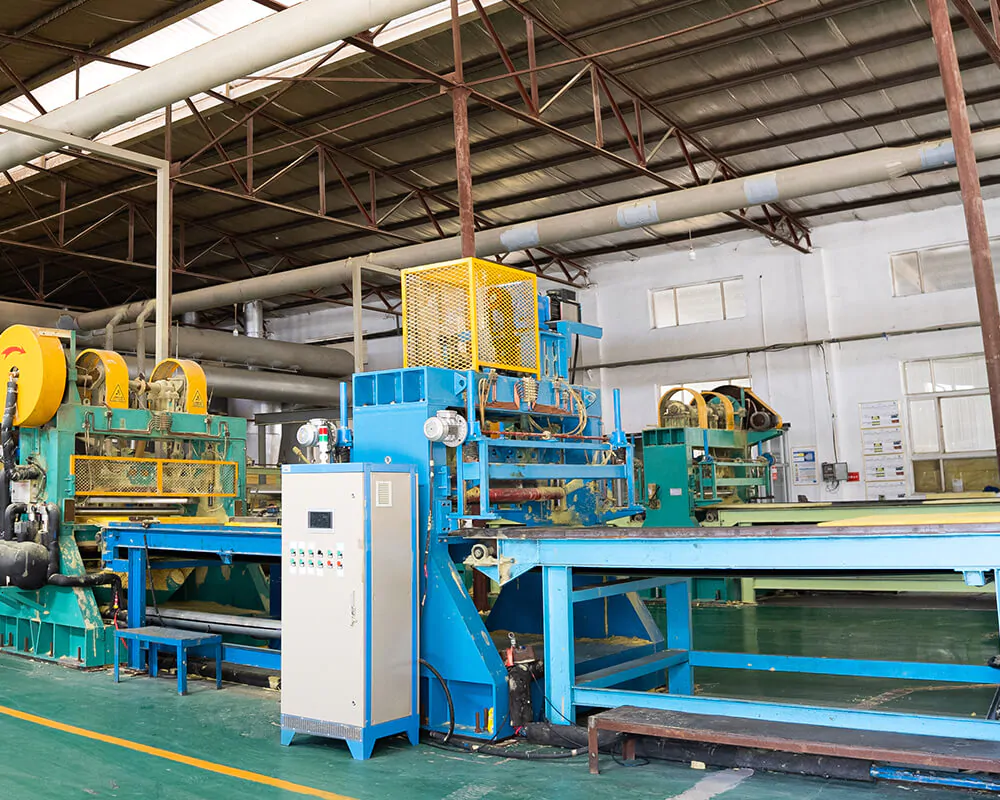
Why source Rock Wool Board from SinoInsulation
- Own factory plus a vetted partner-factory network — combined annual capacity up to 450,000 tons.
- MOQ from one 20ft container; LCL and mixed-container (multi-material) orders supported.
- Samples before bulk orders; custom packaging, compression packing, and private-label / OEM labeling.
- ISO 9001 and CE held; ASTM and AS/NZS test reports available on request, matched to the selected product.
- One inquiry, multiple materials: combine rock wool with glass wool, rubber foam, or cellular glass in a single order.
When It's Not the Best Fit
Rock wool board is not the best first choice for every insulation condition. Review the project before using rock wool board when:
Selection Guide
Answer these to narrow down the right specification.
What is the application: facade, roof, ceiling, equipment, floor, or wall assembly?
Confirms whether board is the right product form and narrows the variant option.
What board size and thickness are needed?
Helps match the board to the installation area, build-up depth, and thermal target.
What density is required?
Determines compressive strength, acoustic behavior, and handling weight for the application.
Is a facing or coating required?
Selects between unfaced, foil faced, black tissue, white mineral coated, or dual-density routes.
Supply & Purchasing
SinoInsulation supports rock wool board sourcing for construction, industrial, and distributor programs.
Need datasheet or project documents?
Send your application and required product details. We can provide datasheet, packing information, and available supporting documents during quote review.
Quality & Market Certs
ISO 9001 quality system and CE marking held; ASTM and AS/NZS test reports available on request, matched to the selected product.
Product Datasheet
Get product data for the selected rock wool board type and option.
Packing & Labeling Details
Confirm carton, pallet, compression pack, private label, or mixed-SKU packing options.
Frequently Asked Questions
Answers to common questions about this product.
Rock wool board can be a component of fire-rated wall assemblies, but the fire rating belongs to the tested system — not the board alone. Confirm the complete assembly documents.
Higher density provides better compression resistance and low-frequency acoustic performance. Lower density is lighter and easier to handle. Confirm from the datasheet for the specific application.
Rock wool board is not waterproof. It is water-repellent to varying degrees, but should not be exposed to sustained moisture without drainage and protection.
Choose rock wool board when the project needs higher density, compressive strength, higher temperature tolerance, or non-combustible fire documentation. Glass wool board is lighter and lower cost for moderate applications.
Facing options may include foil, tissue, mesh, or other materials. Confirm availability, fire behavior, and compatibility with the application.
Request a Quote
Tell us the application and performance requirements — we will recommend the right board density, thickness, and facing.