







R15 looks like a product grade, but it is a thermal-resistance label.
R15 means the insulation has a nominal R-value of 15 under the applicable test and labeling basis. It describes resistance to heat flow; it does not specify the material, thickness, size, sound rating, fire rating, or whole-wall result.
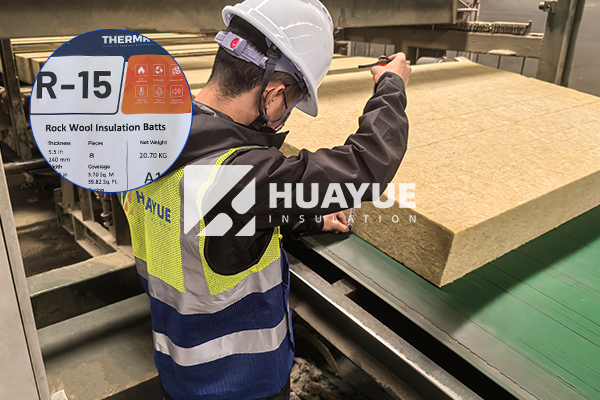
The useful next question is not simply “Is R15 good?” It is whether the named product, cavity, framing, and assembly match the project.
What Does R15 Mean in Insulation?
R15 is shorthand for a thermal-resistance value used in insulation specifications.
In U.S. building language, R15 or R-15 indicates nominal resistance to heat flow on the applicable test and labeling basis; a higher R-value indicates greater insulating power for the material being compared.
The “R” stands for resistance. The number is useful because it gives a common thermal comparison, but it is not a complete product description. The U.S. Department of Energy explains that R-value measures an insulating material’s resistance to conducting heat and depends on the insulation type and thickness. The Federal Trade Commission’s R-Value Rule likewise treats R-value as a tested disclosure about insulation’s ability to restrict heat flow.
That means <code>r15 means</code> a thermal target, not a recipe. Two products can both be labeled R15 while differing in fiber type, facing, thickness, dimensions, density, installation method, or intended assembly. A product’s label also does not automatically establish the thermal performance of a finished wall. Framing, sheathing, windows, fasteners, air leakage, thermal bridges, gaps, and workmanship affect the complete enclosure.
R15 is also not a sound-transmission class, a fire-resistance period, a moisture rating, or a health certification. Those questions require the exact product data and, when relevant, evidence for the complete assembly. Avoid using “R15 wool insulation” as if it names one universal product. It may refer to mineral wool or rock wool, and in some searches “wool insulation” may mean sheep-wool insulation. Confirm the material family before comparing dimensions or performance.
For a simple label comparison, R15 is two nominal R-value points above R13. The arithmetic difference is about 15.4% because 15 divided by 13 is approximately 1.154. That calculation helps explain the labels; it does not predict the same percentage improvement in a whole wall or in energy bills.
| Term | What it tells you | What it does not tell you |
|---|---|---|
| R15 or R-15 | A nominal thermal-resistance value | Product size, material, sound, fire, or whole-wall result |
| 3.5 inches | Thickness of a named product example | A universal thickness for every R15 product |
| 24 inches on center | Framing layout or stud spacing | The actual clear opening or batt width |
| Rock wool / mineral wool | A material category or family term | The current specification of a named supplier product |
What Is R15 Insulation Used For?
R15 insulation is selected when the design calls for approximately R15 in the insulation layer and the product fits the assembly.
R15 insulation is commonly considered for framed walls, especially a 3.5-inch batt in a nominal 2×4 cavity; it can appear in other assemblies only when the exact product, dimensions, code path, and complete construction support that use.
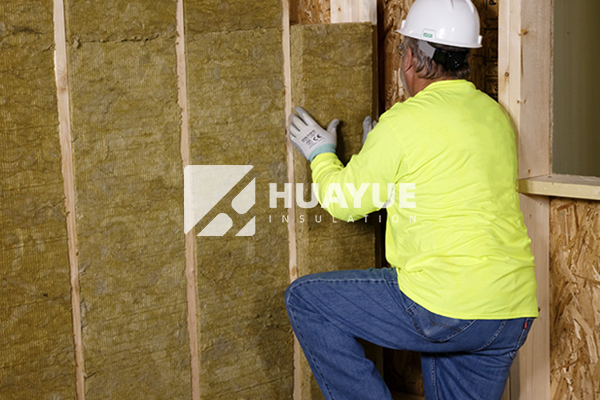
For an exterior 2×4 wall, R15 is usually a cavity-insulation question first. The nominal cavity depth is about 3.5 inches, so a named batt designed for that depth can be a practical starting point. The final wall decision still depends on location, adopted code, air control, continuous insulation, sheathing, cladding, openings, and the approved assembly.
The U.S. Department of Energy’s summary of 2021 IECC insulation paths shows why a single R15 answer cannot apply everywhere. For an uninsulated 2×4 wood-frame wall, the table lists R13 as one path in climate zones 1 and 2, while other zones use higher cavity values or combinations of cavity and continuous insulation. This is a code-edition example, not a statement of the code adopted in every city or country. Check the authority having jurisdiction and the project specification.
R15 may also be considered for an interior partition when the cavity depth and framing spacing fit the selected batt. In that situation, do not convert the thermal label into an STC rating or a promise of sound isolation. The complete partition, board layers, decoupling, perimeter seals, doors, and penetrations control the result. For ceilings, floors, and roofs, the same rule applies: use R15 only when the assembly requirement calls for it. An attic target can be much higher than R15, and a floor over an unheated space may have different support, moisture, and code requirements.
| Application context | Why R15 may be considered | What must still be confirmed |
|---|---|---|
| Exterior 2×4 wall | A 3.5-inch cavity batt can align with the nominal cavity depth | Local code, continuous insulation, air control, and whole-wall design |
| Interior framed partition | The batt can occupy the cavity when the dimensions fit | Complete acoustic or fire-rated assembly, if required |
| Ceiling, floor, or roof | A project may specify an R15 layer in a limited-depth assembly | Joist depth, climate, support, ventilation, moisture, and code |
| Steel-stud wall | A named product may publish an R15 steel-stud option | Steel-stud dimensions and the tested or specified wall system |
The practical meaning of <code>what is r15 insulation used for</code> is therefore “which assembly needs this thermal layer?” not “where can any R15 package be installed?” Treat the rating as one input in the design, then verify fit and system requirements.
How Does R15 Rock Wool Fit a 24-Inch Wall?
The phrase “24-inch R15” usually describes framing spacing, not a 24-inch-wide batt.
For one named U.S. ROCKWOOL Comfortbatt example, R15 is 3.5 inches thick; the 24-inch-on-center wood-stud option is 23 inches wide by 47 inches long. A different product may use different dimensions.
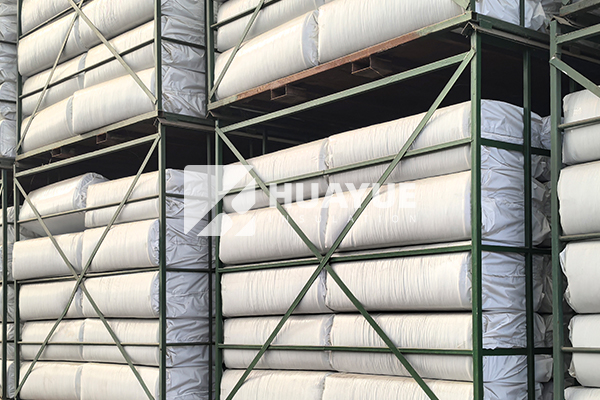
This distinction is the key to the <code>rockwool r15 24 inch</code> query. “24 inch” may mean 24 inches on center between framing members, a measured clear opening, or a product listing that uses a rounded width description. Those are not interchangeable fields.
The current U.S. ROCKWOOL Comfortbatt technical data sheet lists R15 at 3.5 inches. For wood studs, it lists 15.25 inches by 47 inches for 16-inch-on-center framing and 23 inches by 47 inches for 24-inch-on-center framing. The same document lists steel-stud dimensions of 16.25 inches by 48 inches and 24.25 inches by 48 inches for 16- and 24-inch-on-center framing. These are named-product examples from an unaffiliated competitor, not universal rock-wool or HUAYUE dimensions.
Why is a 24-inch-on-center wood option narrower than 24 inches? The batt is sized to fit the clear bay between framing members, not to equal the center-to-center spacing. Stud width, actual lumber dimensions, manufacturing tolerances, corners, wiring, pipes, and other obstructions can change the measured opening. Measure the framed cavity instead of ordering from the nominal spacing alone.
The same check applies to thickness. A 3.5-inch R15 batt may fit a nominal 2×4 cavity when the product is designed for that application. It should not be compressed into a shallower space, left with unplanned gaps, or treated as a full-depth solution for a deeper cavity without reviewing the design. DOE building-science guidance notes that gaps, voids, compression, and misalignment with air barriers can change installed insulation performance.
Finally, keep the terms separate. <code>Rock wool</code> or <code>stone wool</code> describes a material category. <code>ROCKWOOL</code> identifies a separate third-party brand. <code>R15 wool insulation</code> is incomplete until the buyer confirms whether the listing means mineral/rock wool or natural sheep wool. A quotation should name the product, form, market, thickness, width, length, and framing system in one place.
What Should You Check Before Ordering R15 Wool Insulation?
A search phrase is not a purchase specification.
Before ordering R15 wool insulation, identify the material family, product form, cavity depth, framing spacing, labeled R-value, and intended assembly; then match the quotation to current product data.
Start with the following fields:
- Material and product form: Confirm mineral wool, rock wool, stone wool, or natural wool; then identify batt, blanket, board, pipe, or loose-fill form. Do not compare “wool” products by keyword alone.
- Assembly: State exterior wall, interior partition, ceiling, floor, roof, or another use. If a fire, acoustic, moisture, or industrial requirement exists, request the evidence for the complete assembly or named application.
- Cavity and framing: Give the measured depth, clear opening, wood or steel framing, and 16- or 24-inch-on-center layout. Explain whether “24 inch” refers to spacing or the product width you need.
- Thermal basis: Record R15 or R-15, the unit system, the applicable test or declared basis, and whether the value is for the material layer or a complete assembly. The FTC R-Value Rule is a useful U.S. reference for test-based insulation labeling.
- Product identity: Ask for the current manufacturer, product name, revision date, thickness, width, length, facing, and installation instructions. Never transfer a named competitor’s R15 dimensions to another supplier.
- Project and order fields: Add quantity, destination, packing, tolerances, and required documents after the product form and fit are clear. Those fields can be confirmed progressively rather than replacing the technical answer.
For a HUAYUE inquiry, the rock wool insulation product page is the broad product-form route. If the task is specifically a North American 2×4 wall, the dedicated rock wool for 2×4 walls guide covers the separate product-fit decision. Use the current named-product data sheet for any quotation or submittal; this article does not establish HUAYUE R15 availability or specifications.
When comparing supplier offers, ask whether every bidder is quoting the same material family, form, thickness, framing basis, and R-value scope. A lower price for a different thickness or a different product form is not a like-for-like comparison. A higher label is not automatically better if it cannot fit the cavity or satisfy the approved assembly.
If you need help starting the review, share the application and the cavity or framing dimensions first. Quantity, destination, packing, and document requirements can follow once the product form is clear.
Conclusion
R15 means nominal thermal resistance—not a universal size or wall result. Match the exact wool product to the cavity, framing, code path, and assembly evidence before ordering.