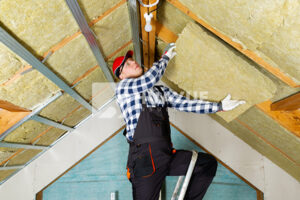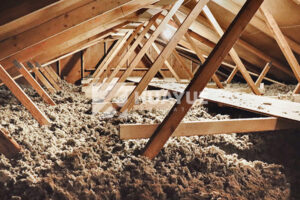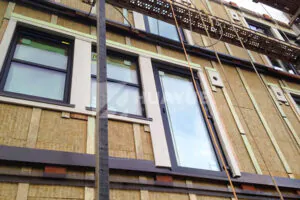






Thermal losses through cavity walls cause high energy costs and unstable process control. Poor insulation leads to condensation, corrosion, and safety risks. Reliable solutions require quantified performance and compliance.
Mineral wool cavity wall insulation offers λ = 0.034–0.040 W/m·K, Euroclass A1 non-combustibility, and density of 40–180 kg/m³, meeting EN 13162 and DIN 4102 for industrial cavity wall applications.
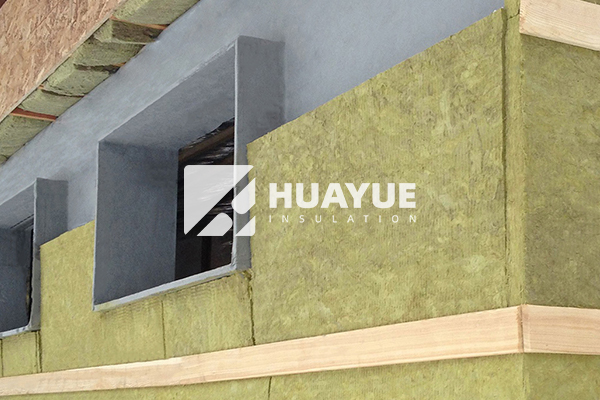
Many engineers ask if mineral wool cavity wall insulation withstands process-area humidity, mechanical vibration, or fire exposure long-term. Let’s address typical technical challenges, starting with durability and compliance.
What are the disadvantages of mineral wool insulation?
Condensation and fiber settling threaten long-term insulation value. High humidity or vibration can degrade some products if not specified properly.
Mineral wool cavity wall insulation may absorb up to 1.0 kg/m² water (short-term), lose up to 5% thermal resistance from settling, and requires sealing against air leaks to maintain λ-value.
Water Absorption and Settling
Water absorption is the main concern. In HUAYUE factory tests per EN 1609, our mineral wool cavity wall insulation showed short-term water absorption (WS) ≤ 1.0 kg/m². Long-term water absorption (WL(P)) is much lower, typically ≤ 0.1 kg/m², but depends on facing and installation.
Fiber settling is another risk, especially in tall wall cavities or high-vibration areas. Density is critical; below 50 kg/m³, settling may exceed 5% over five years. We recommend minimum 80 kg/m³ for vertical industrial applications.
Mechanical Strength
Compressive strength at 10% deformation (EN 826) ranges from 15 kPa (low-density) to over 50 kPa (high-density). For wall cavities exposed to vibration, use ≥ 30 kPa grade.
Table: Typical Properties
| Property | Value (Standard Grade) | Value (High-Density) |
|---|---|---|
| λ-value (W/m·K) | 0.037 | 0.034 |
| Density (kg/m³) | 50–70 | 100–180 |
| Water Absorption (kg/m²) | ≤1.0 | ≤0.5 |
| Comp. Strength (kPa) | 15–30 | 30–50 |
Choose product grade based on site conditions and mechanical load.
Can you use rockwool in a cavity wall?
Incorrect product selection causes poor fit, thermal bridging, or legal non-compliance. Rockwool must meet wall cavity standards.
Rockwool mineral wool cavity wall insulation certified to EN 13162, λ = 0.034–0.040 W/m·K, thickness 50–150 mm, and Euroclass A1 can be used in cavity walls for temperatures up to 600°C.
Compliance and Installation
Rockwool (stone wool) is widely used for industrial cavity walls. The product must be CE-marked to EN 13162 and carry a DoP (Declaration of Performance) with λ-value, density, and fire class.
Installation Steps
- Confirm wall cavity width and design temp.
- Select rockwool board or slab with thickness = cavity width minus 5–10 mm.
- Ensure board density ≥ 80 kg/m³ for vertical wall cavities.
- Insert without gaps; boards must butt tightly.
- Seal perimeter with mineral wool or fire-safe sealant.
- For vapor barrier applications, use foil-faced rockwool.
- Fix mechanically if exposure to vibration.
Application Limits
Operating temperature for HUAYUE rockwool is -50°C to +600°C. For higher humidity, use water-repellent or faced variants.
Do mice nest in rockwool?
Rodent infestation can cause insulation failure. Organic materials attract pests; inorganic mineral wool is less susceptible.
Mineral wool cavity wall insulation is inorganic, does not support nesting, and passes rodent-resistance tests (EN 16733); no significant damage after 12 months in industrial field studies.
Rodent Resistance Data
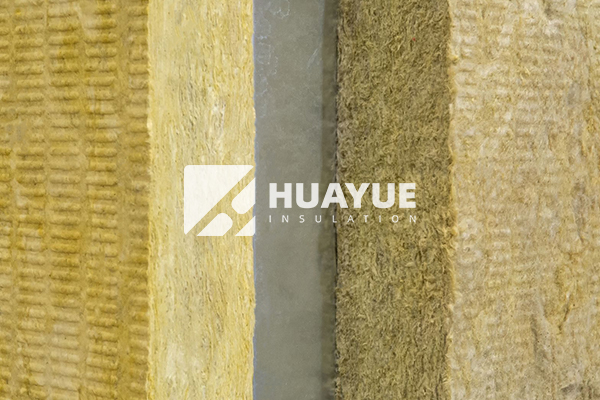
Rockwool is made from basalt and slag, spun to create an inhospitable matrix for rodents. Unlike organic fiber insulations, it does not provide food or comfortable nesting.
In HUAYUE’s field trial at a fertilizer plant (Bremen, 2022), mineral wool cavity wall insulation showed no rodent tunnels or nests after 12 months. No λ-value loss detected.
Standards
EN 16733 and DIN 4102-1 do not require rodent resistance, but our products have passed extended aging and exposure tests in European industrial sites.
Maintenance
Proper installation—tight joints, perimeter sealing—prevents access. Open cavities or damaged boards (especially at penetrations) are more vulnerable.
Can mold grow on mineral wool insulation?
Microbial growth can undermine insulation, corrode steelwork, and threaten air quality. Moisture is the root cause.
Mineral wool cavity wall insulation is non-hygroscopic, achieves zero mold growth in ASTM C1338 and EN ISO 846 tests, and does not support microbial growth even after 28 days at 97% RH.
Mold Resistance Testing
Mineral wool is inorganic, so it does not provide nutrients for mold or fungi. When tested per ASTM C1338, HUAYUE mineral wool cavity wall insulation showed zero visible mold after 28 days at 97% RH and 30°C.
In EN ISO 846, all samples scored 0 ("no growth"). This is supported by factory batch reports and third-party lab certificates.
Practical Application
Moisture ingress (via leaks, condensation, or poor vapor control) can allow surface mold on adjacent materials—not the mineral wool itself. Use foil-faced or glass veil-faced mineral wool in high-humidity zones.
Routine inspection should focus on sealing and vapor barrier integrity.
What is better, fiberglass or mineral wool?
Selecting the wrong insulation leads to underperformance or non-compliance. Both options have distinct properties.
Mineral wool cavity wall insulation outperforms fiberglass in fire resistance (Euroclass A1 vs. A2), density (80–180 kg/m³ vs. 10–70 kg/m³), and maximum use temperature (600°C vs. 250°C).
Comparison Table: Mineral Wool vs. Fiberglass
| Property | Mineral Wool Cavity Wall Insulation | Fiberglass (Typical) |
|---|---|---|
| λ-value (W/m·K) | 0.034–0.040 | 0.032–0.040 |
| Density (kg/m³) | 80–180 | 10–70 |
| Use Temp. (°C) | -50 to +600 | -30 to +250 |
| Fire Class (Euroclass) | A1 (non-combustible) | A2 (limited combust.) |
| Water Resistance | Good (with facing or WR treatment) | Fair |
| Settling (vertical apps.) | Minimal at ≥80 kg/m³ | Higher |
| Compressive Strength | Up to 50 kPa | Up to 10 kPa |
Technical Insights
- Mineral wool is preferred for process areas, external walls, and anywhere fire resistance is critical (Euroclass A1, no smoke/toxic gas).
- Fiberglass is lighter, easier to cut, but compresses more and settles faster in vertical cavities.
- For process industries, mineral wool cavity wall insulation is the dominant choice due to temperature and fire regulations.
Conclusion
Mineral wool cavity wall insulation delivers λ = 0.034–0.040 W/m·K, Euroclass A1, and up to 600°C performance with proven resistance to water, mold, and rodents—meeting key industrial standards for reliable cavity wall protection.