





Mineral wool insulation density is mass per unit volume. It helps identify product form and handling needs, but does not alone prove thermal, acoustic, mechanical, or fire performance.
Choose mineral wool by the documented requirements of the application—not by the highest density number. Compare the same product form, thickness, density basis, and relevant test evidence before treating two products as equivalent.

The term appears often in specifications because it is easy to state in kg/m³. The useful question, however, is what that number means for the particular board, batt, blanket, or pipe section being compared.
What Does Mineral Wool Insulation Density Mean?
Density becomes useful only when it describes a defined product in a defined condition.
Density is mass divided by volume. For mineral wool insulation, it is commonly reported in kilograms per cubic metre (kg/m³), but the number is meaningful only with the product’s form, dimensions, and reporting basis.
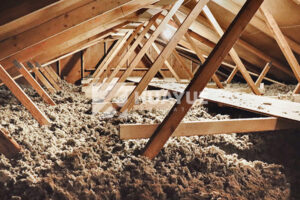
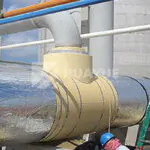
For a simple physical calculation, divide a sample’s mass by its length × width × thickness. That calculation is straightforward; the comparison is not always straightforward. A board has a stable rectangular volume, while a batt, blanket, or loose-fill product can be more compressible and can be installed in a different condition from its packed condition. A pipe section adds inside diameter, wall thickness, and fit to the comparison.
Ask how the density was declared. It may be a nominal target, a declared value, a minimum, an average, or a result from a particular sample. Those descriptions are not interchangeable. Thickness tolerance, conditioning, a facing or coating, and whether the measurement includes a component beyond the wool can also change the basis of the reported figure.
The same category can be used in different applications at different density and thickness combinations. That is why a broad mineral-wool number is a starting point for identification, not a universal recommendation. It is also why buyers should avoid comparing a thin board with a thicker batt—or a faced product with an unfaced one—by density alone.
Before putting density into a specification or comparison sheet, record the exact product name, product form, units, thickness, dimensions, density basis, tolerance, and document revision. This makes later technical review much clearer and reduces the risk that a familiar density number is mistaken for an equivalent product.
Why Isn’t a Higher Density Always Better?
More mass per volume changes the product, but it does not create one automatic performance result.
Higher density may be relevant to firmness or a particular application, yet it is not a universal shortcut to better insulation, sound control, fire classification, or durability. Each outcome needs its own applicable product or assembly evidence.
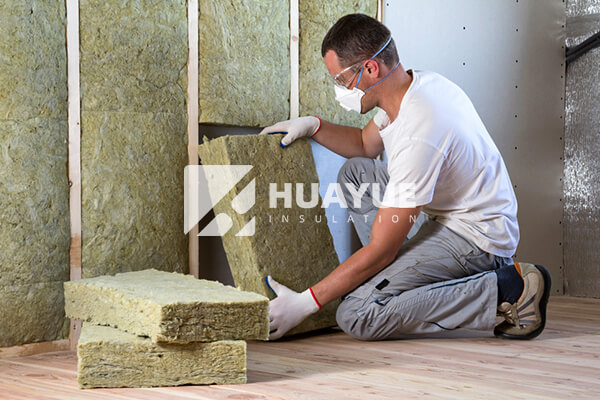
The key distinction is between a material attribute and a required result. Thermal performance should be checked using the documented conductivity or resistance for the named product, thickness, temperature range, and test conditions. A denser but thinner product cannot be assumed to provide the same thermal resistance as a thicker product designed for the same location.
Acoustic questions need the same discipline. Absorption and sound insulation depend on more than the material: thickness, air space, mounting method, facings, framing, seals, penetrations, and the tested assembly can all change the result. A density comparison can help shortlist similar products, but it cannot replace the relevant acoustic data.
Mechanical and fire questions should stay separate as well. If an application requires resistance to compression, point load, vibration, movement, or a specific installation method, check the applicable product data and system design. If it requires a reaction-to-fire classification or a fire-resistance period for an assembly, use the correct classification or tested-system documentation. Density alone does not grant a rating to a wall, roof, duct, or enclosure.
| What you need to know | Do not use density alone | What to compare instead |
|---|---|---|
| Thermal performance | A higher number does not automatically mean a better result. | Named product, thickness, declared thermal data, and service conditions. |
| Acoustic result | Density does not describe the complete acoustic assembly. | Test result, thickness, mounting, air space, and assembly details. |
| Mechanical suitability | A board’s density is not a substitute for a mechanical property. | The relevant strength/stability data and installation design. |
| Fire evidence | Density cannot create a material or assembly rating. | Correct classification or tested assembly documentation. |
When Is a High-Density Mineral Wool Board Relevant?
The phrase is useful when a project needs a board with a documented role, not when it is used as a quality label.
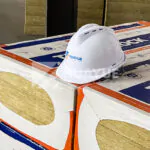
A high-density mineral wool board may be considered where the design calls for a firmer board form or documented mechanical behavior. It is appropriate only when its thickness, fixing method, facing, and required performance evidence also match the application.
“High density” has no single cross-supplier threshold that makes a board interchangeable with another board. A product may be described that way in one catalogue because of its place within that supplier’s range, while another supplier may use a different threshold or use a different board construction. Treat the phrase as a prompt to request the detailed product sheet, not as a complete specification.
This is especially important when a board will be fixed, covered, exposed to service loads, installed around equipment, or incorporated in a wall, roof, partition, or other assembly. The relevant questions are practical: Does the product’s stated form suit the installation? Is the selected thickness compatible with the design? Are the required facings, fasteners, joints, and protective layers defined? Does the available evidence identify this exact product rather than a related family?
The same caution applies in a tender comparison. A supplier may offer a board with a higher density number but a different thickness, fiber orientation, facing, or declared use. That is not automatically an upgrade. Conversely, a lower-density product is not automatically a downgrade if the design permits it and the named product meets every required result under the same conditions.
For a broad material introduction, keep the decision at this level. A dedicated product specification should then state the actual required properties and documents. This avoids a vague instruction such as “use high-density mineral wool board,” which leaves too much room for mismatched substitutions.
How Should You Compare Mineral Wool Density?
Use density as one controlled comparison field within a complete product check.
Start with the application and required result; then compare product form, thickness, density basis, and matching evidence. This sequence turns density into a useful control instead of a misleading pass/fail grade.
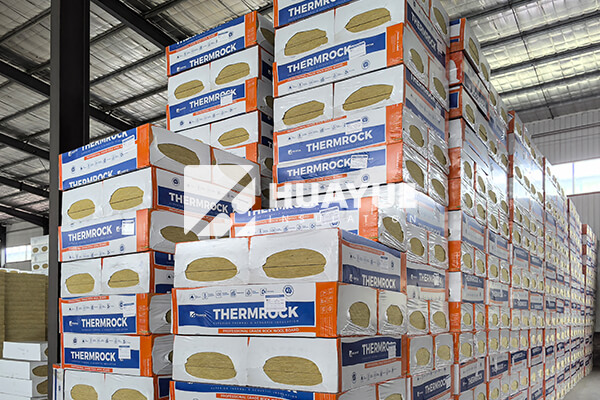
Use this sequence when reviewing an offer or preparing an inquiry:
- Define the location and function: cavity, partition, roof, facade, pipe, duct, equipment, or another assembly.
- Identify the required product form before comparing density: board, batt, blanket, pipe section, lamella, or loose fill.
- State the required thickness and dimensions, then check whether the reported density uses the same product condition and units.
- List the governing outcomes separately—thermal, acoustic, mechanical, fire, moisture, or installation—and request the evidence that matches each one.
- Compare facings, tolerances, fixing or support method, and the document revision alongside the density figure.
- Treat any proposed alternative as a full equivalency review, not a one-number comparison.
This approach is useful for both general mineral wool questions and a search for a high-density mineral wool board. It prevents a common error: choosing a product because its density appears familiar, then discovering that its form, thickness, installation detail, or available evidence does not match the work.
If you are still at the early selection stage, an inquiry can begin with the intended application and the product form you expect to use. Dimensions, quantity, destination, facing, and document requirements can follow once the performance target and product identity are clear.
Conclusion
Mineral wool density is a comparison input, not a universal quality score. Select the documented product and assembly evidence that fit the application, then use density to confirm like-for-like comparison.