







Rock wool is often chosen where fire behaviour matters, but the word “fireproof” can hide an important distinction.
Rock wool insulation can be non-combustible, but it is not automatically a fire-rated wall, floor, penetration seal, or tank system. Always check the exact product’s declared fire classification and the tested assembly where a time rating is required.
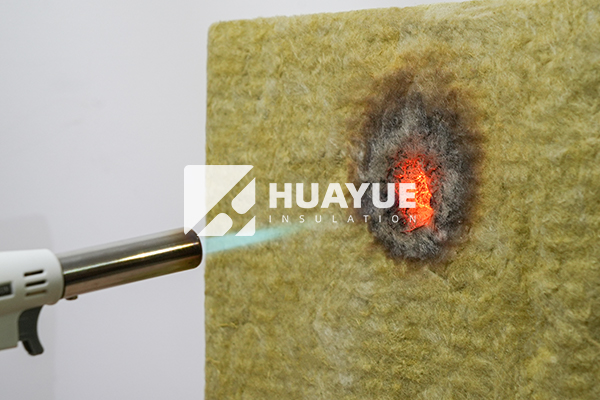
This guide separates material reaction to fire from the fire resistance of a complete construction, so specifiers can ask for the right evidence before selecting insulation.
Is Rock Wool Fireproof or Fire Resistant?
The safest short answer is more precise than a simple yes or no.
Many rock wool products are designed as non-combustible insulation, yet “fireproof” should not be used to promise that every product or installation will prevent fire damage under all conditions.
Rock wool, also called stone wool, is a mineral-fibre insulation category. Its fibres are made from mineral raw materials rather than a foam plastic. That material basis is why rock wool is commonly selected when designers want insulation that does not add fuel to a fire. However, a category name is not a test report. A finished product may include a facing, coating, adhesive, membrane, or other component that changes its declared reaction-to-fire classification. The correct classification belongs to the complete product as sold and installed, not only to the unfaced fibre core.
For this reason, use “non-combustible” only when the manufacturer’s declaration supports it for the exact product. In European projects, the declaration may use a Euroclass reaction-to-fire classification. In other markets, the applicable code and test method can differ. The project team should obtain the product document that applies to the intended market and use.
The practical benefit is still meaningful: where the specified rock wool product is non-combustible, it can help limit the insulation’s contribution to fire growth. That is different from saying it makes the surrounding construction indestructible. Linings, fasteners, joints, cavities, service penetrations, external facings, and installation quality can all affect what happens in a fire.
Is All Rock Wool Fireproof?
Do not assume one rock wool product’s result applies to another product, form, or system.
No. “Rock wool” describes a material family, not a universal fire certificate. Verify the declared reaction-to-fire class for the exact board, blanket, pipe section, or faced product being specified.
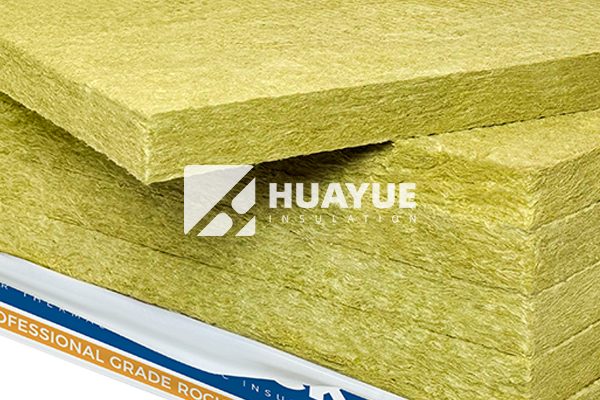
This check matters especially when comparing unfaced insulation with products that carry foil, glass tissue, coatings, or bonded layers. A composite product can behave differently from its individual components. The same caution applies when a product is cut, wrapped, or combined with sealants and supports on site. The relevant evidence is the declaration and installation scope for the finished product or system.
There is also a naming issue worth clearing up. “ROCKWOOL” is a trademark used by an unaffiliated manufacturer; it is not a generic name for every rock wool product and it is not a SinoInsulation brand. When a specification says “rockwool,” confirm whether it means the generic material category or a named manufacturer’s product. A named product’s data must not be substituted for another manufacturer’s board or blanket.
For a simple product review, ask for the product name, form, facing, intended application, and fire declaration. For an industrial installation, add the operating condition and all external layers. This prevents a common error: choosing an insulation core for its material reputation while overlooking a facing or system component that governs the final classification.
What Does Fire Rated Rock Wool Insulation Mean?
Fire ratings describe a tested result, not a promise that insulation alone carries a time rating.
A fire-rated rock wool insulation solution is normally part of a named, tested assembly. The rating applies to that complete arrangement, with its stated components, dimensions, fixings, and installation conditions.
Two terms are regularly confused. Reaction to fire describes how a construction product behaves when exposed to fire, such as its contribution to fire growth. Fire resistance describes how a building element or firestop system performs for a stated time under a specified test. A wall, floor, duct enclosure, penetration seal, or perimeter system may have a fire-resistance classification; the insulation inside it does not automatically inherit that time rating by itself.
For example, a fire-resistance test may depend on the wall type, cavity depth, board layers, framing, sealant, service size, fixing pattern, and permitted orientation. Replacing one component, changing a joint width, or using a different facing can take the installation outside the tested scope. The right question is not “Is this rock wool one-hour rated?” It is “Which tested assembly covers this exact application, and what are its installation limits?”
This distinction improves submittal reviews. Instead of requesting a generic brochure, ask for the test report, classification report, listing, or approved system document required by the local authority or project specification. Check the product identity, construction type, penetration or joint details where relevant, the test standard, the rating period, and the date or revision. A qualified project fire engineer or authority having jurisdiction should resolve any code-specific interpretation.
How to Read a Rock Wool Fire Test or Product Declaration
A useful fire document identifies both what was tested and what the result actually covers.
Read the product identity, test method, classification, and stated application together. A favourable result outside its stated scope is not evidence that a different assembly or installation is fire rated.
Start by matching the document to the supplied material. Confirm the manufacturer, product name, form, thickness, density where the document identifies it, and whether the item is faced or unfaced. Then identify the test or classification type. A reaction-to-fire declaration helps assess the product’s fire behaviour. A fire-resistance report or listing addresses a particular assembly or firestop arrangement. Neither document should be stretched beyond its listed scope.
Use this short review path before purchase or installation:
- Define the application: wall cavity, façade, roof, floor, duct, pipework, tank, or penetration.
- Identify the local code, specification, and required classification or time rating.
- Match the exact rock wool product and any facing to a current declaration.
- Where a time rating is required, match the full tested assembly, including accessories and installation limits.
- Keep the approved documents with the submittal and ensure site installation follows the listed detail.
This is not unnecessary paperwork. It is how a material-level property is connected to an installable, reviewable fire-safety decision. It also gives purchasing teams a clear way to compare quotations: request documents for the offered product and system, rather than accepting a broad claim that all mineral wool performs the same way.
When Can Rock Wool Be Used in Firestop or Fire-Resistant Work?
Rock wool may be specified in suitable tested designs, but the design—not the loose material alone—determines the permitted use.
Use rock wool for firestop, fire-resisting, or high-temperature applications only when the exact product and installation are covered by the applicable tested system, classification, and project requirements.
Some applications use mineral wool as an insulation component; others use it within purpose-designed firestop or perimeter-containment systems. These are different jobs. An insulation board fitted in a wall cavity is not automatically approved as a penetration seal. Similarly, packing a gap around a service without the specified sealant, depth, compression, retaining method, and tested detail is not a substitute for a listed firestop system.
For building work, coordinate the insulation selection with the wall, floor, roof, or façade designer. For penetrations and joints, coordinate with the firestop system documentation and the trade responsible for installation. For industrial equipment and tanks, confirm the operating condition, outer layers, supports, cladding, and project fire scenario with the engineering team. These choices are application-specific and cannot be confirmed from a generic material description.
If you are sourcing rock wool insulation, a productive first enquiry is the application and the required fire document or classification. Dimensions, facing, quantity, destination, packaging needs, and other details can follow once the correct product scope is identified. That sequence keeps a technically important decision ahead of a price-only comparison.
Conclusion
Rock wool can be a non-combustible insulation choice, but fire-rated performance belongs to the exact product and tested construction. Match both before specifying or installing.