








How do you choose the right rock wool thickness for your project?
It can be confusing to pick the right thickness of rock wool insulation. Too thin, and you lose efficiency; too thick, you waste budget and space.
The ideal rock wool thickness depends on your project’s needs, including thermal, acoustic, and structural requirements. Common thicknesses range from 25mm to 200mm. Thicker isn’t always better—optimize for performance and cost.
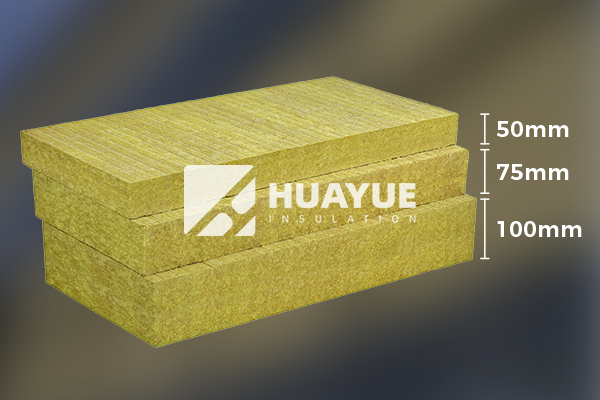
Finding the right thickness is crucial. If you use the wrong thickness, you may end up with wasted energy, more noise, or a higher bill. Let’s look closer at how to decide.
What thicknesses does ROCK WOOL come in?
Rock wool insulation is available in a wide range of thicknesses, so you can match material exactly to your needs.
Most manufacturers offer rock wool in thicknesses from 25mm up to 200mm. The most common sizes for building insulation are 50mm, 75mm, 100mm, and 150mm. Some specialized applications go up to 200mm or more, while thin products (25mm, 40mm) are often used for internal walls or industrial pipes.

When I select a thickness, I think first about local codes. I also factor in climate conditions, energy-saving targets, and the space available. For external walls in Germany, Hans Müller found that 100mm to 150mm meets most thermal insulation needs. Pipelines and tanks usually need thinner materials, often layered if higher protection is essential. For interior walls, especially for soundproofing, 50mm or 75mm usually works well, balancing cost and performance.
Here is a simple table of typical thickness uses:
| Thickness (mm) | Common Use | Notes |
|---|---|---|
| 25–40 | Pipes, small areas | Good for narrow spaces |
| 50–75 | Internal walls | Often chosen for soundproofing |
| 100–150 | External walls, roofs | Meets most thermal requirements |
| 200+ | Specialty projects | Used for high performance needs |
Each project will need a different solution. I always recommend discussing with your insulation supplier to match thickness exactly to your project.
Is thicker ROCK WOOL always better?
It’s tempting to think the thickest insulation gives the best protection, but that’s not always true.
Thicker rock wool can improve thermal and acoustic insulation, but after a certain point, extra thickness has reduced benefits. Thicker material costs more, takes up space, and may be harder to install. Most of the energy savings or sound reduction is achieved with the first 100mm–150mm in walls and roofs. Going beyond that, you pay more but get less extra performance.
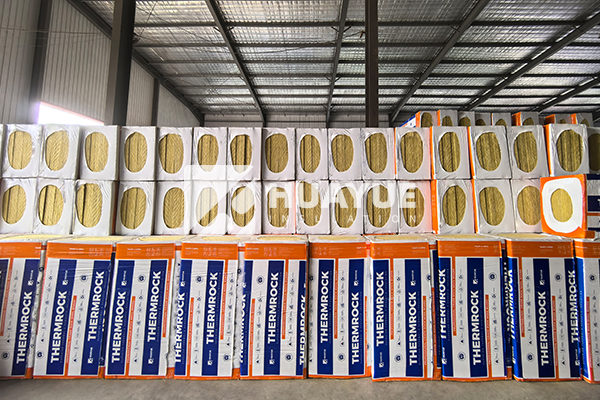
When Hans looks at his chemical plant’s insulation, he never just asks “how thick can we go.” Instead, he checks the minimum required by safety standards and weighs the trade-offs with budget, installation time, and space. For example, making a tank wall thicker can mean more protection, but also less interior volume and higher cost. With rock wool, the first layer stops most heat and sound, while the next layer adds less. I always use the “law of diminishing returns” to decide how thick to go.
Here’s how thicker rock wool compares:
| Thickness | Benefit Added | Issues |
|---|---|---|
| Thin (25–50mm) | Fast installation, low cost | Lower insulation performance |
| Medium (75–150mm) | Good performance for most needs | Balances cost and space |
| Thick (200mm+) | Upgrades for extreme climates | Expensive, harder to handle |
More isn’t always better—sometimes just “right” is best.
How thick should ROCK WOOL be for soundproofing?
Choosing rock wool thickness for soundproofing depends on your noise reduction needs.
Rock wool between 50mm and 100mm is usually enough for soundproofing most internal walls and ceilings. Thicker material can block even more noise, but space and budget constraints mean 75mm is the “sweet spot” for most homes and offices. The density and quality of rock wool also matter—a dense 50mm board often blocks more sound than a loose 100mm slab.
For Hans, when working in Germany’s noisy industrial zones, he finds that 100mm blocks most machinery noise, but for standard office or residential use, 50mm is enough. I always start with the minimum plus a buffer, then test for real-world noise levels before finalizing thickness.
Here is a soundproofing comparison:
| Thickness (mm) | Soundproofing Performance | Space Consumed | Cost (Relative) |
|---|---|---|---|
| 50 | Good for basic noise | Minimal | $ |
| 75 | Strong reduction | Moderate | $$ |
| 100 | Near-total block | Significant | $$$ |
Check your local building acoustic code to avoid costly over-specification.
Is 50mm ROCK WOOL insulation good?
You may wonder if 50mm thick rock wool is enough. The answer depends on the project, but for many uses, it works well.
50mm rock wool offers solid thermal and sound insulation for internal walls, partition panels, and some external walls if paired with other materials. I’ve used 50mm as a quick solution in retrofits, especially when wall thickness is limited. Hans notes that in chemical tanks, he sometimes layers thin slabs to reach the needed safety rating while keeping installation flexible.
Quality matters as much as thickness. A denser 50mm product can perform better than a thicker, lower-density brand. In most homes and offices, 50mm delivers cost-effective insulation and good energy savings.
Here’s a breakdown of 50mm rock wool:
| Feature | Benefit | Limitation |
|---|---|---|
| Easy to Install | Lightweight, simple setup | Less protection in extreme weather |
| Cost Effective | Lower material expense | May need added vapor barrier |
| Versatile | Used in many applications | Not ideal for thick external walls |
If you are short on space or want a fast upgrade, 50mm rock wool is a smart choice.
Conclusion
Choosing rock wool thickness depends on your project’s needs—balance cost, performance, and installation for the best result.
You may also be interested in:

Ready to Get Started?
Get in touch with our experts for personalized solutions tailored to your needs.
Get Free QuoteLatest Articles




Let's Work Together
Ready to take your business to the next level? Get in touch with our team of experts and let's discuss how we can help you achieve your goals.
Get Free Solutions