


Mineral wool and rock wool can look interchangeable in supplier catalogs, but I often see that assumption create procurement problems. Similar names can hide differences in raw material, product form, tested performance, and compliance documents. I recommend treating terminology as a starting point, then verifying whether the offered insulation matches the actual specification.
Rock wool is generally treated as one type within the broader mineral wool category, but mineral wool and rock wool are not automatically interchangeable. Terminology varies by market, standard, and supplier. I only consider substitution after reviewing the application, product form, applicable standard, test reports, thermal performance, fire requirements, and service-temperature range.
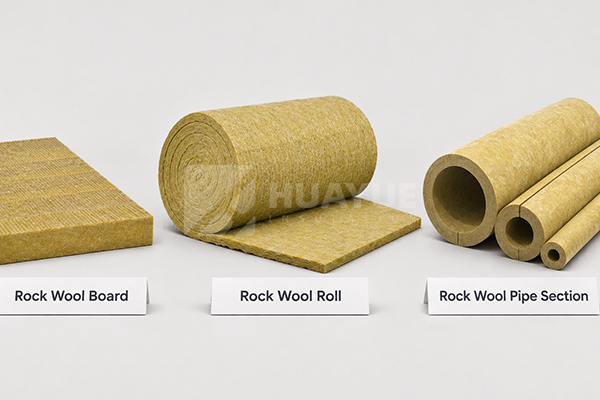
In my conversations with importers and distributors, I find that the best question is rarely about the name alone. The more useful question is whether a particular product can satisfy the buyer’s technical, regulatory, and commercial requirements without creating approval or inventory risks.
Are mineral wool and rock wool the same category?
The category relationship causes much of the confusion. A catalog may use “mineral wool” as a broad family name, while another supplier may use it for a specific product line. If a buyer relies only on the heading, the buyer may compare products that were designed for different applications.
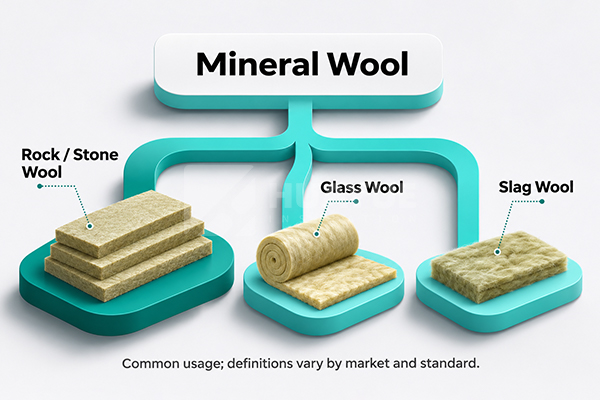
Rock wool is commonly classified as a type of mineral wool made primarily from molten rock or similar mineral raw materials.1 However, the term “mineral wool” may also cover glass wool, stone wool, or slag-based insulation in some markets and standards. I therefore verify the governing definition instead of assuming universal usage.
I treat mineral wool as the broader term
In practical procurement work, I usually begin with the following category model:
- Mineral wool commonly acts as an umbrella term for fibrous insulation made from molten mineral or glass-based raw materials.
- Rock wool or stone wool usually refers to insulation produced mainly from natural rock and selected mineral raw materials.
- Glass wool generally refers to mineral-fiber insulation manufactured from glass raw materials.
- Slag wool may describe insulation made partly or mainly from industrial slag, depending on the market and product.
This model helps importers organize supplier offers, but I do not treat it as a universal legal definition. Product terminology can change across national standards, tender documents, customs descriptions, and supplier catalogs.
For example, one distributor may list glass wool and rock wool as two subcategories under “mineral wool.” Another company may use “mineral wool board” when it means rock wool board specifically. A project specification may also use “mineral wool” but include density, fire, and temperature requirements that point toward a particular material.
I check how the applicable standard defines the product
I recommend checking terminology in three places:
- The project specification may define what the designer means by mineral wool.
- The applicable product standard may state the material scope and required test methods.
- The supplier’s technical datasheet should identify the product composition, form, intended use, and declared properties.
I do not treat a general certificate as proof that every product from a manufacturer complies with every standard. Certifications and test reports normally apply to identified products, constructions, thicknesses, facings, or production sites. Buyers should verify the scope, validity, issuing body, and connection to the offered model.
I use the name to identify the product family. I use the specification and corresponding documents to decide whether the product is acceptable.
From a purchasing perspective, this distinction matters because category membership does not establish equivalence. Rock wool may belong to the mineral wool family, but another mineral wool product does not automatically provide the same tested performance or suit the same installation.
Why are mineral wool and rock wool labels insufficient for substitution?
A familiar product name creates a sense of certainty, but that certainty can be misleading. I have received inquiries that ask for “the same mineral wool” while leaving out the thickness, density, facing, standard, and application. Those missing details usually control whether a replacement is suitable.
The labels mineral wool and rock wool do not prove that two products are equivalent. Products with similar names may have different forms, dimensions, thermal values, fire classifications, service-temperature limits, mechanical properties, facings, or test documentation. I require a specification-based comparison before I recommend any commercial substitution.
Product form changes the purchasing decision
A buyer should first identify the required product form. Common forms include:
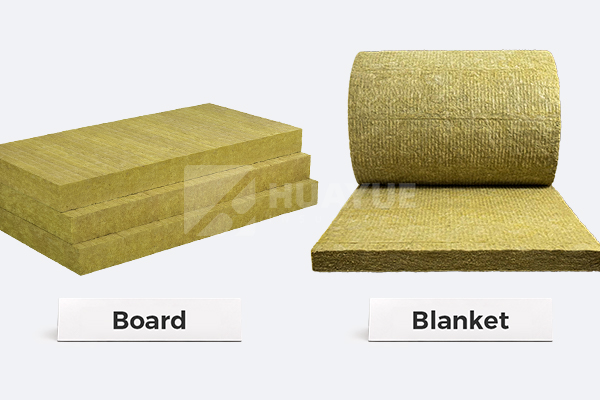
- Boards or slabs for walls, roofs, equipment, façades, and acoustic systems.
- Batts for framed construction and cavity applications.
- Blankets or rolls for large surfaces, metal buildings, equipment, and selected industrial uses.
- Pipe sections for piping systems with specified diameters and wall thicknesses.
- Lamella products for applications that require a particular fiber orientation or mechanical behavior.
A rock wool board cannot replace a mineral wool blanket simply because both belong to the same insulation family. The two products may differ in handling, compressive behavior, joint design, fastening requirements, and packaging efficiency.2
Facings also matter. Aluminum foil, reinforced foil, kraft paper, glass tissue, wire mesh, PVC, and other coverings can change the intended use and installation method. A facing may contribute to vapor control, surface protection, appearance, or handling, but the supplier should support any performance claim with relevant documentation.
Declared density does not establish complete equivalence
Importers often use density as a quick comparison tool. I understand why because density is easy to put into a purchase order. However, equal nominal density does not necessarily mean equal thermal, fire, acoustic, or mechanical performance3.
I compare declared properties rather than using density as a substitute for test data. My initial comparison normally includes:
| Comparison point | Why I review it | Evidence I request |
|---|---|---|
| Product form | The form controls installation and use | Datasheet, drawings, or samples |
| Thickness and dimensions | The dimensions affect fit and calculated resistance | Datasheet and dimensional tolerances |
| Thermal conductivity | The declared value affects thermal calculations4 | Test report or declaration under the required method |
| Fire performance | The classification can affect project approval | Classification report for the relevant product |
| Service temperature | The limit affects industrial suitability | Manufacturer data supported by relevant testing |
| Mechanical properties | Strength can matter for roofs, façades, and equipment | Test results using the specified method |
| Water-related properties | Exposure conditions may require defined behavior | Relevant test report |
| Facing type | The facing affects installation and vapor strategy | Facing specification and system documentation |
| Applicable standard | Markets use different conformity routes | Declaration, certificate, or report with clear scope |
The commercial consequences can continue after delivery
If buyers treat similar labels as proof of equivalence, they can face several risks:
- A consultant or contractor may reject the submitted material.
- A distributor may receive stock that does not match the local product category.
- A fire document may not cover the supplied thickness, facing, or construction.
- A pipe section may not fit the specified outside diameter.
- A board may not withstand the required installation or service conditions.
- A shipment may require relabeling, discounting, or alternative use.
- An importer may carry inventory that its regular customers cannot approve.
I have seen buyer questions become much easier once we replace “Is it the same?” with “Which specification must it meet?” That change moves the discussion from uncertain terminology to measurable procurement requirements.
How should buyers compare mineral wool and rock wool products?
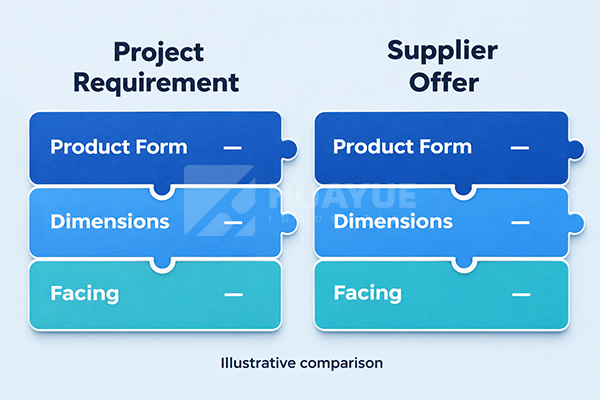
Supplier comparison can become difficult when each quotation uses a different product name or datasheet format. I solve this problem by converting every offer into one comparison sheet. This approach reveals missing information and prevents a low unit price from hiding a technical mismatch.
Buyers should compare mineral wool and rock wool by application, form, dimensions, required standard, thermal performance, fire classification, service temperature, mechanical properties, facing, and supporting documents. I also review manufacturing consistency, packaging, minimum order quantity, lead time, container loading, labeling, and change-control procedures before approving a supplier.
I start with seven technical questions
I ask the following questions before matching a product:
-
What is the intended application?
A façade, partition, roof, HVAC system, industrial pipe, boiler, and acoustic enclosure can impose different requirements. -
Which product form is specified?
A board, batt, roll, blanket, lamella mat, and pipe section should not be treated as interchangeable forms. -
Which standard or code applies?
A buyer should identify the market, tender standard, local code, or customer specification rather than request “international standards” in general. -
Which thermal value is required?
I check the stated thermal conductivity, test conditions, declared value, and required thickness or thermal resistance. -
Which fire requirement applies?
I distinguish between material classifications, product classifications, and assembly or system tests.5 One result should not be generalized to another scope. -
What service temperature is expected?
Operating temperature, short-term peak temperature, environmental exposure, and facing limitations can all affect selection. -
Which documents must accompany the shipment or submittal?
The buyer may require a technical datasheet, declaration, certificate, test report, safety document, inspection record, or country-specific label.
I then compare commercial conditions
A technically acceptable product can still create supply-chain problems. I therefore add commercial and manufacturing checks:
- I confirm whether the dimensions are standard production sizes or custom sizes.
- I review thickness and density tolerances instead of comparing nominal values alone.
- I ask whether the quotation covers unfaced or faced material.
- I confirm whether the package will carry the buyer’s brand, the manufacturer’s brand, or neutral labeling.
- I calculate the loading quantity by package, pallet, cubic meter, and container.
- I ask how compression packaging may affect recovery and handling.
- I confirm the minimum order quantity for custom facings, labels, and packaging.
- I review the expected production lead time and shipping plan.
- I request a process for handling specification changes and nonconforming goods.
- I consider pre-shipment inspection when the order value or project risk justifies it.
I use a bid-alignment table
A structured request reduces misunderstandings. Buyers can use a table like this when sending an inquiry:
| Requirement | Buyer’s input | Supplier’s confirmed offer |
|---|---|---|
| Application | Roof, wall, HVAC, pipe, or equipment | Supplier states the intended use |
| Product form | Board, batt, blanket, roll, or pipe | Supplier identifies the exact model |
| Dimensions | Thickness, width, length, or diameter | Supplier confirms tolerances |
| Thermal requirement | Required value and test basis | Supplier provides declared data |
| Fire requirement | Required classification and standard | Supplier identifies applicable report |
| Temperature | Continuous and peak conditions | Supplier states supported range |
| Facing | Type, weight, reinforcement, and overlap | Supplier provides construction details |
| Documentation | Reports, declarations, and certificates | Supplier lists document numbers and scope |
| Quantity | Square meters, cubic meters, tons, or units | Supplier calculates production and loading |
| Packaging | Compression, pallet, label, and brand | Supplier confirms the packing specification |
This table also helps buyers compare a rock wool supplier with a broader mineral wool supplier. I recommend leaving no row marked merely “standard.” The buyer and supplier should identify the exact value, method, document, or agreed tolerance.
Which documents should support a mineral wool and rock wool decision?
Documentation becomes especially important when importers source from a new manufacturer or replace an established brand. A polished brochure may help explain a product, but it does not establish compliance. I look for traceable documents that correspond to the exact material being offered.
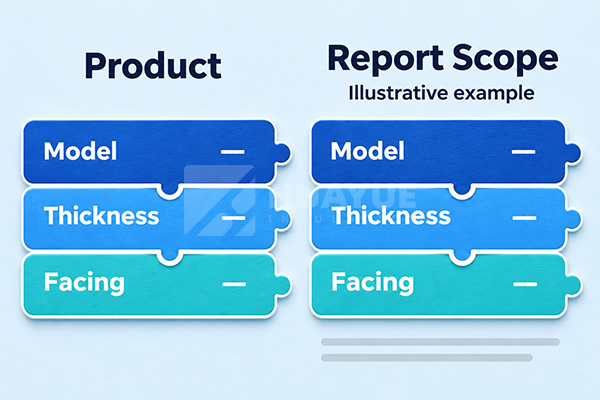
A mineral wool and rock wool purchasing decision should be supported by a product-specific datasheet, relevant test reports, applicable declarations or certificates, and clear identification of the manufacturer, factory, model, thickness, facing, and standard. Buyers should verify each document’s scope, validity, issuing organization, and relevance to the target market.
I separate company credentials from product evidence
A management-system certificate and a product-performance report serve different purposes. For example, an ISO management-system certificate may provide useful information about a company’s documented processes. It does not, by itself, prove that a particular insulation board has a required thermal value or fire classification.
I place supplier documents into four groups:
- Company documents identify the legal entity, manufacturing location, and management systems.
- Product documents describe composition, dimensions, tolerances, intended use, and declared performance.
- Test and classification reports show results under named methods and defined sample conditions.
- Shipment documents connect the ordered goods to batches, quantities, packing lists, labels, and inspection records.
For every important report, I check whether the product name matches the quotation. I also look for thickness, density, facing, sample construction, test method, test date, report number, and issuing body. If a report applies only to an unfaced board, I do not automatically extend it to a foil-faced product.
I verify certifications instead of accepting logo lists
Supplier websites may display CE, FM, SGS, ISO, or other marks and organization names. I recommend treating each item as a document to verify, not as a general guarantee.
My review asks:
- Does the document cover the quoted product?
- Does it identify the relevant manufacturing plant?
- Does it remain valid on the planned shipment date?
- Does it apply in the destination market?
- Does its standard match the tender or regulatory requirement?
- Does it cover the offered facing, thickness, or assembly?
- Can the issuing or certification body confirm its status?
- Does the buyer need an independent engineer or compliance professional to review it?
HUAYUE has management-system and product-testing foundations across its insulation portfolio, but I would still confirm the exact document set for the selected model and destination. I would not apply a group-level credential automatically to every mineral wool, rock wool, or glass wool product.
I consider supplier quality controls
Documents describe a product, but manufacturing controls help determine whether production remains consistent. During supplier qualification, I may review:
- Raw-material control and approved supplier procedures.
- Production-line monitoring and parameter records.
- Thickness, density, dimension, and appearance checks.
- Batch identification and traceability.
- Calibration and test-equipment records.
- Finished-product inspection plans.
- Nonconformity and corrective-action procedures.
- Packaging control and label approval.
- Sample retention policies.
- Third-party inspection arrangements.
HUAYUE operates automated production systems that use PLC and SCADA controls across its manufacturing activities.6 Buyers should still define the inspection criteria for each order and verify how those controls apply to the specific production line and product.
For high-risk or application-specific decisions, I recommend review by a qualified engineer, fire consultant, code professional, or testing laboratory. A manufacturer can support product matching and documentation, but the project’s responsible professionals should approve final suitability.
Frequently Asked Questions
Is rock wool always a type of mineral wool?
Rock wool is generally treated as a type of mineral wool in common industry usage. However, I recommend checking the definition used by the applicable standard, specification, and supplier. Regional terminology can differ, so the category relationship alone does not confirm that two products are technically interchangeable.
Can mineral wool replace rock wool in a project?
Mineral wool may replace a specified rock wool product only when the proposed material satisfies the application, form, dimensions, thermal requirements, fire criteria, service temperature, mechanical properties, and applicable standards. I recommend obtaining formal project approval before ordering a substitute.
Is stone wool the same as rock wool?
Suppliers often use “stone wool” and “rock wool” for similar rock-based insulation products. However, I do not assume that every catalog uses the terms identically. Buyers should compare the exact model, composition description, intended application, declared performance, and supporting test reports.
Does equal density mean equal insulation performance?
Equal density does not prove equal thermal, fire, acoustic, or mechanical performance. I use density as one specification point, not as evidence of complete equivalence. Buyers should compare test methods, declared values, product structure, thickness, facing, and manufacturing tolerances.
What information should I send when requesting a quotation?
I recommend sending the application, product form, thickness, dimensions, density if specified, thermal requirement, fire requirement, operating temperature, facing, applicable standard, quantity, destination port, packaging needs, and required documents. A BOQ, datasheet, drawing, or current product reference can make supplier matching more accurate.
Conclusion
Mineral wool and rock wool have a category relationship, but their names do not prove product equivalence. I recommend comparing the intended application, product form, standards, test documents, thermal and fire performance, service temperature, dimensions, and commercial conditions before approving a substitute. HUAYUE supplies rock wool and other insulation materials for international B2B procurement. Importers, distributors, and project buyers can send us a BOQ, datasheet, drawing, or current product specification for document-based product matching and quotation.
The Facts on Rock and Slag Wool https://gaftp.epa.gov/ap42/ch11/s18/reference/ref02_c11s18_1995.pdf ↩
663518 DP-1292 https://rampac.energy.gov/docs/default-source/noncertified/dp1292.pdf ↩
Determination of Thermal Properties of Mineral Wool ... - PMC https://pmc.ncbi.nlm.nih.gov/articles/PMC10488771/ ↩
2019 BTO Peer Review – ORNL https://www.energy.gov/documents/bto-peer-2019-ornl-models-evaluate-low-tc-envelopespdf ↩
Fire Resistance of Structural Members and Assemblies https://tsapps.nist.gov/publication/get_pdf.cfm?pub_id=932140 ↩
HUAYUE® Rock Wool Insulation Overview | PDF https://www.scribd.com/document/916325523/HUAYUE-Rock-Wool-Board-Insulation-Product-Data-Sheet ↩